Spider Lily (Higanbana) Tattoo Meaning: The Anime Symbol of Farewell and Rebirth
If you’ve spent any real time watching anime, you’ve probably noticed spider lilies — higanbana — appearing right before something ends: a character’s death, a final goodbye, a turning point the story never walks back. That pattern isn’t random, and it isn’t something anime invented on its own. The flower carries real cultural weight in Japan, long before it became visual shorthand for anime storytelling — its association with death, funerals, and the afterlife is well documented (see the background on Lycoris radiata / higanbana) — and understanding that weight matters if you’re considering a spider lily tattoo of your own.
This guide breaks down spider lily tattoo meaning in full: what the flower actually symbolizes, why anime keeps reaching for it at the same emotional moments, how color changes the meaning, which tattoo styles suit the design, where to place it, and what to tell your artist so the symbolism reads the way you intend. The goal is to get the accuracy right before you commit to ink, not just find a nice-looking reference photo.
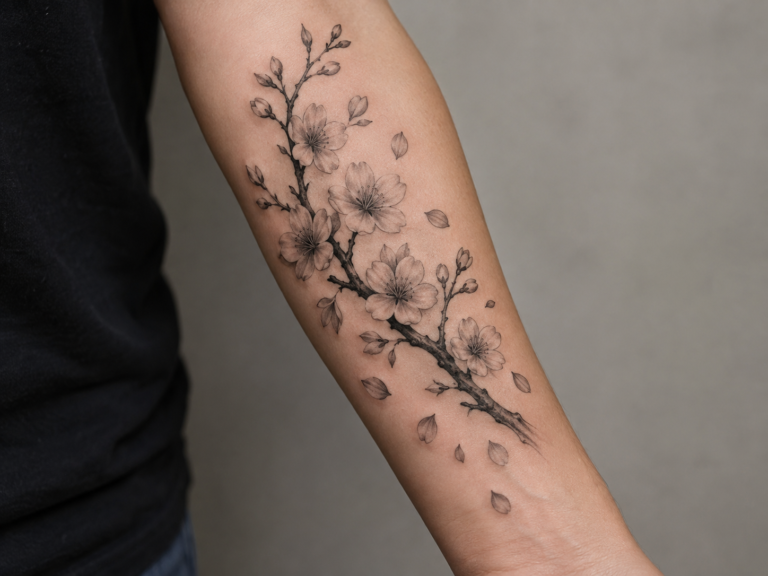
For a similar symbol-driven read, see our guide to Cherry Blossom Tattoo Meaning: Symbolism, Culture, and Design.
Table of Contents
Table of Contents
Why This Flower Keeps Showing Up Right Before Something Ends
Anime storytelling reaches for the spider lily again and again at the same kind of moment: a farewell, a death, an ending a character can’t undo. It tends to work as a visual cue rather than a plot device — a single red bloom in a field, a shot that lingers on the flower right before the scene shifts. This isn’t one show’s invention. It’s a recurring pattern across the medium, drawing on a symbol that already carried this exact meaning in Japanese culture long before anime existed.
That’s part of why the flower translates so well into a tattoo. It’s recognizable enough to read as intentional, and its meaning already fits themes a lot of people want a memorial or milestone tattoo to hold: loss, remembrance, and the idea that an ending can also be a kind of passage.
It also helps that the symbol doesn’t depend on any one story to make sense. A viewer who has never seen the specific scene a design might be nodding to can still read a spider lily correctly, because the flower’s meaning exists independently of any single show. That’s a real advantage for a tattoo meant to last decades — the design stays legible even if the anime that first put the flower in front of you eventually fades from cultural memory.
Knowing the cultural root of the symbol, not just its anime usage, is what separates a spider lily tattoo that reads as considered from one that reads as purely decorative. The next section covers that root directly.
The Real Meaning Behind Higanbana: Death, Memory, and Rebirth
The spider lily’s Japanese name, higanbana, ties directly to Higan, the Buddhist observance held around the autumn equinox — a period traditionally associated with honoring the dead and reflecting on the passage between this life and the next. The flower tends to bloom during this exact window, which is a large part of why it became linked to death and remembrance rather than staying a purely decorative garden flower.
The symbolism goes further than the name. In Japanese folklore, higanbana is associated with the Sanzu River, a river the deceased are said to cross on their way to the afterlife. The flower is sometimes described as lining that crossing, marking the boundary between the world of the living and whatever comes after — which is part of why the image reads as a threshold rather than an ending in the simplest sense.
One detail makes the symbolism unusually specific: the spider lily’s flower and leaves never appear at the same time. The leaves emerge only after the flower has already died back, so the plant is never seen in full bloom and leaf together. That biological quirk became a metaphor in its own right, for a separation that can’t be closed — for two things, or two people, fated never to meet again. It’s a small enough detail that a lot of tattoo designs miss it, but it’s the piece that gives the symbol its emotional specificity rather than a generic “flower that means death.”
Put together, higanbana carries a cluster of closely related meanings: death, farewell, memory, and — because a crossing is also an arrival somewhere new — rebirth. None of these four meanings sits in isolation from the others; the autumn-equinox timing, the river crossing, and the flower-and-leaf separation all point toward the same idea from different angles, which is part of why the symbol holds together so well as a single tattoo concept rather than feeling like several unrelated meanings stacked on top of each other.
It’s a heavier symbol than a lot of tattoo-meaning content treats it as, and that weight is exactly why it resonates as a memorial or milestone tattoo rather than a purely decorative one. Understanding higanbana tattoo meaning at this level, rather than stopping at “it’s a death flower,” is what makes the eventual design feel earned rather than borrowed.
Color Variations: What Red, White, and Gold Spider Lilies Mean
Color shifts the emotional register of a spider lily design without changing its core symbolism. These associations are commonly cited across sources discussing the flower’s meaning, not a single fixed rule:
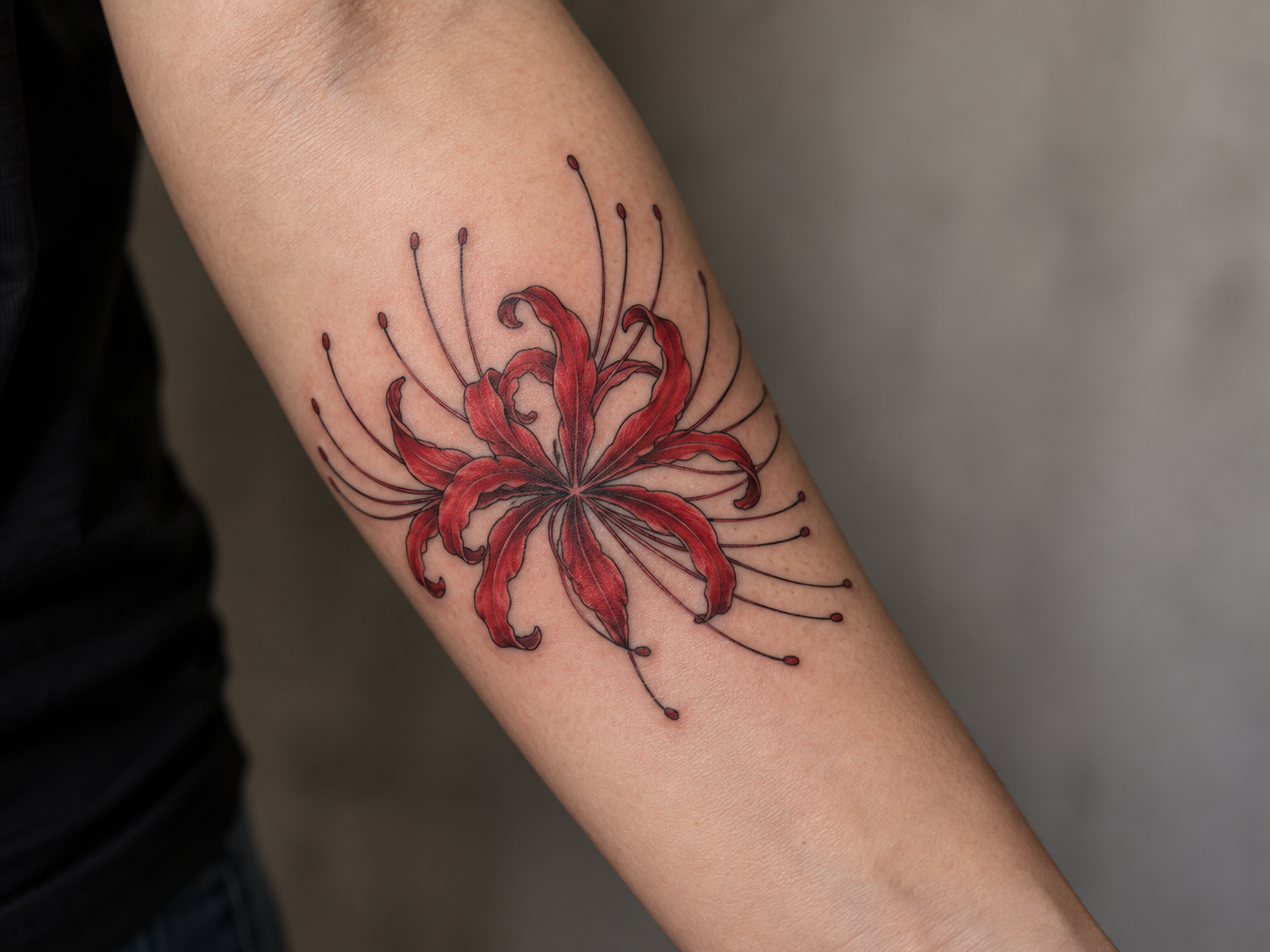
- Red — the most traditional and most anime-associated color. Red spider lily tattoo symbolism ties most directly to separation, death, memory, and passion, and it’s the version most people picture by default.
- White — a gentler read on the same theme, often used for a softer, quieter farewell rather than a dramatic one.
- Gold or yellow — less common, generally tied to longing and lost happiness rather than death itself.
The flower also carries a lighter set of associations worth knowing about: passion, independence, and quiet resilience, since it tends to bloom in places other plants struggle to establish. A design leaning on a gold or softer palette can lean into that reading instead of the heavier one.
If you’re building a memorial piece, red or white are the more conventional choices. Gold works better if the design leans toward longing or nostalgia specifically, rather than loss in the more direct sense.
None of these color choices is more “correct” than another — they’re different emphases within the same underlying symbol, not competing interpretations. Pick the one that matches the specific feeling you want the tattoo to carry, rather than assuming there’s a single right answer.
Style Comparison: Irezumi, Realism, Blackwork, and Watercolor
Style changes how long the tattoo holds its detail and how the symbolism reads years down the line, not just how it looks on day one.
| Style | What it looks like | Best for | Main tradeoff |
|---|---|---|---|
| Irezumi (Traditional Japanese) | Bold outlines, saturated color, often paired with background motifs like skulls, snakes, or koi | Readers who want the design rooted in Japanese tattoo tradition rather than standing alone | Needs a larger canvas to fit the background elements properly |
| Realism | Anatomical detail, gradient shading, photographic petal and stem texture | Readers who want the flower’s fragility and drama to read as literally as possible | Needs a skilled realism artist, and holds up less cleanly at very small sizes |
| Blackwork | High-contrast black ink, no color, sharp defined edges | Readers who want the symbol to stay legible and clean for decades | Loses the color-based meaning distinctions (red, white, gold) entirely |
| Watercolor | Soft blended edges, no hard outlines, paint-like color bleed | Readers who want the design to evoke a fading memory emotionally | Fades and blurs fastest of the four styles over time |
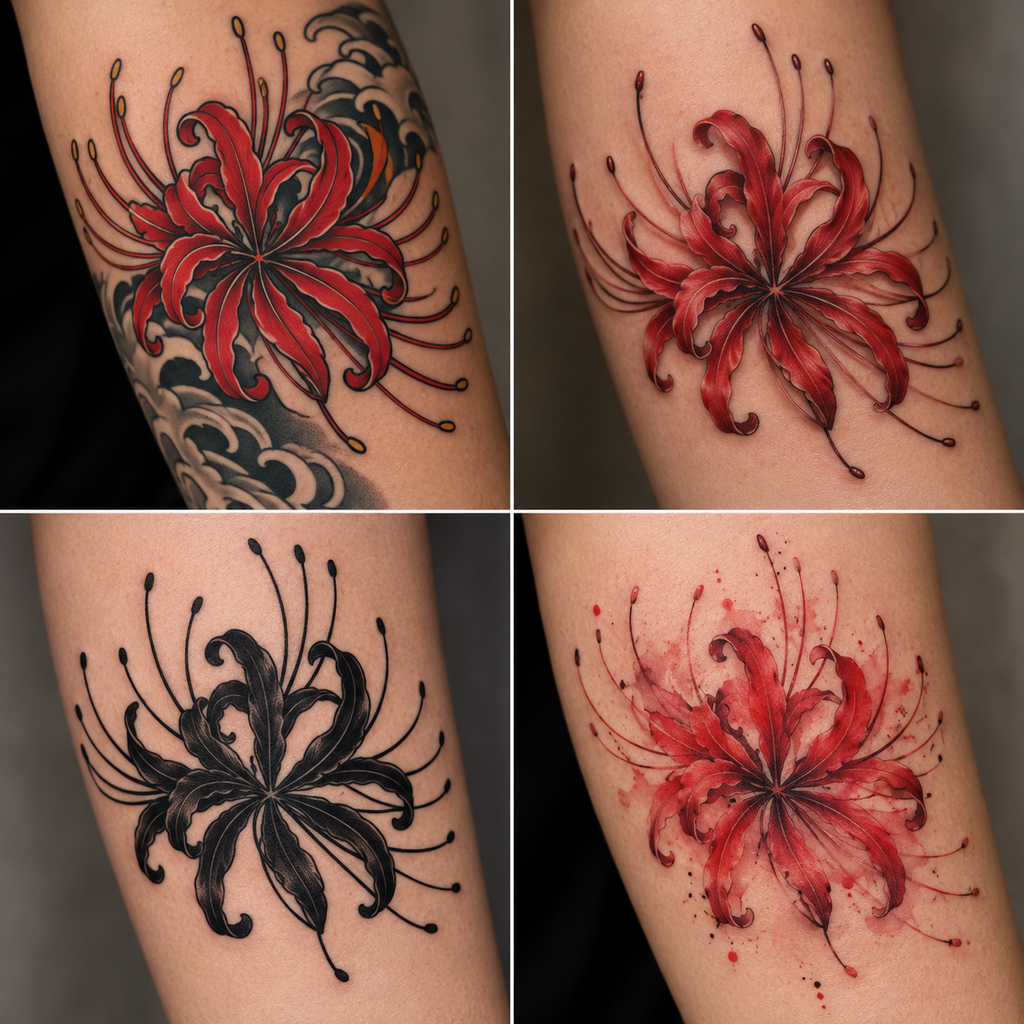
Blackwork holds its shape the longest, which matters if permanence itself is part of what you want the tattoo to say. Watercolor is the most emotionally evocative option for a fading-memory theme, but it’s also the style most likely to need touch-ups sooner than the others, and how well any of these styles actually holds up depends heavily on the healing process itself — see our anime tattoo aftercare guide for what that involves.
If longevity matters more to you than the initial visual impact, weigh blackwork or irezumi over realism or watercolor. If the emotional read is the priority and you’re comfortable with more maintenance down the line, watercolor’s soft edges do the most work of any style here to evoke memory and impermanence directly through the linework itself, not just the subject matter.
Placement and Size Guidance
Placement should follow from how personal or visible you want the symbolism to be, not just which spot looks good in a single reference photo. A memorial or grief-focused piece often reads better somewhere private, while a piece meant to spark conversation or signal identity works better somewhere visible — the symbolism itself doesn’t change based on where you put it, but the way other people encounter it does.
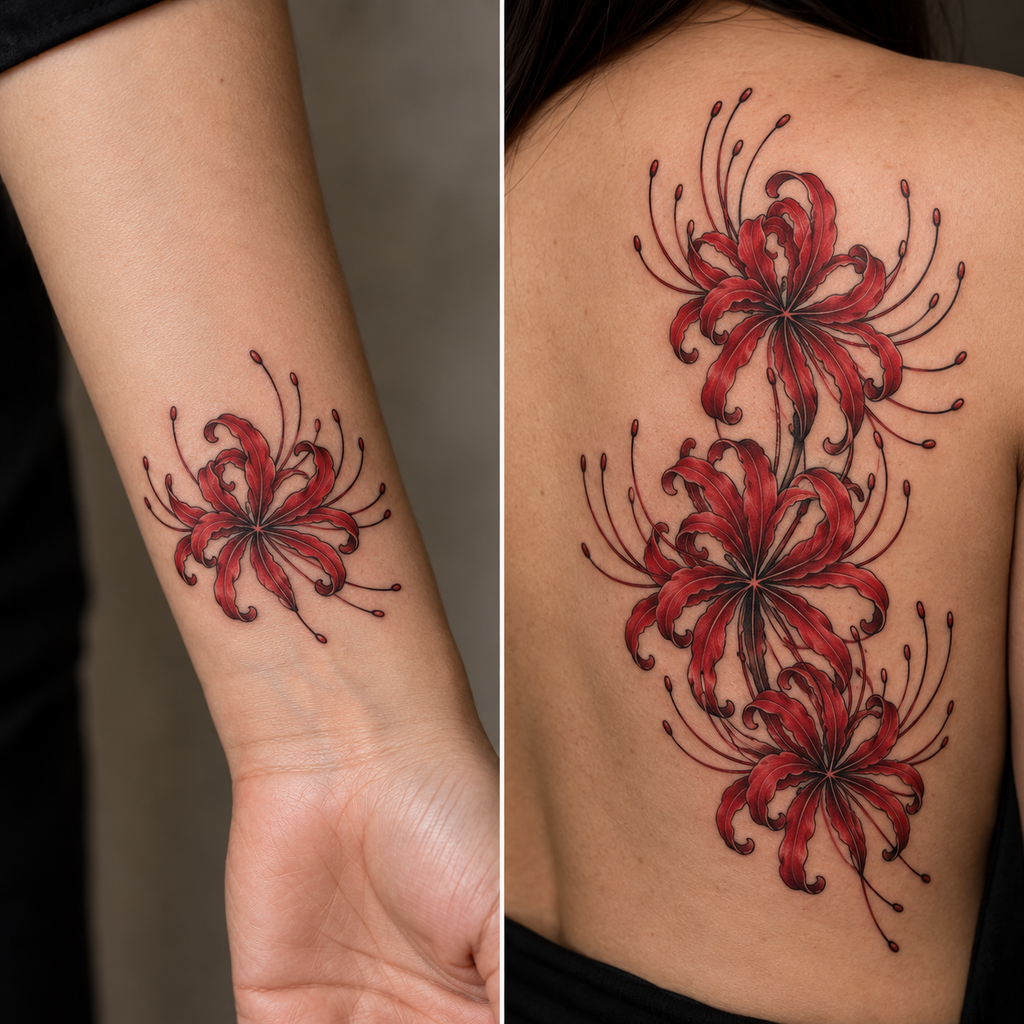
Forearm or wrist. Visible and personal — a good fit for a single, medium-sized flower meant to be seen and to prompt a real conversation about what it means to you. Best Placement for an Anime Tattoo: A Full Guide by Pain, Durability, and Style covers pain, durability, and style tradeoffs across placement zones in more depth if you’re still deciding where an anime-inspired piece should go generally.
Ribs or side. A more private placement, suited to a design built around a single vertical stem — fitting for grief or memory-focused pieces meant to stay personal rather than public.
Back or shoulder blade. Enough room for a fuller irezumi-style composition, background motifs included, without cramping the detail.
Shin or thigh. A long, narrow canvas that follows the natural line of the leg — works well for a single stem-and-bloom composition rather than a wide scene.
Getting the Symbolism Right: What to Tell Your Artist
A few details are easy to get wrong if your artist hasn’t worked with this symbol before.
The flower-and-leaf-never-meet detail matters more than it looks. Since the traditional symbolism depends on the flower and leaves never appearing together, a design that shows both at once quietly breaks that meaning. If the eternal-separation angle is the point of your tattoo, tell your artist to leave the leaves out of the composition, or to treat them as clearly separate from the bloom rather than growing from the same stem.
If you want the design to nod to how anime uses this symbol, describe the mood and visual cue you’re going for — a single bloom appearing at a moment of farewell, for example — rather than asking your artist to copy a specific official scene, frame, or piece of artwork. An original design inspired by that recurring pattern reads better as a tattoo and avoids reproducing anyone else’s copyrighted work.
If you’re considering adding kanji or other Japanese characters alongside the flower, confirm the exact characters with a native speaker or a professional translator before your appointment. Getting a character wrong is a permanent mistake, and it’s one an artist without language expertise can’t always catch.
This is a real cultural and religious-adjacent symbol, not just a decorative motif, and it’s worth treating it with the same care you’d want a reference book to use. Bringing a clear, specific description of the meaning you want the piece to carry — not just a reference image — gives your artist what they actually need to get the details right.
When you’re choosing who does the work, look at healed examples of their linework in whichever style you’ve picked, not just fresh photos. Fresh ink can look sharp regardless of how well it was actually built to last, and healed work is what tells you whether an artist’s fine detail, color saturation, or blackwork edges actually hold up the way you’re hoping they will.
FAQ
Is a spider lily tattoo bad luck?
Not inherently. The flower is associated with death and farewell, which some cultures treat cautiously, but within tattoo culture it’s a well-established memorial and remembrance symbol rather than something read as an omen. Context and personal intent matter more than a fixed superstition.
What does a spider lily tattoo mean for a woman versus a man?
The flower’s core symbolism — death, memory, farewell, rebirth — doesn’t change based on who’s wearing it. Some people read it as a slightly softer or more introspective symbol on a woman and a starker, more direct one on a man, but that’s a matter of personal styling and framing, not a rule the symbol itself carries.
Should a spider lily tattoo include the leaves?
Only if eternal separation isn’t the specific meaning you’re going for. Since the plant’s flower and leaves never appear at the same time in nature, showing both together in a design breaks that traditional symbolism. If you want the flower-only look preserved, tell your artist explicitly to leave the leaves out.
Is a spider lily a good memorial tattoo?
Yes, it’s one of the more fitting choices available. The flower’s established associations with death, memory, and passage to what comes next line up directly with what most people want a memorial tattoo to represent, without needing an invented meaning layered on top.