Anime Tattoo Aftercare: The Complete Healing and Color-Care Guide
Healing works the same way for every tattoo. What changes is how much a careless week can cost you when the design carries fine linework or heavy color. A bold blackwork shape can survive a little rough handling and still read clearly. A detailed anime portrait or a full-color piece can’t take the same risks without losing exactly the details that made you want it in the first place.
If you’re still working through the earlier decisions — style, size, placement, whether you’re ready to book at all — What to Know Before Getting an Anime Tattoo covers that ground.
Table of Contents
The First 24–48 Hours
What you do in the first day or two matters more than almost anything else in the healing process, because this is when the tattoo is most exposed.
Many artists send you home with one of two coverings, plastic wrap or a medical adhesive bandage such as Saniderm or Tegaderm, though practices vary from studio to studio. Plastic wrap is usually removed within a few hours. A medical adhesive bandage can stay on much longer — anywhere from a day to several days, depending on your artist’s preference and how your skin reacts to it. There’s no single correct number here. Follow whatever your artist told you specifically, since they chose the covering based on your design and skin.
Once the covering comes off, wash the tattoo gently with warm water and an unscented soap. You’ll likely see some plasma, ink, or blood residue mixing with the wash water. That’s expected, not a sign anything went wrong. Pat the area dry with a clean towel — don’t rub it — and let it air out for a while before applying anything. Many artists suggest holding off on lotion for the first day and letting the skin settle first, so check what your artist recommends.
Don’t re-wrap the tattoo once the original covering is off, unless your artist specifically told you to.
Cleaning and Moisturizing During Healing
Once the first day has passed, the routine becomes simple and repetitive: keep it clean, keep it lightly moisturized, and don’t overdo either one.
Wash the tattoo once or twice a day with an unscented soap, using clean hands. Pat it dry rather than rubbing. Once it’s dry, apply a thin layer of an unscented lotion or tattoo-specific balm. A thin layer is the goal — enough to keep the skin from drying out and cracking, not enough to leave the area sitting under a thick, greasy film. Let one application wear off before you add more. Overdoing it can slow healing too, so a thin layer is better than a thick one. This lines up with Mayo Clinic’s tattoo guidance, which recommends washing a new tattoo with soap and water, patting it dry, and applying a mild moisturizer several times a day while it heals.
Stick to unscented products throughout this window. Fragrance and unnecessary additives are more likely to irritate healing skin, and they add a variable you don’t need while you’re trying to tell whether the tattoo itself is healing normally.
What’s Normal While It Heals
A healing tattoo goes through a predictable, slightly unglamorous stage before it looks finished, and knowing what to expect keeps you from mistaking normal healing for a problem.
| Stage | What you may notice | Focus on |
|---|---|---|
| First 24–48 hours | The covering comes off on your artist’s schedule; some plasma, ink or blood residue in the wash water is expected | Gentle washing, patting dry, and moisturizing only when your artist says to start |
| First week | Peeling and flaking usually begin; mild scabbing over heavily saturated areas | Leave flakes and scabs alone; pat itchy spots instead of scratching |
| Second week | Peeling and itching can continue | Keep it clean, lightly moisturized, out of the sun and out of the water |
| About 2–4 weeks | Mayo Clinic says most tattoos take about two weeks to heal; many artists use two to four weeks as a typical range | Keep following your artist’s routine until the surface has fully healed |
| After that | The skin underneath keeps settling, and the tattoo may look clearer than it did mid-heal | Long-term sun protection on exposed tattoos |
Peeling and flaking usually start within the first week and can continue into the second. Mild scabbing is common too, especially over areas with heavier ink saturation. None of this means anything went wrong — it’s just skin shedding the layer that took the trauma of the needle.
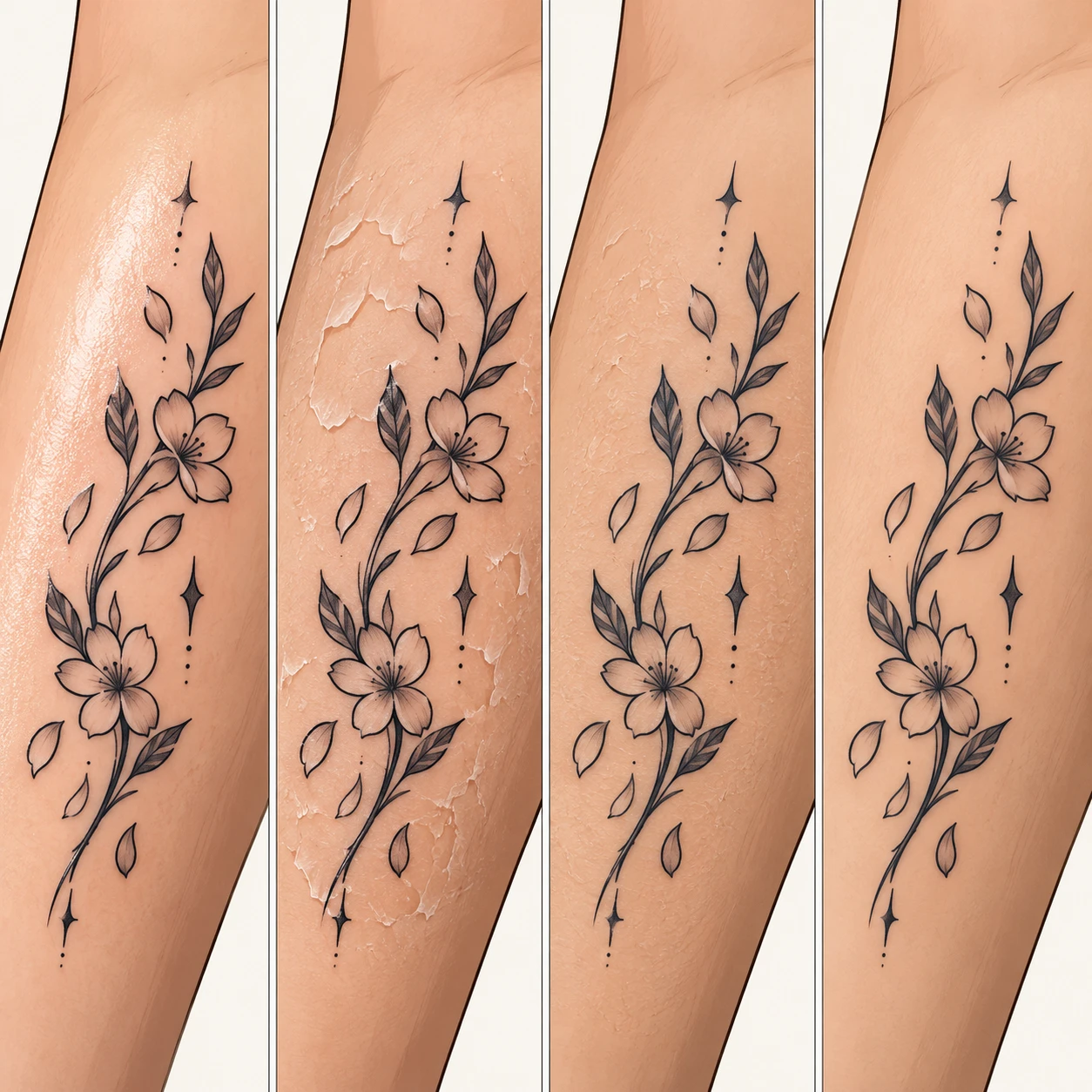
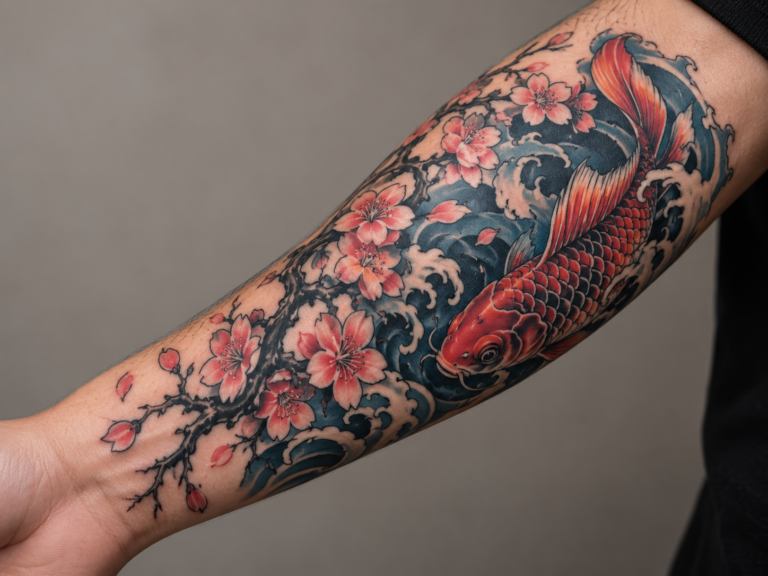
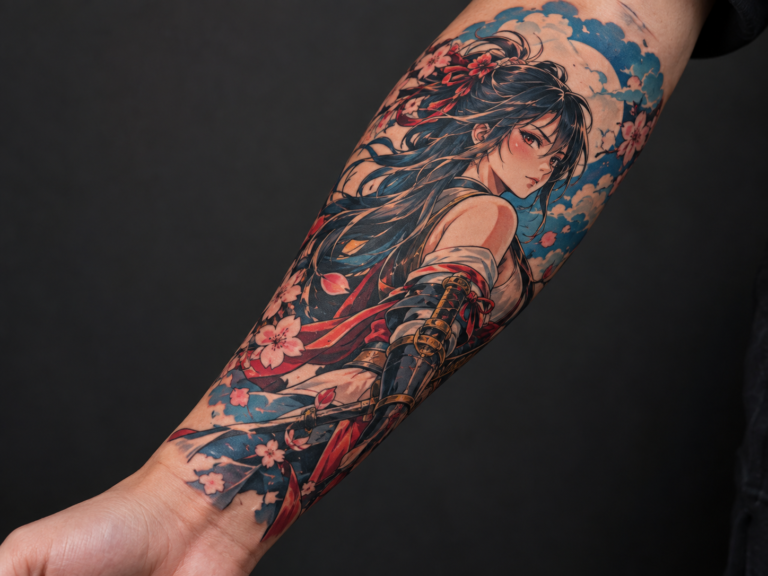
Illustrative concept images: AI-generated artwork created to explore tattoo design ideas. They do not represent verified tattoos performed on real clients.
Itching tends to show up as the peeling stage kicks in, and it’s one of the harder parts of healing to sit through. Pat the area instead of scratching it. Scratching or picking at flaking skin is the single most common way people damage a healing tattoo, because it can pull out ink along with the skin rather than letting it shed on its own.
If something looks genuinely different from ordinary peeling — spreading redness, real swelling, or anything that looks infected rather than just healing — that’s a signal to reach out to your artist or a medical professional rather than waiting it out. The warning-signs table further down shows what to look for.
What to Avoid During Healing
A short list of things to steer clear of during the healing window, and why each one matters:
- Direct sun exposure. Sun on a healing tattoo can irritate healing skin and dull the ink’s appearance, so it’s best avoided during the healing window. Mayo Clinic likewise advises keeping a new tattoo out of the sun until it has healed.
- Soaking and swimming. Baths, pools, and long soaks introduce bacteria to an open healing area. Quick showers are fine; submerging the tattoo isn’t.
- Saunas and hot tubs. Same underlying risk as soaking, with added heat that can irritate already-sensitive skin.
- Heavy sweating and intense exercise, especially in the first several days. Sweat can irritate the area and heavy movement can stress skin that’s still fragile.
- Tight clothing and jewelry near the tattoo. Friction from a waistband, sleeve, watch, or ring rubbing against a healing tattoo can disrupt the surface exactly where you need it left alone.
That last point matters more depending on where the tattoo is. A tattoo on a high-friction spot — a hand, a foot, a wrist under a watch band — needs more deliberate care during healing than one on a flatter, more stable part of the body. If you’re still deciding on placement, Best Placement for an Anime Tattoo walks through which spots make healing (and long-term wear) easier or harder. Here, the point is simpler: whatever you chose, keep friction off it while it heals.
Protecting Fine-Line and Detailed Anime Work
This is where most aftercare advice stops being useful for anime tattoos specifically, because fine-line and highly detailed work carries a risk that bolder tattoos mostly don’t: losing the exact detail that makes the design recognizable.
A bold, simple shape can take some rough handling during the peeling stage and still look right once it heals — a slightly disrupted edge on a thick line barely shows. A thin line has no such buffer. If skin lifts or gets picked at over a fine line, there’s a real chance of pulling out ink along a stretch that thin, leaving a visible gap rather than just a softer edge. The same goes for small facial features or expressive details — the kind of thing an anime character’s whole likeness often depends on. Lose a sliver of linework there and the design can stop reading as the character it’s supposed to be.
None of this means fine-line tattoos heal through a different biological process. They heal exactly the way any tattoo heals. What’s different is how much margin for error the design has. A detailed piece simply has less room to absorb a mistake during healing than a bold one does.
Practically, that means a few things matter more here than they would for a simple shape. Avoid stretching or flexing the tattooed area more than necessary during the peak peeling days, since movement is one of the more common ways skin lifts unevenly over fine lines. Resist the urge to check on the design constantly by rubbing or pressing on it — let it heal without added handling. And don’t layer on heavy amounts of product hoping to “protect” the detail faster — a thin, consistent layer is still the goal here, exactly as it is for the rest of the tattoo. Thin, consistent care beats heavy, inconsistent care every time, and it matters more here than almost anywhere else in this guide.
Protecting Color-Heavy Anime Work
Color-heavy and cel-shaded anime pieces carry a different version of the same underlying risk: not losing fine lines, but losing the clean, saturated color blocks and transitions that make the piece pop.
Sun exposure deserves extra caution with color specifically. Sun is one of the main things that fades tattoo ink, so it’s worth being especially careful with a fresh color piece: cover or shade it when you’re going to be outside, rather than treating sun exposure as an afterthought until you’d normally reach for sunscreen anyway.
Once the tattoo has fully healed, sun protection becomes a long-term habit rather than a healing-window rule, and it matters for black-and-grey work as well as color. Dermatologist tips shared by the American Academy of Dermatology recommend a water-resistant sunscreen with SPF 30 or higher on exposed tattoos, reapplied every two hours when you are outdoors, and avoiding tanning beds and sunlamps, which can fade tattoo ink.
Picking and scratching also do more visible damage to color work than to a simple black outline. A patch of lifted skin over a solid color fill or a smooth color transition tends to heal back looking uneven or patchy in a way that’s much more noticeable than the same disruption over plain blackwork. If a color section itches more than the rest of the tattoo during peeling, pat it exactly like you would anywhere else. Don’t single it out for extra scratching just because it feels different.
As with fine-line work, none of this reflects color ink healing through a separate biological process. The skin heals the same way regardless of what color went into it. What changes is how visible any mistake becomes once the color is meant to sit clean and even.
When to Check In With Your Artist
Everything in this guide is general healing guidance, not a replacement for what your specific artist told you. If your artist’s instructions differ from anything here — a different bandaging window, a different recommended product, a different timeline — follow their instructions. They know your specific tattoo, your skin, and the techniques they used to create it.
Reach out to your artist, and see a medical professional if needed, if you notice anything that goes beyond ordinary healing: spreading redness or heat well past the tattooed area, real swelling, pus, a fever, or pain that gets worse instead of better as the days pass. General guidance can describe typical healing, but it can’t diagnose what you’re seeing.
The table below summarizes the difference, based on warning signs listed by the U.S. Food and Drug Administration (FDA) and Mayo Clinic.
| Usually part of normal healing | Contact a health care professional |
|---|---|
| Peeling and flaking during the first one to two weeks | Redness, warmth or swelling that spreads or gets worse instead of better |
| Mild itching as the skin starts to peel | Pus, or pain that increases as the days pass |
| Light scabbing, especially over heavily saturated areas | Fever, shaking, chills or sweats, which the FDA lists as possible signs of infection |
| A tattoo that looks temporarily lighter, patchy or less crisp while it settles | A rash or bumps on the tattoo, which can signal an allergic reaction; Mayo Clinic notes reactions can also appear years later |
If you do have a reaction, the FDA suggests asking your artist for the brand, color and lot number of the ink used, which can help identify the cause, and reporting the problem to the agency.
Mayo Clinic notes that most tattoos take about two weeks to heal, and many artists treat two to four weeks as a typical range for the surface to settle. The exact timeline varies from person to person and tattoo to tattoo, and depends partly on how well the early care steps above are followed. The skin underneath keeps settling for a while after the surface looks done, which is part of why patience during the visible healing weeks pays off later. Once your tattoo is fully healed, how well it holds up over months and years is a separate question worth thinking about as you decide on aftercare products and sun protection long-term.
FAQ
How long does it take for an anime tattoo to heal?
Most tattoos heal at the surface in about two weeks, and many artists quote two to four weeks; the timeline table above shows what each stage usually looks like. The skin underneath keeps settling for a while after the surface looks healed.
Is peeling and scabbing normal on a detailed anime tattoo?
Yes. Peeling, flaking, and light scabbing are a normal part of healing for any tattoo, including detailed or color-heavy anime work. The key is leaving it alone while it happens rather than picking at it, since detailed work has less room to absorb damage from picking than a bold, simple design does.
Can I tell if my fine-line tattoo is healing correctly?
Ordinary peeling, light scabbing, and mild itching are normal, even over fine lines, and a healing tattoo can look temporarily lighter, patchy, or less crisp than it will once it’s fully settled. That’s a normal part of the process, not something to try to diagnose yourself. If anything about how a section is healing concerns you, your artist is the best person to ask, since they can see the design as it was originally done and assess it directly.