Realistic Anime Tattoo Ideas: Photorealistic Designs and How to Get the Style Right
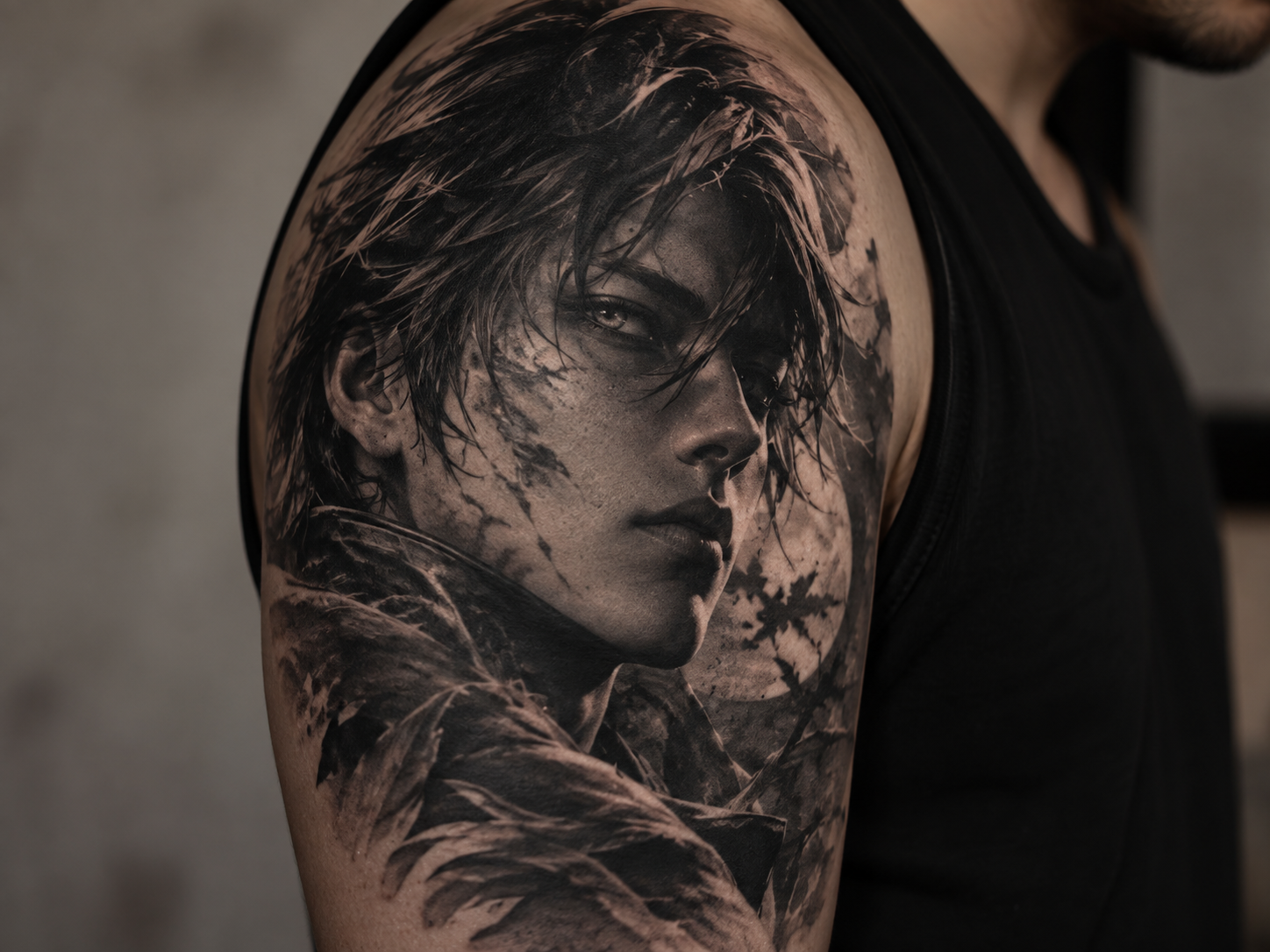
If the anime tattoos you’ve been drawn to look less like a manga page and more like a photograph, you’re looking for realistic anime tattoo ideas — sometimes called photorealistic anime tattoos. This style trades flat linework and graphic color blocking for lifelike shading, depth, and tonal detail. It’s a different design decision than a manga-panel piece or a soft watercolor piece, and it comes with its own considerations for placement, scale, and finding the right artist — shading-heavy work in particular benefits from the healing steps in the American Academy of Dermatology’s tattoo safety guidance.
This guide covers what actually makes an anime tattoo read as realistic, how black-and-grey and color-realism executions differ, original design directions to bring to an artist, and what to think about before committing to this style.
Table of Contents
Table of Contents
What Makes an Anime Tattoo “Realistic”?
A realistic or photorealistic anime tattoo aims to render its subject the way a photograph or a painted portrait would: with gradual shading, believable light and shadow, texture, and depth, rather than the flat color fills and clean outlines typical of graphic anime-style tattoos.
This is one of several rendering styles anime fans choose from. Manga panel tattoos lean into bold linework and panel-style composition, closer to the page itself. Watercolor-style anime tattoos go the opposite direction, using soft, painterly color bleeds with little hard linework at all. Realistic tattoos sit apart from both: the goal is tonal accuracy and depth, not flat clarity or painterly softness.
That difference in goal changes what the tattoo actually looks like on skin. A realistic piece typically has more visible shading gradients, more layered tonal work, and a more three-dimensional feel than either of the other two styles.
Black-and-Grey vs. Color Realism — Two Ways to Execute This Style
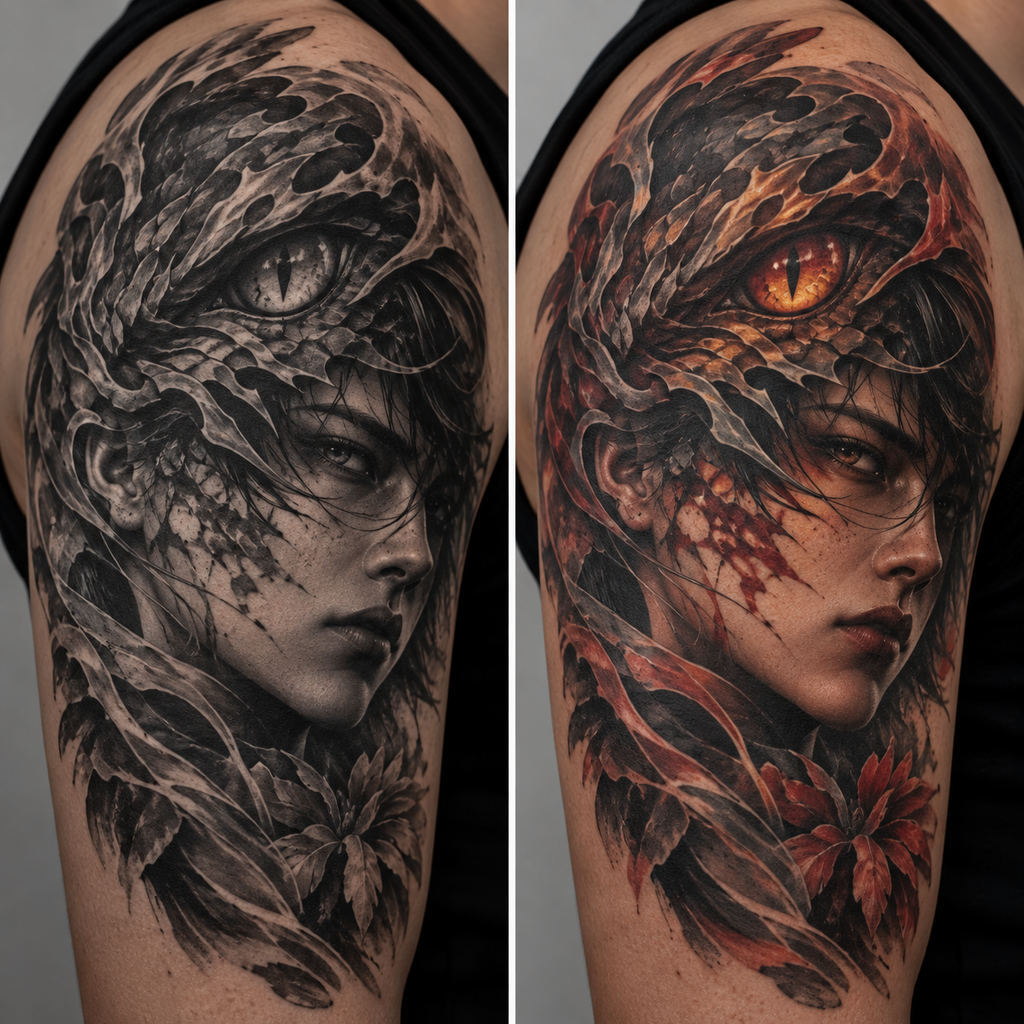
Realistic anime tattoos are usually done one of two ways: black-and-grey or color realism.
Black-and-grey is the more common and often more traditional execution. It relies entirely on black ink diluted to different densities to build shading and depth, which tends to age well and reads as classic, moody, or cinematic depending on the design.
Color realism uses a full palette to build the same lifelike depth and shading, but in color rather than grayscale. It can look more vivid and striking, but it generally asks more of both the artist’s skill and the design’s execution, since color realism has to manage tone, shading, and hue all at once.
Neither is a stand-in for the word “realistic” on its own — black-and-grey is a technique and palette choice within the realistic style, not a separate style, and not the same thing as “realistic” itself. A realistic anime tattoo can be done in either black-and-grey or color; the style is defined by the lifelike shading and depth, not by the palette used to achieve it.
Realistic Anime Tattoo Ideas — Gallery-Style Inspiration
The strongest realistic anime tattoos usually start from a single striking subject rendered with real depth, rather than a busy scene. Here are original design directions built around that idea:
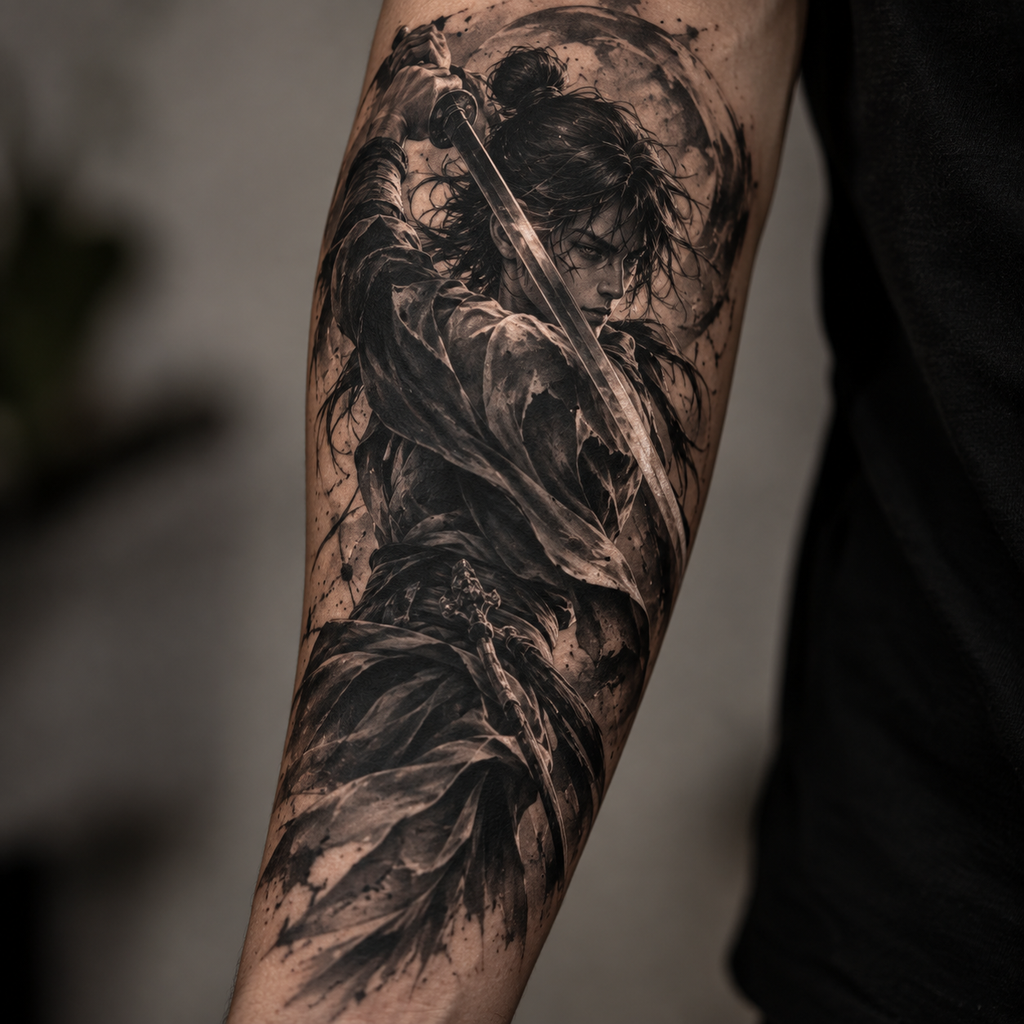
An original sword-wielding protagonist. A single figure mid-motion, rendered with realistic muscle definition, fabric texture, and dramatic side-lighting across the face and blade. Works well as a black-and-grey forearm or upper-arm piece where the light source can carve real depth into the composition.
An original masked warrior. A close-cropped portrait focused on a carved or ornamental mask, with realistic material texture — wood grain, metal sheen, or worn leather — and shadow falling naturally across the face beneath it. The mask itself becomes the focal point for tonal detail.
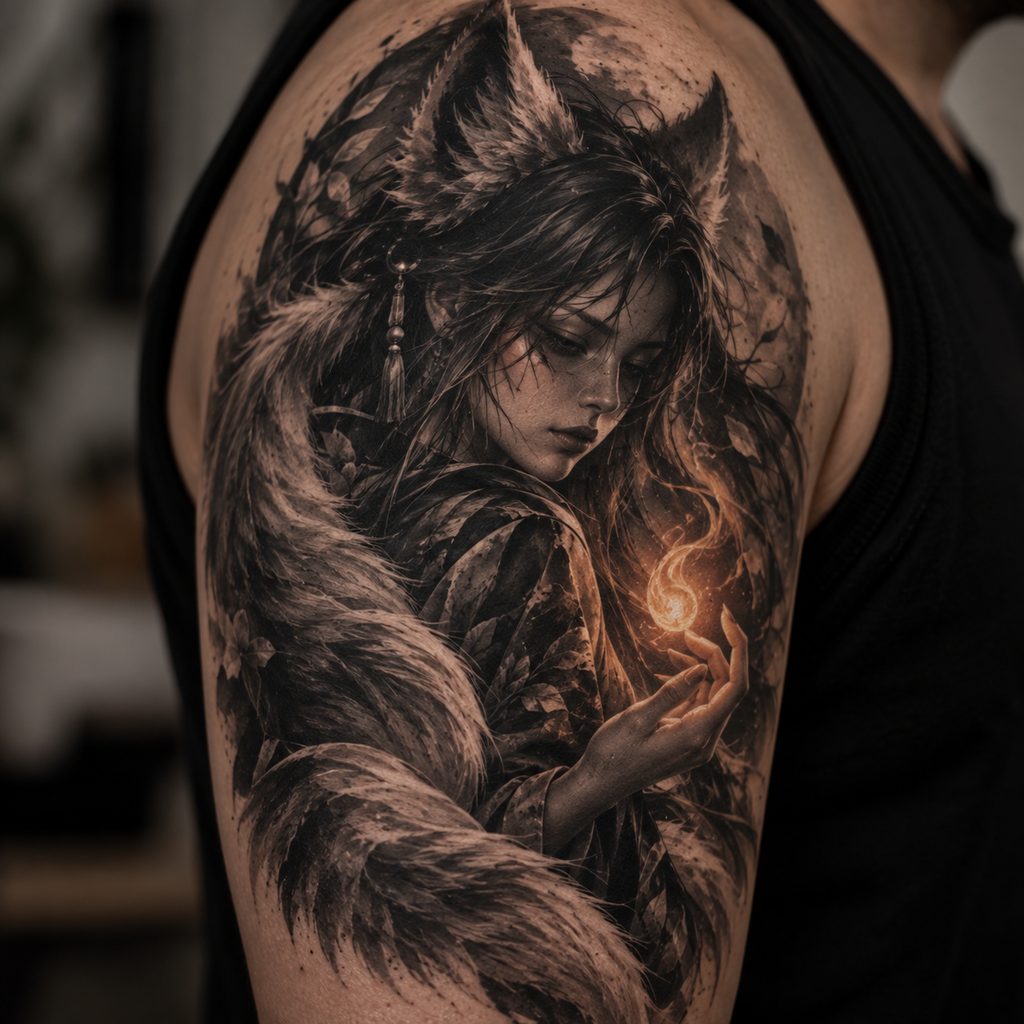
An original fox-spirit character. A half-human, half-fox figure with realistic fur texture along the ears and tail, softened facial shading, and a glowing or luminous element (an ember, a lantern, a wisp of light) rendered with genuine light-falloff rather than a flat glow effect. Suits an upper-arm placement with room for the fur texture to read clearly.
An original cyberpunk heroine. A portrait blending realistic skin shading with reflective, textured surfaces — circuitry, chrome, or glass — picking up light differently than skin does. The contrast between soft tonal shading on the face and hard reflective highlights elsewhere is what sells the realism here.
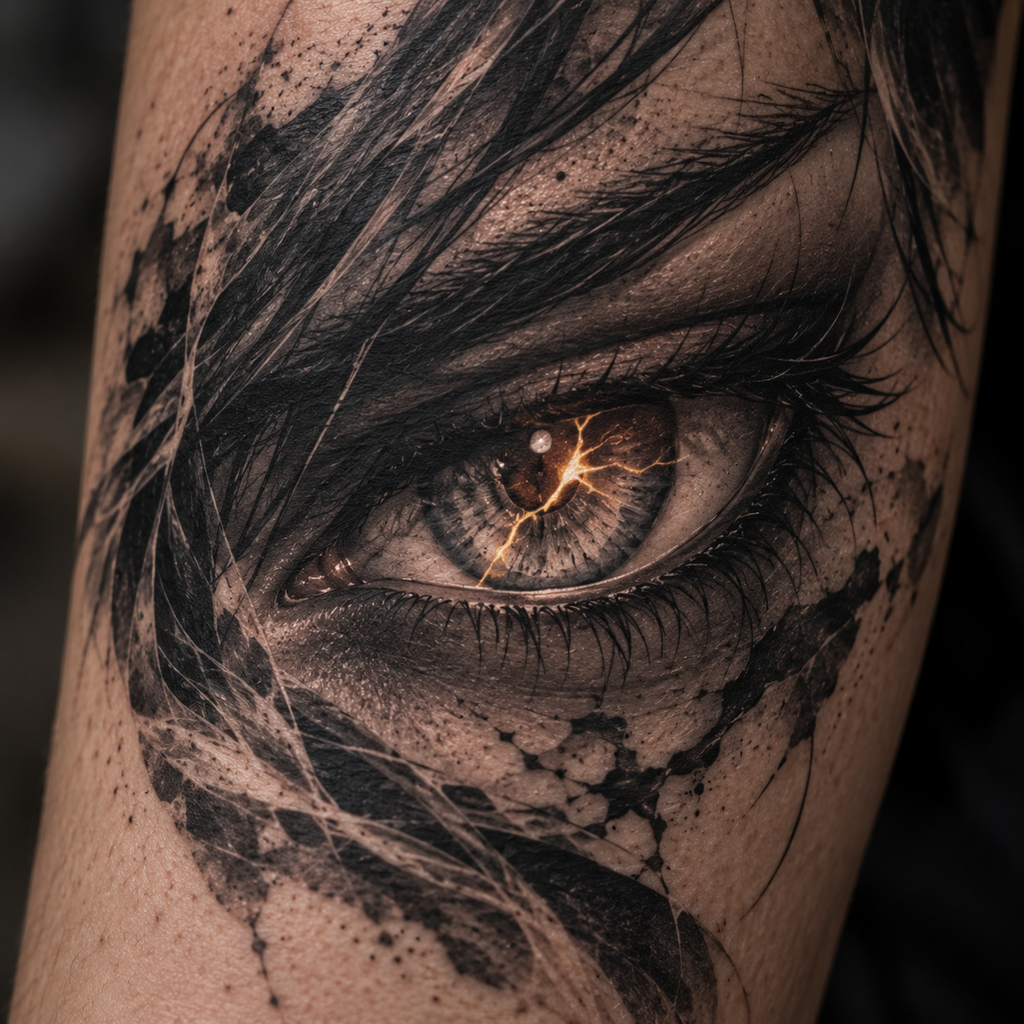
An original supernatural eye motif. A single close-up eye, rendered with realistic iris detail, reflected light, and surrounding shadow, carrying a subtle supernatural element (an unusual iris pattern, a faint glow, a crack of light across the pupil). Works at a smaller scale than the other concepts, since it’s a focused detail piece rather than a full figure.
An original dramatic portrait with cinematic lighting. A face or half-figure lit the way a film still is lit — strong directional light, deep shadow on one side, a rim of light on the other. This lighting approach is what makes realistic tattoos read as three-dimensional rather than flat, and it works across almost any subject.
Each of these is a starting point, not a finished design — the right artist will adjust proportion, composition, and detail level to fit the placement you choose.
Placement and Scale Considerations for Realistic-Style Work
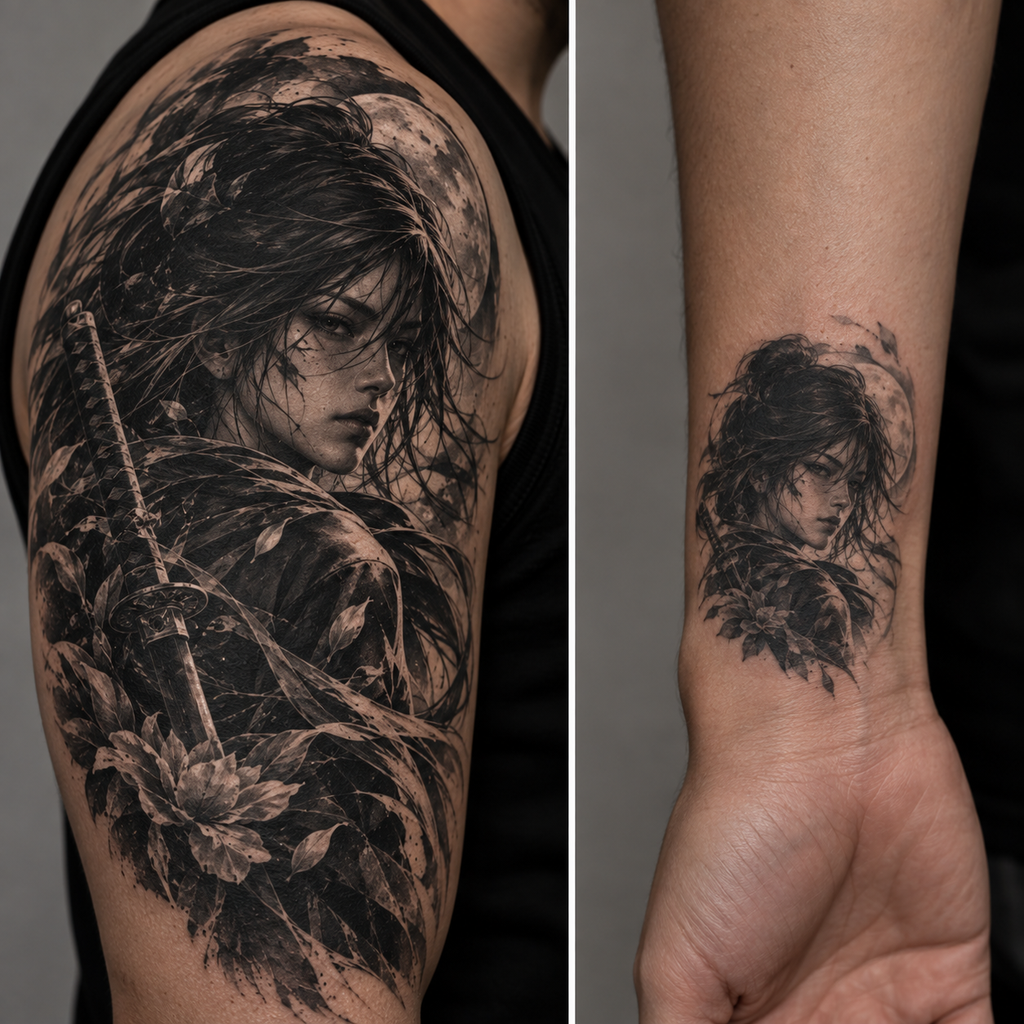
Realistic detail needs room. Fine shading gradients and tonal transitions read clearly on larger, flatter areas of skin — the forearm, upper arm, shoulder, or back — where the design has space to breathe and the artist has room to build up gradual shading.
Small or heavily curved areas make this harder. A wrist, ankle, or finger doesn’t hold fine tonal gradients the same way a forearm does, since there’s less flat surface for the shading to sit on and the curve of the skin can distort fine detail over time. If a design idea above appeals to you but you’re set on a smaller placement, expect the artist to simplify the shading and detail level to fit — a full realistic rendering rarely survives a shrink to a very small scale.
Because this style relies on layered shading rather than a single pass of solid color or clean line, it also tends to take more time in the chair, and more sessions, than a simpler black-outline design of the same size. That’s worth factoring into your planning alongside the design itself.
Choosing an Artist Who Specializes in Realism
Not every tattoo artist who does anime work does realism well — it’s a distinct skill from linework or flat color application. When you’re looking at portfolios, look specifically for black-and-grey or color-realism pieces, not just general anime-tattoo examples. An artist who’s strong at manga-panel or flash-style work isn’t automatically strong at photorealistic shading.
Pay attention to shading and gradient control in particular: does the transition between tones look smooth and deliberate, or patchy? For color realism, also look at how the artist handles skin-tone blending and whether colors sit naturally together rather than looking segmented.
Where possible, look at healed photos of an artist’s realistic work, not just fresh photos taken right after a session. Realistic shading can look different once it’s settled and healed, and healed photos give a much more honest picture of how the finished piece will actually look weeks later.
FAQ
Is black and grey realism its own tattoo style?
Not exactly on its own — black-and-grey is a technique and palette choice used within the realistic tattoo style, rather than a separate style in its own right. A tattoo can be realistic and done in black-and-grey, or realistic and done in color; the “realistic” part refers to the lifelike shading and depth, not the palette.
Is realistic anime tattooing harder to execute well than other anime tattoo styles?
It generally asks more of an artist’s shading and tonal-control skills than flatter styles like manga-panel or graphic color work, since the entire effect depends on gradual, believable shading rather than clean lines or flat fills. That’s part of why portfolio review matters more for this style specifically.
Does a realistic-style anime tattoo typically cost more?
It can, mainly because the layered shading this style relies on tends to take more time and often more sessions than a simpler design of the same size. Exact pricing depends on your artist, location, and the specific design, so it’s worth discussing directly with whoever you’re booking with.
What is the meaning behind a black and grey tattoo?
Black-and-grey doesn’t carry one fixed meaning on its own — it’s a shading technique, and the mood it creates (classic, moody, cinematic) comes from how it’s used in a given design rather than from the technique itself carrying symbolism.
Realistic anime tattoo ideas come down to a specific creative choice: trading flat, graphic anime style for depth, shading, and tonal accuracy. Whether you land on black-and-grey or color realism, the style rewards a bit more planning around placement, scale, and finding an artist whose realism portfolio actually backs up the work.


