How Much Does an Anime Tattoo Cost? A Size, Style, and Color Breakdown
How much does an anime tattoo cost? The honest answer is that size alone won’t tell you the price. Two tattoos of the same dimensions can cost very differently depending on color, linework, and how many characters or elements are packed into the design. This guide breaks down what actually drives anime tattoo pricing, what real design types cost according to named, working studios, and how to read a quote you’re handed so you know whether it’s reasonable before you book.
Table of Contents
- What Actually Drives Anime Tattoo Pricing (Beyond Just Size)
- Cost by Anime Design Type
- Artist Experience Tier and What It Changes
- What a Realistic Quote Looks Like
- Frequently Asked Questions
- Getting Your Number Right
What Actually Drives Anime Tattoo Pricing (Beyond Just Size)
Size sets a baseline, but anime-style work adds cost drivers that a generic tattoo of the same dimensions usually doesn’t carry.
Color density is the biggest one. A black-line symbol takes far less time than the same-size design filled with multiple flat colors or blended shading, since each color pass adds time in the chair. A single-color outline can often be finished in one clean pass, while a piece with three or four colors means the artist is stopping, switching, and reworking the same area multiple times to keep the transitions smooth.
Linework complexity matters just as much. Anime art often relies on fine, precise outlines and small internal details — hair strands, expression lines, small accessories, layered clothing folds — that take longer to execute cleanly than a bold, simple shape of the same overall size. A design that looks simple on paper can still take real time to tattoo well if it’s dense with small lines.
Character count is another factor specific to this style. A single character portrait is one thing; a scene with two or three characters, or a panel composition pulled from a page layout, multiplies the amount of linework and shading packed into the same footprint. More characters generally means more total detail even when the overall tattoo size doesn’t change.
Finally, shading style plays a role. Anime’s stylized proportions and cel-shaded look often require careful gradient work to read correctly at tattoo scale, which is more time-intensive than a flat, single-tone fill. Getting that shading to hold up well on skin — rather than blurring into a smudge over time — takes a level of care that adds to the session length.
What to Know Before Getting an Anime Tattoo covers more on how to prepare for these decisions before you sit down with an artist.
Put together, these four factors are why two anime tattoos at the same size can land in very different price brackets — and why the sections below organize cost by design type and color, not just by inches.
Cost by Anime Design Type
Instead of sizing a tattoo in inches alone, it helps to think about which of these three anime design categories you’re actually getting, since each one carries a different combination of the cost drivers above.

Symbols & Icons
Small, single-color anime-inspired symbols and icons sit at the lowest cost tier. Lunar Phase Tattoos, an anime/manga specialist studio, prices small anime pieces like these at around 1–2 hours of work for approximately $400. These designs rely on clean black-line work with little to no shading, which keeps both the time in the chair and the final cost down. If your budget is limited or this is your first anime tattoo, this tier is the most predictable place to start, since there’s little room for the design to balloon in scope once the linework is agreed on.
This tier also tends to be the fastest to book, since a short single-session appointment is easier for a studio to slot in than a longer, multi-hour piece. If you’re deciding between a symbol and a small character portrait purely on cost, the linework-only approach is where you’ll see the clearest savings.

Chibi & Minimal Character Portraits
Once you move into a character portrait — even a small, simplified one — color and detail start adding real time. Lunar Phase Tattoos’ small-to-medium colored character pieces take around 4 hours and run about $800. The jump from the symbol tier reflects the added linework needed for facial features and proportions, plus the color fills that a plain icon simply doesn’t need. Expect this tier to sit roughly double the symbol tier for a comparable physical size.

Full Scenes & Panel Compositions
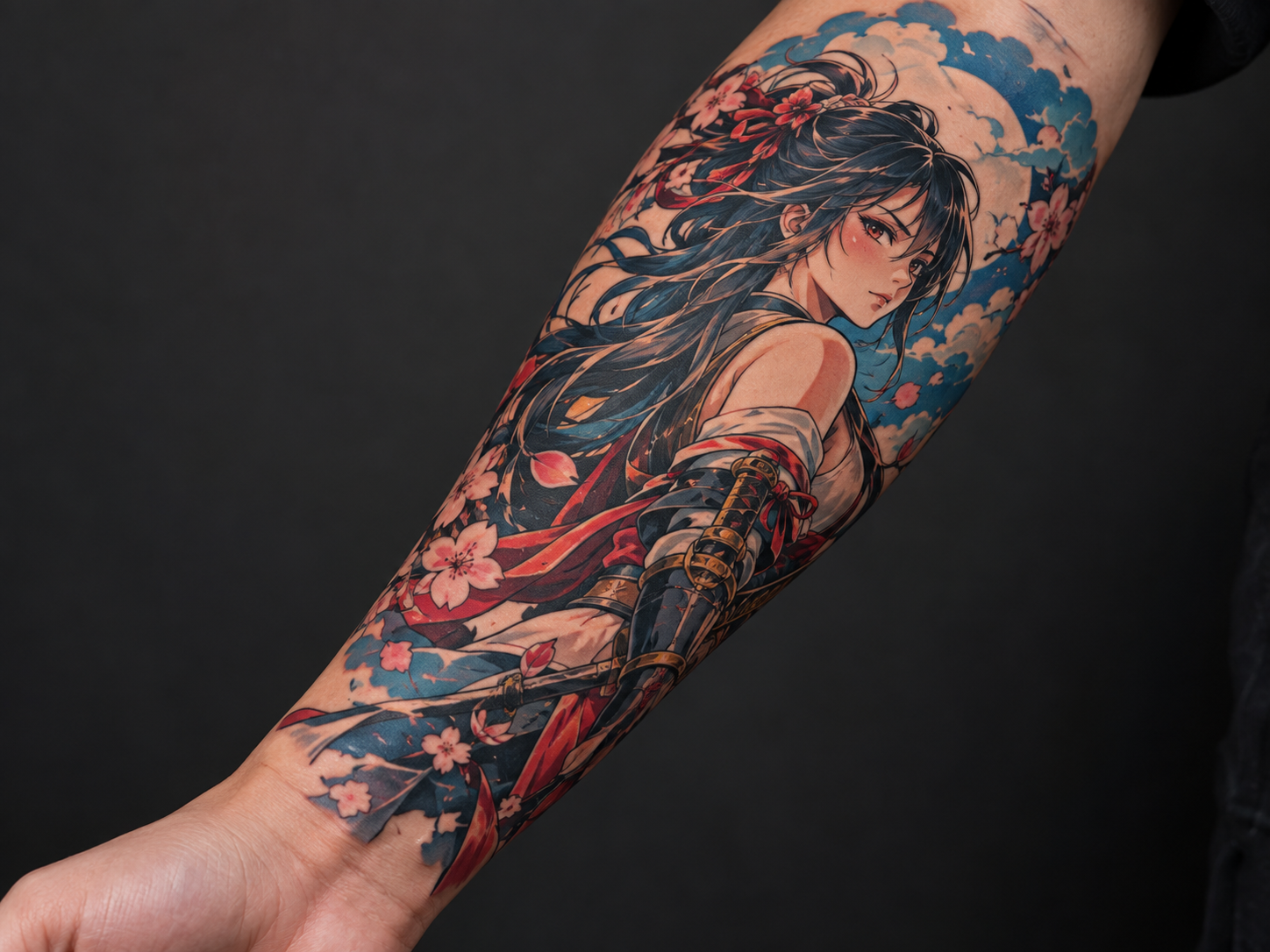
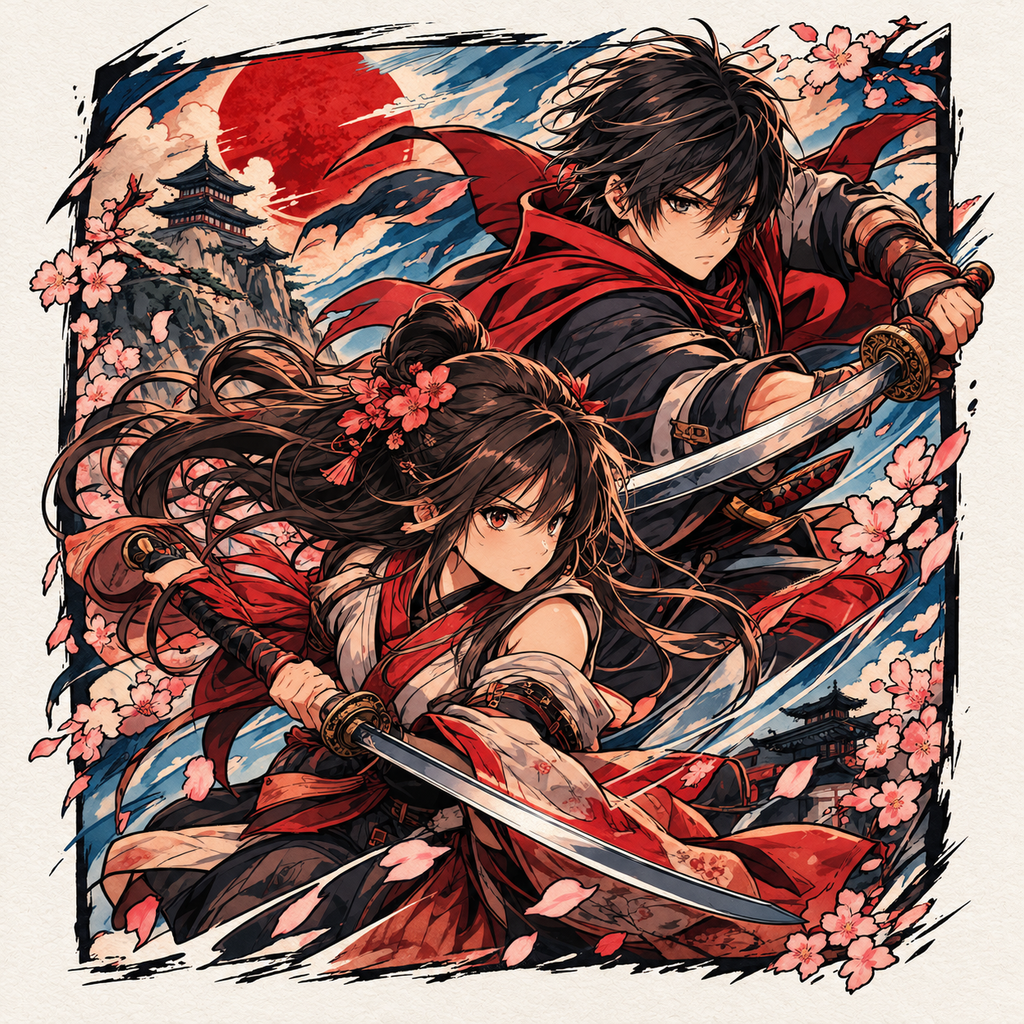
Full anime scenes or panel-style compositions — multiple characters, a background, or a layout pulled from a page — sit at the top of the cost range. Art Collector Tattoo Studio, a Los Angeles shop with a published 2026 pricing guide, lists a “Large Color Anime Tattoo” (roughly 8×5 inches, a full day session) at $800–$1,000 with a junior artist, $1,200–$1,600 with an experienced artist, and $2,000–$2,500 with a pro artist. Lunar Phase Tattoos’ extra-large character designs, which take 6–8 hours to complete, run around $2,000. At this tier, expect a longer session — often a full day or spread across multiple sessions — and a price that reflects both the physical size and the density of detail packed into it.
Artist Experience Tier and What It Changes
Who tattoos you changes the price as much as what you’re getting. According to Art Collector Tattoo Studio’s 2026 pricing guide, hourly rates break down roughly like this:
| Artist Tier | Typical Hourly Rate |
|---|---|
| Junior Artist (1–3 years) | $50–$130/hour |
| Experienced Artist (5+ years) | $150–$300/hour |
| Pro or Award-Winning Artist | $300+/hour |

A higher hourly rate doesn’t always mean a higher total cost. An experienced or pro artist often works faster and gets a design right in fewer sessions, while a junior artist may take longer to reach the same result — sometimes narrowing the total cost gap between tiers, especially on detailed anime work where clean linework and color blending benefit directly from experience. This is part of why the Full Scenes & Panel Compositions ranges above overlap between tiers: a junior artist’s lower hourly rate can still add up to a similar total once the extra session time is factored in.
For anime work specifically, artist experience also affects how well fine linework and shading hold their shape as the tattoo heals and ages. That’s a quality difference the hourly rate alone doesn’t fully capture, but it’s worth weighing against the upfront savings of a junior artist’s rate.
What a Realistic Quote Looks Like
Most studios will ask for a deposit to hold your appointment, which is typically applied toward the final cost rather than charged on top of it. For anything beyond a small symbol, expect the artist to want a brief consultation first — reference images, placement, and size all affect the final number, which is why a firm quote usually comes after that conversation rather than from a price list alone.
If your design includes color or multiple elements, ask the artist directly how they price it: by the piece, by the hour, or by session. That answer, compared against the design-type ranges above, is the fastest way to tell whether a quote is in a reasonable range for what you’re asking for. It’s also worth asking whether the quote already accounts for touch-ups, since some studios include one free touch-up session and others charge separately.
It’s normal for a quote to come in above what you expected if your reference images turn out to need more color or linework than you initially described. Rather than treating that as a red flag on its own, walk back through the cost drivers above with the artist — color density, linework, character count, and shading — and ask which one is pushing the number up. A studio that can explain that clearly is generally a good sign; one that can’t or won’t is worth a second opinion.
Placement matters too — a small anime symbol behind the ear or on the wrist will generally sit at the low end of the Symbols & Icons range, while the same design on a more sensitive or time-consuming area of the body can push the estimate higher, independent of the design itself.
This is general guidance on typical anime tattoo pricing, not a quote for your specific design — treat the ranges above as a starting point for your own research, and consult a licensed tattoo artist directly for a firm, written quote before you book.
Frequently Asked Questions
How big is a $100 tattoo?
At that price, you’re generally looking at a tiny design — a small anime symbol or icon under about 2 inches, done in simple black linework with no color or shading.
How big is a $200 tattoo?
A $200 budget typically covers a small symbol or icon tattoo, sometimes with a bit more line detail, still on the smaller end of the Symbols & Icons category described above.
How long does a $500 tattoo take?
Based on the design-type ranges above, $500 sits between a small symbol piece and a colored character portrait — realistically a couple of hours in the chair, depending on the artist’s experience tier and how much color the design needs.
How much does a custom anime tattoo design cost?
A custom, original anime design generally costs more than a flash-style (pre-drawn) piece of the same size, since the artist spends additional time developing the concept with you before the tattooing itself begins. Expect that development time to be reflected in the final quote rather than treated as free.
What is the cost of a tattoo?
For anime-style work specifically, cost depends less on a single number and more on design type, color, and artist experience. As broken down above, a small symbol can run a few hundred dollars, while a full color scene from an experienced or pro artist can reach into the thousands.
Getting Your Number Right
Anime tattoo pricing isn’t random — it follows the same handful of factors every time: how much color the design uses, how detailed the linework is, how many characters or elements are involved, and who’s holding the machine. Use the design-type breakdown above to figure out roughly where your idea falls, then confirm it against a real consultation with your chosen artist rather than relying on a single number from anywhere online.
Prices here are drawn from specific, named studios — Art Collector Tattoo Studio and Lunar Phase Tattoos — at a specific point in time, and will vary by region, artist, and current demand. Treat them as a realistic starting point for your own conversation, not a guarantee. Once your budget and design are settled, How to Remove an Anime Tattoo: Laser Removal, Cost, and What Your Ink Means for the Process is worth a read if you ever want to understand the other side of the cost equation, and our Anime Tattoo Aftercare: The Complete Healing and Color-Care Guide covers what happens right after you leave the chair.
For more on preparing for your appointment, see our full Tattoo Guides category hub.