Hannya Mask Tattoo Meaning: The Noh Demon of Jealousy and Its Difference from Oni
A hannya mask tattoo brings up one question almost immediately: whether it’s the same thing as an oni mask. The confusion is common enough that it shows up as its own search on Pinterest and across tattoo blogs, and it’s worth answering directly rather than treating the two demon faces as interchangeable. The hannya has a specific origin and a specific story — rooted in Noh theatre, where the mask originates — and understanding both is part of what makes this design one of the more layered entries in anime symbols and meanings. This guide covers where the mask actually comes from, what its colors signal, how it differs from an oni, and how to turn that meaning into a design you’ll still stand behind.
Table of Contents
Table of Contents
What Is a Hannya Mask? Origins in Noh Theater
The hannya is a mask used in Noh, Japan’s classical masked theater tradition. According to the Victoria and Albert Museum’s collection record for a hannya Noh mask, Noh was codified in the 14th century by the actors Kan’ami and Zeami under the patronage of the shogun Ashikaga Yoshimitsu, and the form developed around restraint, understatement, and precise, formalized movement.
The hannya mask itself represents a woman transformed into a demon by jealousy and obsession. The V&A’s own description calls it “a female serpent-demon filled with malicious jealousy and hatred,” worn by the lead performer in the second half of plays like Aoi no Ue and Dōjōji — stories where a woman is betrayed or spurned by her lover and returns as a vengeful spirit. In Aoi no Ue, the mask is worn by Lady Rokujō after her jealousy consumes her.
The name itself carries a twist: “hannya” is a Japanese rendering of the Sanskrit word prajñā, meaning wisdom. One account traces the name to a mask carver called Hannyabō, active in the late 15th or early 16th century. Despite the demonic face, the word behind it points to insight rather than malice — part of why the mask reads as tragic as much as frightening.
Hannya vs. Oni — What’s Actually the Difference?
Hannya and oni get lumped together constantly, but they come from different parts of Japanese folklore and mean different things.
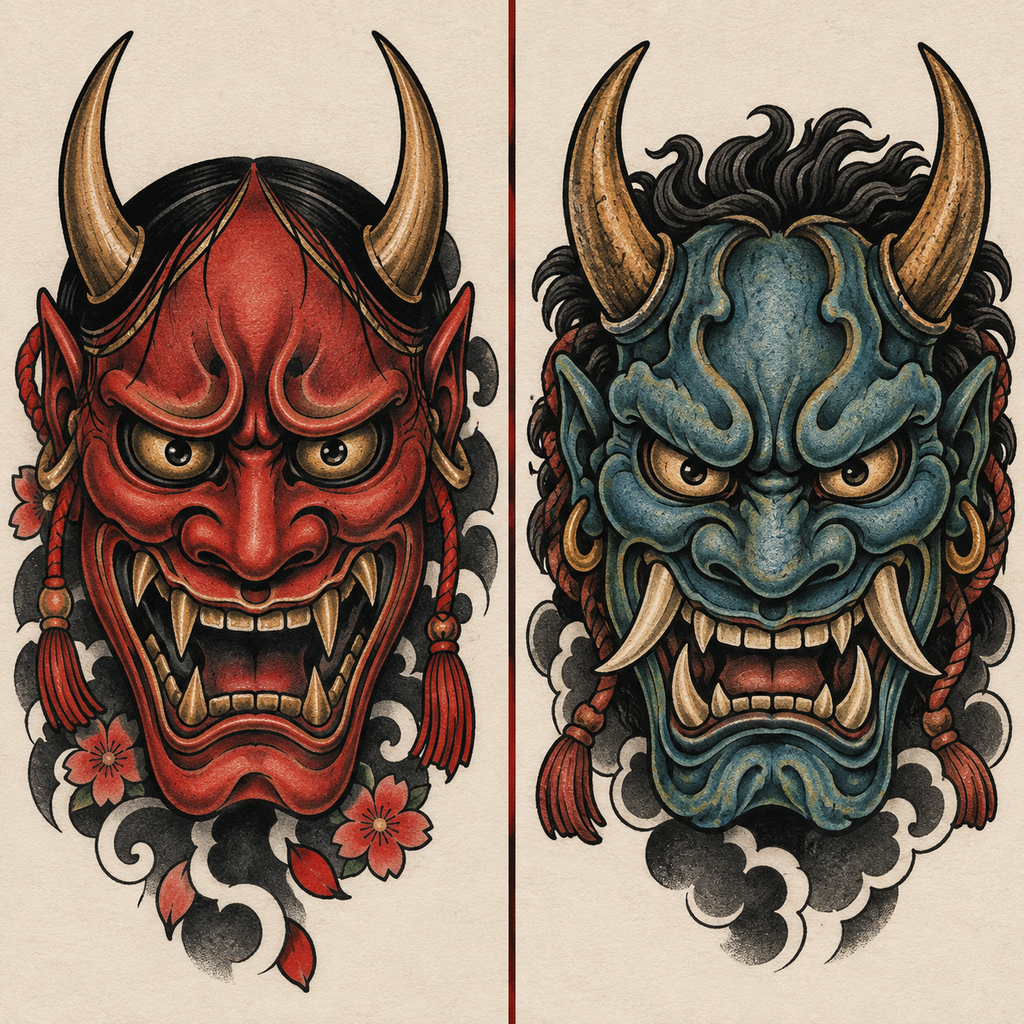
A hannya is a specific type of Noh mask: it represents one human woman, transformed into a demon by a very particular emotional collapse — jealousy, obsession, grief over betrayal. It has a name, a story, and a fixed dramatic context. An oni is broader: a general folklore category of demon or ogre, tied to Japanese folk tradition rather than to Noh theater specifically, and not built around a single woman’s transformation story.
| Hannya | Oni | |
|---|---|---|
| Origin | Noh theater, a specific mask type | Broader Japanese folklore, not Noh-specific |
| Represents | One woman transformed by jealousy and obsession | A general demon or ogre figure |
| Story basis | Tied to specific Noh plays (Aoi no Ue, Dōjōji) | Not tied to a single named story |
| Core meaning | Personal transformation through betrayal and rage | A broader demonic or destructive force |
Neither is “worse” or “scarier” than the other — they’re simply answering different questions. A hannya tattoo is about a specific transformation. An oni tattoo is about a broader kind of demon entirely. Knowing which one you actually mean is the first real design decision.
What the Hannya Mask’s Colors Mean
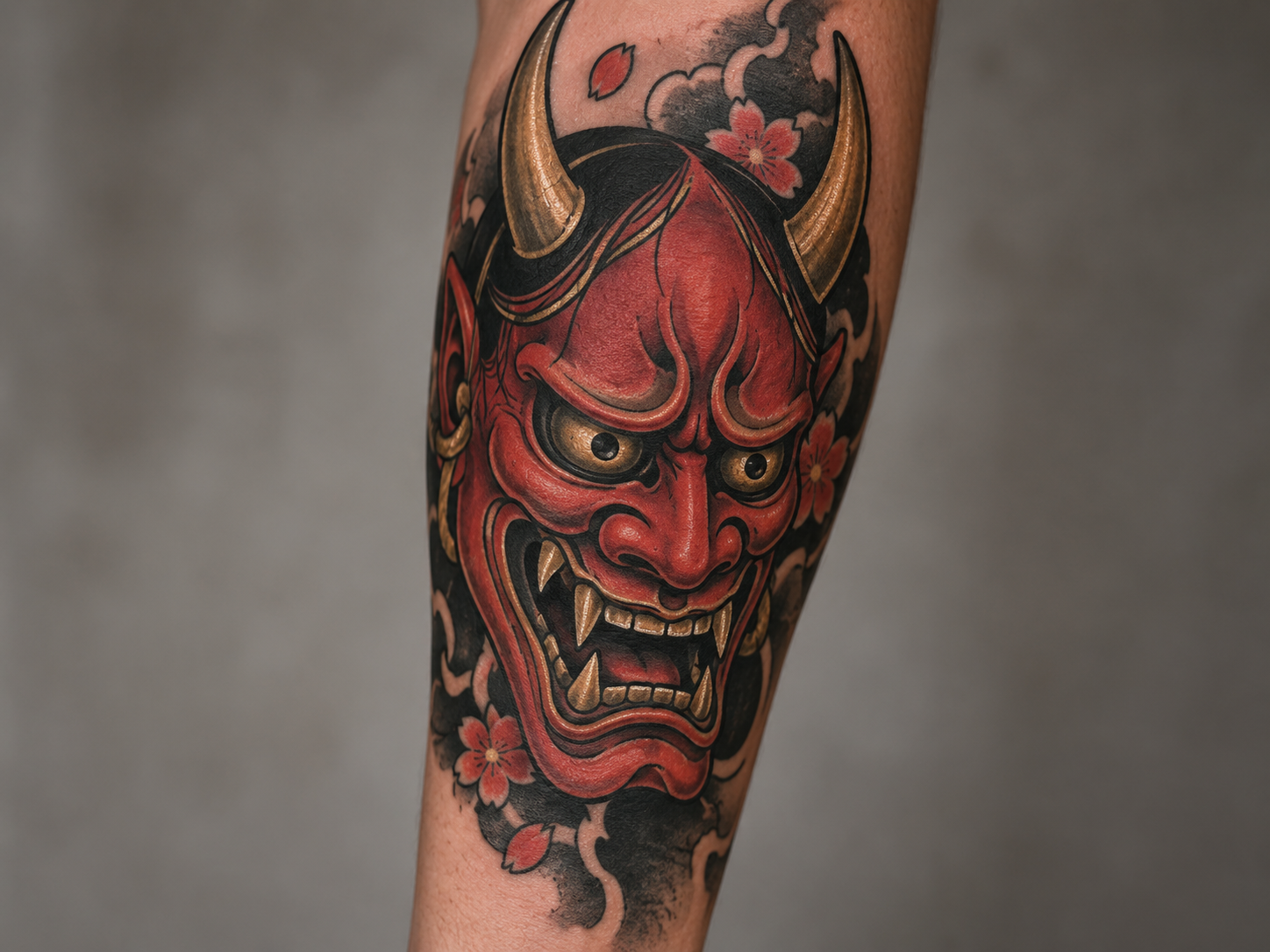
Hannya masks aren’t made in one fixed color, and the color carries meaning. Based on the V&A’s mask record and further detail on the mask’s variations, a lighter or white-toned hannya indicates a woman of refined or aristocratic status — Lady Rokujō’s mask in Aoi no Ue is an example. A red-toned hannya represents a less refined, lower-status figure, such as the peasant spirit that appears in Dōjōji. The darkest red tones are reserved for masks representing a fuller demonic transformation, worn by figures who first appear human before being revealed as demons.
This detail matters for a tattoo because it’s an easy way to make a design specific rather than generic. A pale, restrained hannya reads as tragic and aristocratic. A deep red one reads as fully consumed by rage. Note: these color associations are well documented for the Noh mask itself; treat them as the current best understanding for a tattoo context rather than a fixed rulebook.
Hannya Masks in Anime
Demon and yokai-style masks, including hannya-style faces, show up regularly in anime and manga as a visual shorthand for a character hiding something — rage, a double nature, or a threat behind a calm exterior. This is a recurring design language across the medium rather than a reference to any single show or character, and it’s part of why hannya imagery translates so naturally into tattoo work for anime fans: the mask already does visual storytelling work that anime art also relies on.
If mask-based yokai symbolism is what draws you to this design, InkShonen’s guide to the kitsune mask covers a very different fox-spirit tradition that carries the same kind of layered, dual meaning.
Choosing Your Hannya — Design Elements That Signal Meaning
A few concrete choices shape what your hannya tattoo actually communicates:
- Expression angle. The mask’s most famous feature is that it reads differently depending on the angle: straight on, it looks furious; tilted down, the same carved face reads as sorrowful. A tattoo can lean into either reading through the angle of the head and the linework around the eyes and brow.
- Color. As covered above, paler tones lean tragic and refined; deeper reds lean toward full demonic rage.
- Horn and fang detail. Sharper, more pronounced horns and longer fangs push the design toward pure menace. Softer, shorter features keep some of the mask’s sorrowful side visible.
None of these choices are mandatory. They’re a vocabulary for making sure the finished tattoo says what you actually mean by it.
Placement and Style Pairing for Hannya Mask Tattoos
A single hannya mask works well as a contained piece on the forearm, shoulder, or upper arm, where it can be read clearly at normal viewing distance. A larger composition — the mask alongside flames, waves, or a fuller background scene — needs more room, making the back, chest, or thigh better suited to the design.
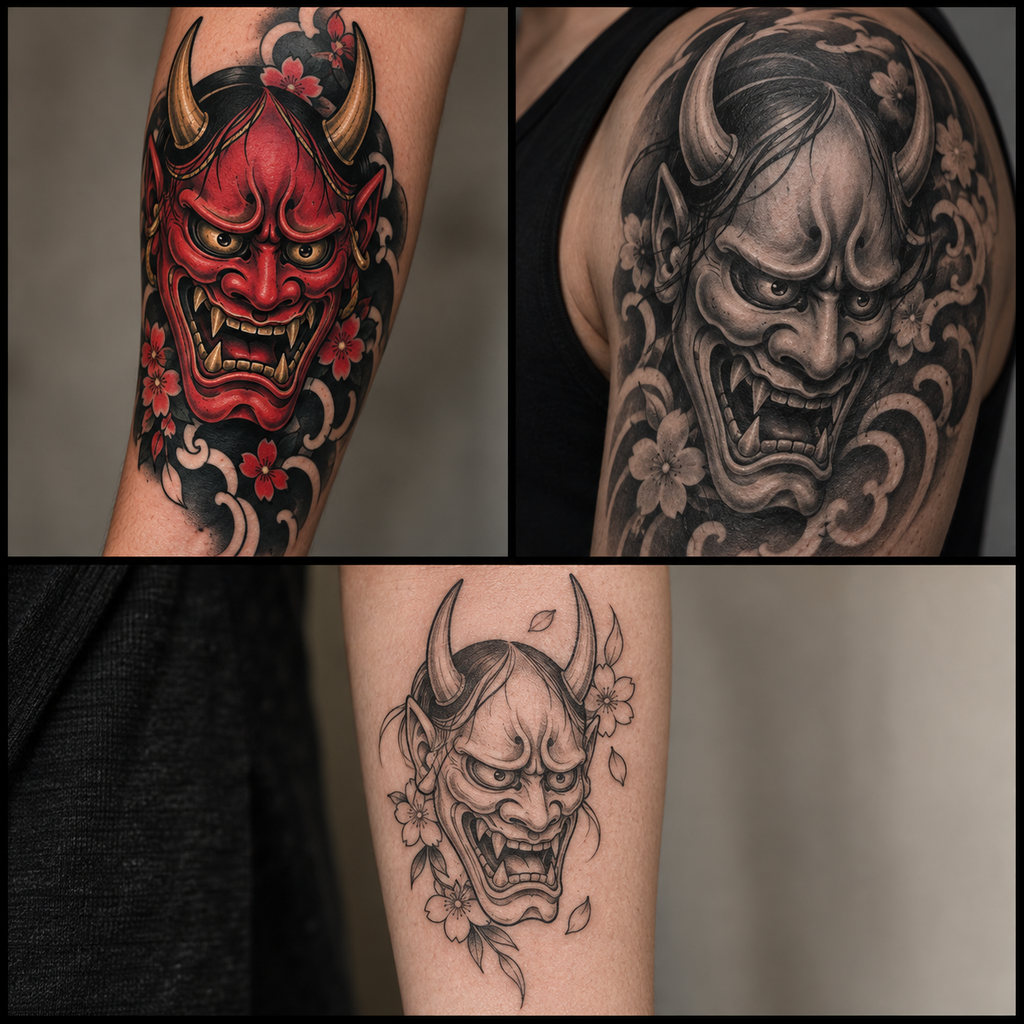
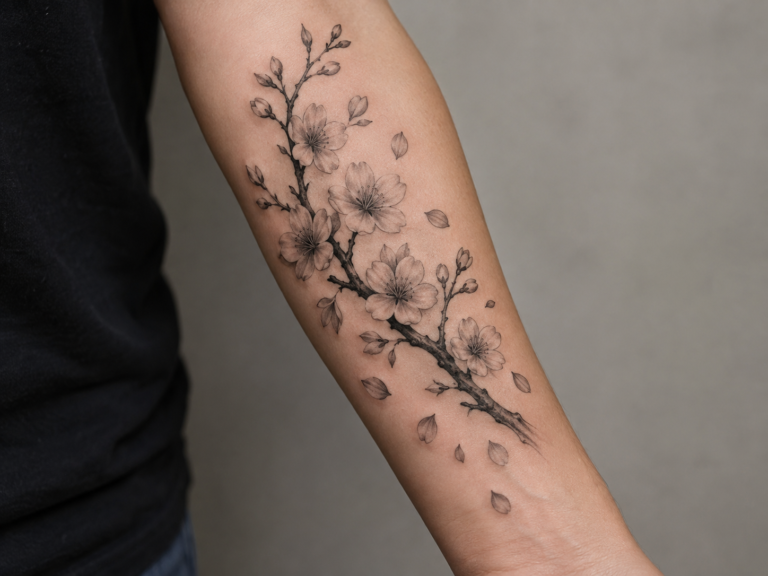
Style changes the tone as much as placement does. Traditional Japanese color work (Irezumi) with bold outlines and a limited, saturated palette gives the mask a classic, high-contrast presence. Black and grey realism trades that boldness for shadow and texture, making the transformation from human to demon feel more like a photographed moment than a graphic one. Fine-line work can work for a smaller, more restrained hannya, particularly in a paler color scheme.
Is a Hannya Mask Tattoo Disrespectful?
Noh theater is a real, still-performed classical Japanese art form, not a fictional invention created for tattoo culture. That doesn’t make a hannya tattoo off-limits, but it’s worth approaching with the same awareness you’d bring to any symbol drawn from a living tradition rather than a generic “cool mask” aesthetic. Getting a hannya tattoo because the story and the craftsmanship behind the mask genuinely interest you is a different thing from picking it purely because it looks intense with no sense of where it came from. Understanding the mask’s actual origin and meaning, which is what this guide has been building toward, is itself a meaningful step in getting the design — and the reasons behind it — right.
Frequently Asked Questions
What does a hannya mask tattoo mean?
It represents a woman transformed into a demon through jealousy and obsession, drawn from Japanese Noh theater. Depending on the design, it can emphasize the tragedy of that transformation or the rage that drives it.
What’s the difference between a hannya and an oni mask?
A hannya is a specific Noh mask representing one woman’s transformation into a demon through jealousy. An oni is a broader Japanese folklore category of demon or ogre, not tied to that specific story or to Noh theater.
Is a hannya mask tattoo disrespectful?
Not inherently. Noh theater is a real, actively practiced art form, so the difference comes down to approaching the symbol with genuine interest in its meaning rather than treating it as a generic scary face.
Can a hannya mask tattoo mean something positive?
The word “hannya” itself comes from a Sanskrit word for wisdom, and the mask’s story is as much about tragedy as menace. Many people read the design as being about resilience through pain rather than rage alone.
What does “hannya” mean in Japanese?
It’s a Japanese rendering of the Sanskrit word prajñā, meaning wisdom — a contrast to the mask’s demonic appearance that’s part of what makes the symbol layered rather than one-note.
This article covers cultural and design information only. It isn’t tattoo-artist or medical advice — talk to a licensed, experienced artist about what will and won’t work for your skin, size, and placement.