Small Anime Tattoo Ideas: Designs, Placement, and What Actually Holds Up
Small anime tattoos are everywhere on Pinterest, but most of what shows up is a name-list of characters with no explanation of why a design works small or where to put it. If you’re looking at small anime tattoo ideas, you’re probably weighing three things at once: what design direction fits the space, which placement actually makes sense for your life, and whether the detail you like today will still look sharp in five years — placement and skin type both affect that longevity, which the American Academy of Dermatology’s tattoo safety guidance covers in more depth.
This guide covers all three, in that order, because the order matters. Picking a design before understanding how size affects it is how people end up with a blurry blob instead of the clean piece they wanted.
None of this requires overthinking the tattoo before you get it. It just means looking at the decision in the right order instead of picking a picture first and hoping it holds up later.
Table of Contents
What Makes a Small Anime Tattoo Work (Style-to-Size Fit)
Before looking at specific designs, it helps to understand what actually survives at small scale, because this is the part most small-anime-tattoo lists skip entirely.
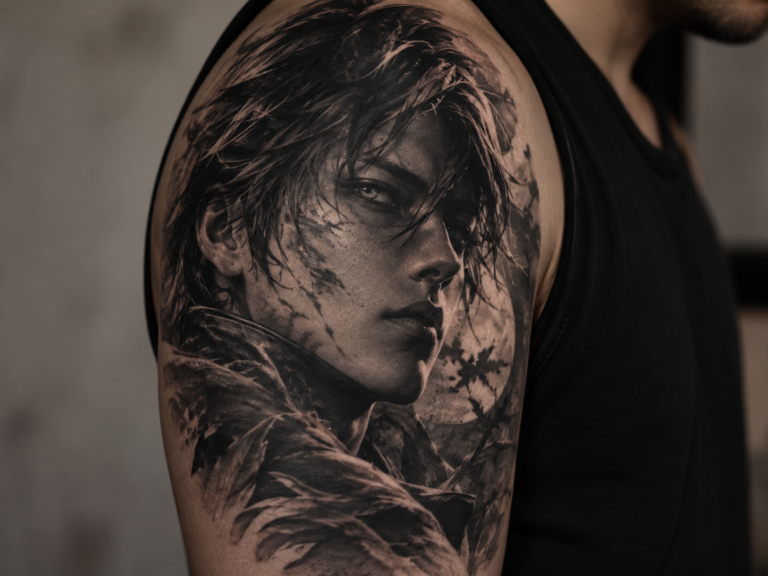
Anime art often relies on fine detail: layered shading, thin gradient lines, small facial features, intricate backgrounds. That level of detail works on a page or a screen. It does not hold up the same way on a one-to-two-inch tattoo. Skin isn’t paper. Ink spreads slightly under the skin over time, and lines that are too thin or too close together blur into each other as the tattoo ages. A detailed character portrait shrunk down to fit a wrist often looks less like the character and more like a smudge within a few years, even with a skilled artist.
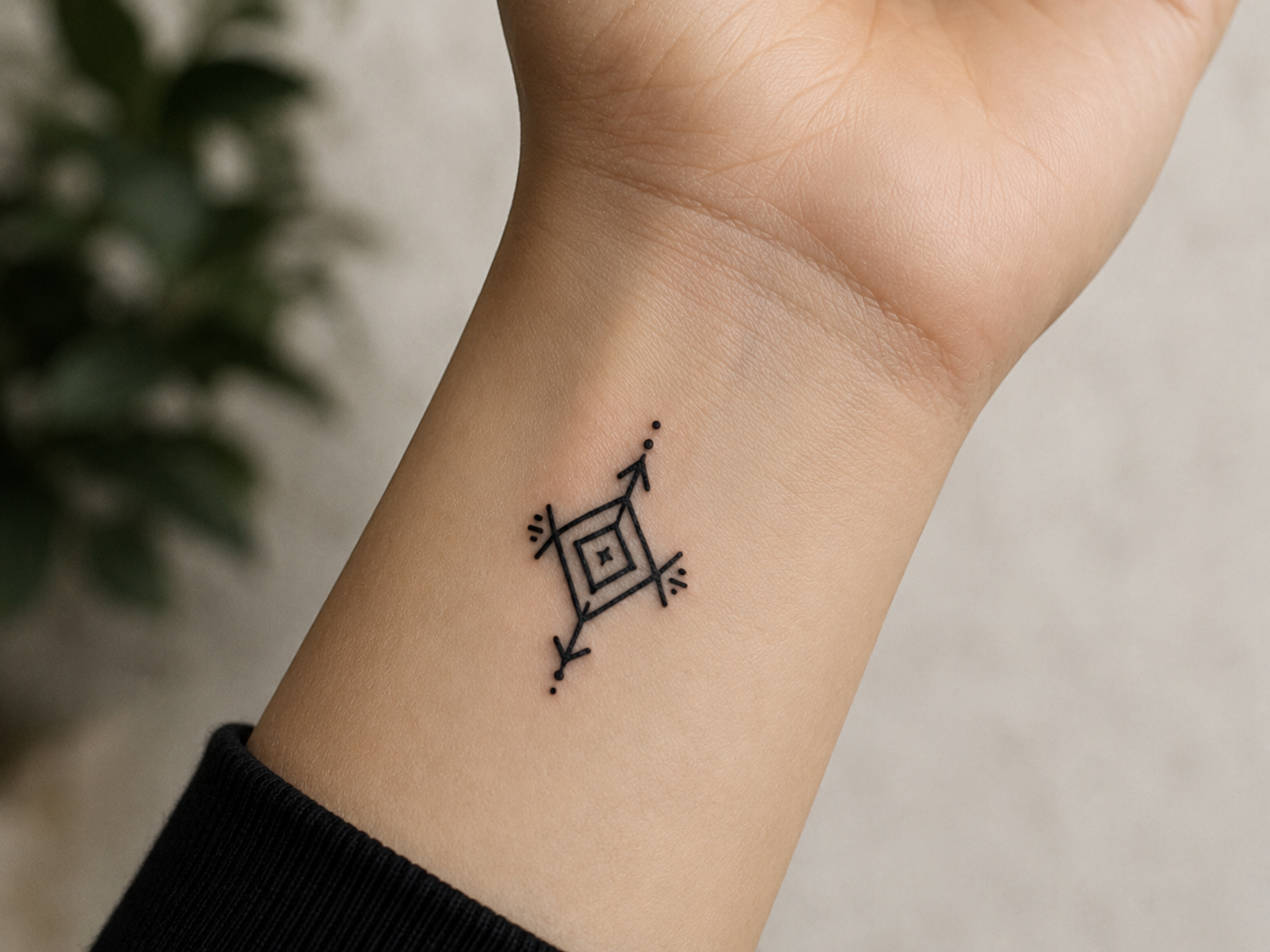
What holds up instead: bold single-line work, solid-fill shapes, and clear symbol-based designs. A single thick outline of a shape reads clearly at any age. A solid black silhouette doesn’t rely on internal detail to be recognizable. A symbol with simple geometry, such as a crest, a mark, or a clean icon, keeps its shape because there’s less for the ink to blur into.
A useful rule of thumb: if you can’t tell what a design is when it’s shrunk down to the size of a postage stamp on your screen, it’s too detailed for a small tattoo. Tattoo artists generally advise simplifying a design specifically for small placements rather than just scaling down a detailed piece, because scaling down without simplifying is exactly what causes the blurring problem later.
This doesn’t mean small anime tattoos have to be plain. It means the design choice has to account for size from the start, not as an afterthought.
Small Anime Tattoo Design Ideas by Category
With style-to-size fit in mind, here are the design directions that actually work small, organized by category instead of as one long character list.
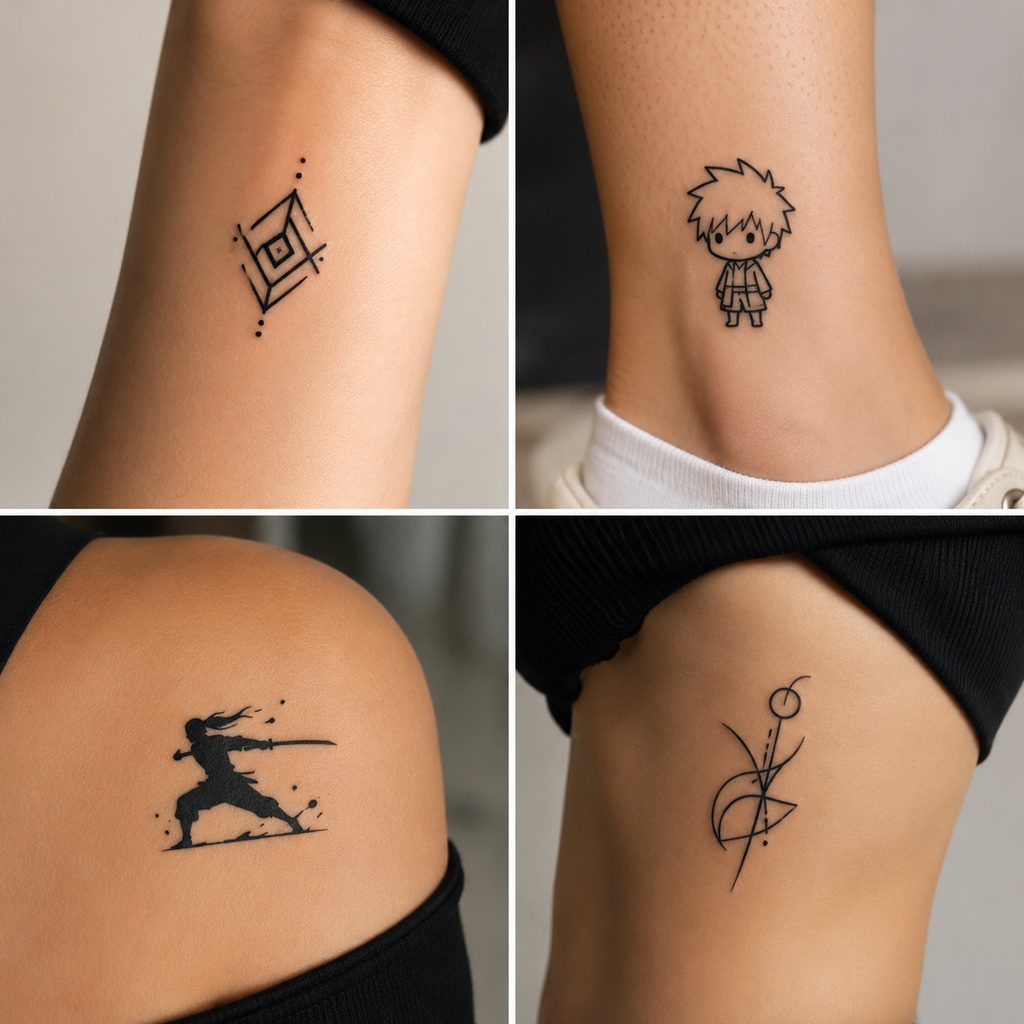
Symbols and icons. Clan marks, guild emblems, and other simple insignia are some of the most reliable small anime tattoo choices, because they’re built to be recognizable at a glance even in the source material. A small mark inspired by a hidden-village emblem, done as a clean single-color symbol rather than a detailed reproduction, is a good example of a design that was already built for this kind of simplicity. The same logic applies to any simple emblem style, not just one franchise’s version of it.
Chibi-style minis. The exaggerated, simplified proportions of chibi art (big head, small body, minimal facial detail) translate well to small tattoos because they’re already stripped down. A chibi version of a character holds its shape better than a realistic portrait of the same character at the same size. That’s less about art style preference and more about which version of a character actually survives being shrunk down to an inch or two of skin.
Minimalist character silhouettes. Instead of a detailed face or full character, a silhouette captures a recognizable pose or outline with a single solid shape. This works especially well for characters with a distinctive silhouette, such as a particular hairstyle, weapon, or stance, since the recognition comes from the outline, not the internal detail.
Original, non-franchise motifs. Not every small anime tattoo needs to reference a specific show. Anime as a visual style has its own recognizable elements, including certain line qualities, a particular way of drawing motion or expression, and stylized natural imagery, that can be used to build an original design inspired by the aesthetic rather than tied to one series or character. This direction is worth taking seriously rather than treating as a fallback: it gives you a design that reads as anime-inspired without depending on staying attached to one specific show, and it sidesteps any question of whether a design copies someone else’s artwork too closely.
Across all four categories, the same rule from the section above applies: simple shapes and clear lines hold up, dense detail doesn’t.
Best Placements for Small Anime Tattoo Ideas
Placement lists usually just name a few popular anime tattoo placements. What actually matters is the trade-off at each one, since “popular” doesn’t mean “right for you.”
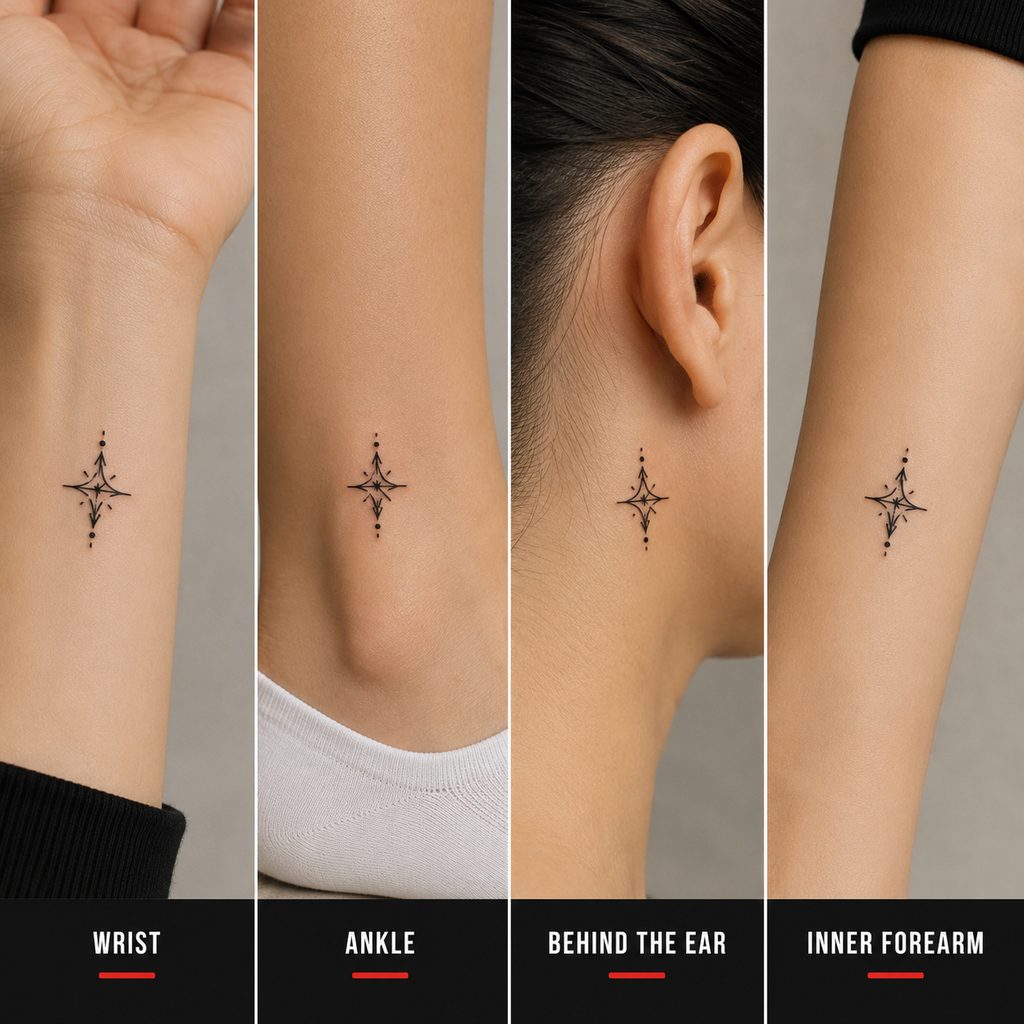
Wrist. A common choice for small designs because it’s easy to see and easy to show. The trade-off: the wrist moves constantly and the skin there is thinner, so linework needs to be precise, and the tattoo is more exposed to sun and friction than most other spots.
Ankle. Similar visibility appeal to the wrist, but with a longer healing time. The ankle sits in a high-friction zone from socks and shoes, which slows healing and can affect how crisply the tattoo settles in.
Behind the ear. One of the more discreet placements, easy to cover with hair. It’s also a thin-skin area, which tends to mean more discomfort during the session and somewhat faster fading than places with thicker skin.
Inner forearm. A flatter, more stable canvas than the wrist or ankle, with less friction from clothing or movement. This tends to be a more forgiving placement for detail retention over time, without needing to size up to a larger design.
Collarbone. Visible when you want it to be, easy to keep covered when you don’t. The skin over the collarbone is thin and close to bone, so this placement is generally more sensitive during the tattoo session itself.
None of these is automatically the “best” placement. The wrist and ankle prioritize visibility over easy healing; the inner forearm prioritizes stability and longevity over that same visibility. Pain level follows a similar pattern: thinner-skin spots like behind the ear and the collarbone tend to be more sensitive, while the inner forearm is usually more comfortable. Match the placement to what you actually want from the tattoo, not just what looks good in a photo.
How Long Small Anime Tattoos Actually Last
This follows directly from the two sections above, because style and placement are what determine how a small anime tattoo ages.
Fine detail fades and blurs faster than bold linework at any size, but the effect is more noticeable on small tattoos because there’s less room for lines to drift before they start touching each other. A detailed design that already looked slightly soft at the six-month mark will look softer still years later. A bold, simple design has more margin before the same drift becomes visible.
Placement affects this too. High-friction, high-exposure spots such as the wrist, the ankle, and the hands tend to show fading and softening sooner than more protected areas like the inner forearm, because of repeated sun exposure, friction from clothing, and general wear. This doesn’t mean avoiding those placements; it means expecting a small design there to need a touch-up sooner than the same design somewhere more protected.
Realistically, most small tattoos benefit from an occasional touch-up regardless of placement or style, simply because ink settles and softens over time. A simple design is easier and cheaper to touch up than a detailed one, since there’s less fine work to restore. How well any individual tattoo ages also depends on skin type, sun care, and the artist’s technique, so treat the guidance here as general tendencies, not guarantees for your specific case. A quick conversation with the artist about which of your specific design and placement choices will need earlier upkeep is worth more than any general rule.
Anime-Inspired vs. Character-Specific: Choosing a Design You Won’t Outgrow
There’s a real decision buried in most small anime tattoo choices that rarely gets addressed directly: do you want a design tied to one specific character or series, or one that reads as anime-inspired without being locked to a single show?
A character-specific design, such as a particular character’s face, a show’s exact logo, or a scene reproduced in miniature, carries real meaning if that character or story genuinely matters to you. But it also ties the tattoo permanently to that one attachment. If your taste shifts away from that series later, the tattoo doesn’t shift with it.
An anime-inspired design, such as a symbol built in the spirit of a franchise’s emblems rather than a copy of one, a chibi-style figure that isn’t a specific character, or an original motif using anime’s visual language, keeps the aesthetic you like without pinning the tattoo to one specific attachment. It’s not a lesser option or a compromise; for a lot of people, it’s the more durable choice precisely because it doesn’t depend on staying a fan of one particular thing.
Either direction is valid. The point is to choose deliberately rather than defaulting to whatever character is popular right now, and to keep any design that references a specific franchise in “inspired by” territory: an original piece built around the idea of a symbol or character, not a direct reproduction of someone else’s official artwork.
FAQ
What is the best placement for a small anime tattoo?
There isn’t one universal best placement; it depends on what you’re optimizing for. The wrist and ankle offer visibility but involve more movement and friction. The inner forearm offers a flatter, more stable canvas with generally easier healing. Behind the ear and the collarbone are more discreet but sit over thinner skin.
Do small anime tattoos fade faster than larger ones?
Fading itself isn’t necessarily faster at small sizes, but the effects of normal fading and ink spread are more noticeable, because small tattoos have less room for lines to drift before detail starts blurring together. Placement also matters: high-friction, high-exposure spots tend to show wear sooner than more protected areas.
How much detail can a small anime tattoo actually hold?
Less than most reference images suggest. Bold single-line work, solid shapes, and simple symbols hold their form well at small sizes. Fine shading, thin gradient lines, and detailed facial features tend to blur together over time. If a design isn’t recognizable when shrunk down small on a screen, it’s too detailed to hold up as an actual small tattoo.
Small anime tattoos work best when the design is chosen for its size from the start, not scaled down from something more detailed after the fact. Match a simple, well-built design to a placement that fits how you actually live, and it will hold its shape for years instead of turning into a soft outline you can no longer quite make out.