Manga Panel Anime Tattoo Ideas: The Style Everyone’s Copying Right Now
Manga panel tattoos turn a page of a comic into a tattoo, and most pages about them are just a wall of images with no explanation of what you’re actually looking at. If you’re browsing manga panel tattoo ideas and the style already appeals to you, you still have real decisions to make: which version of the style fits what you want, where it will actually look right on your body, and whether the fine detail this style depends on will hold up over time — fine linework in particular is sensitive to placement and aftercare, something the American Academy of Dermatology’s tattoo safety guidance addresses directly.
What Makes a Tattoo Read as a ‘Manga Panel’
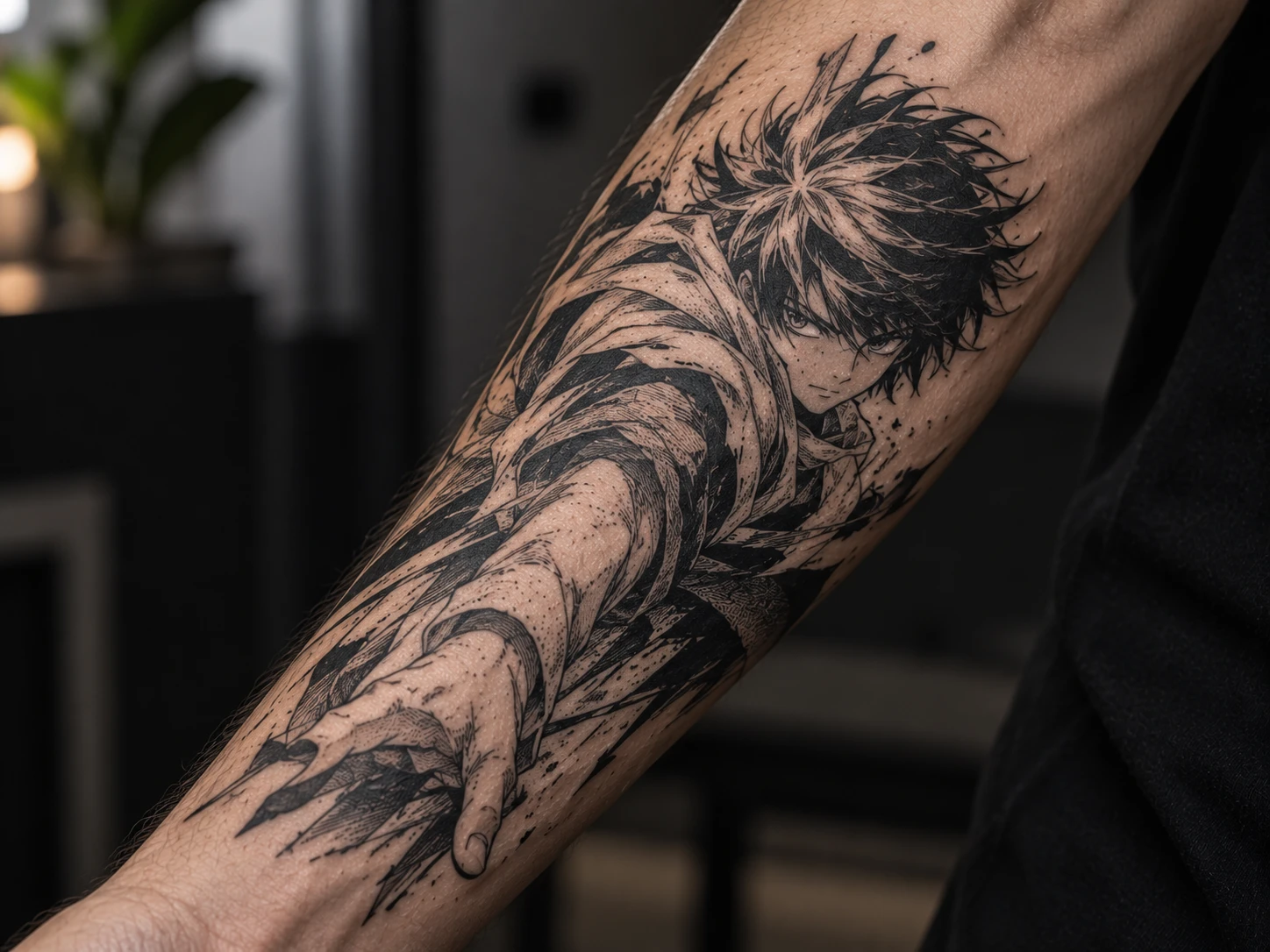
A manga panel tattoo doesn’t need an actual border to read as a “panel.” The border is one option among several, not a requirement. Plenty of the strongest examples skip the frame entirely and let the character or scene sit directly on the skin.
What actually carries the style is the visual language underneath it: clean linework, screentone-style shading translated into tattoo-appropriate texture, and a black-and-grey base palette. Manga art relies on contrast and line quality rather than color, which is exactly why it tends to translate well to tattooing. Color isn’t off the table, but it’s usually treated as an accent rather than the main event, since a fully colored piece starts to look like a different style altogether.
Choosing Your Panel-Style Variant
This is the decision that shapes everything else, and it’s also the one most tattoo inspiration boards skip entirely. There are four common variants, and each comes with a real tradeoff worth knowing before you commit.
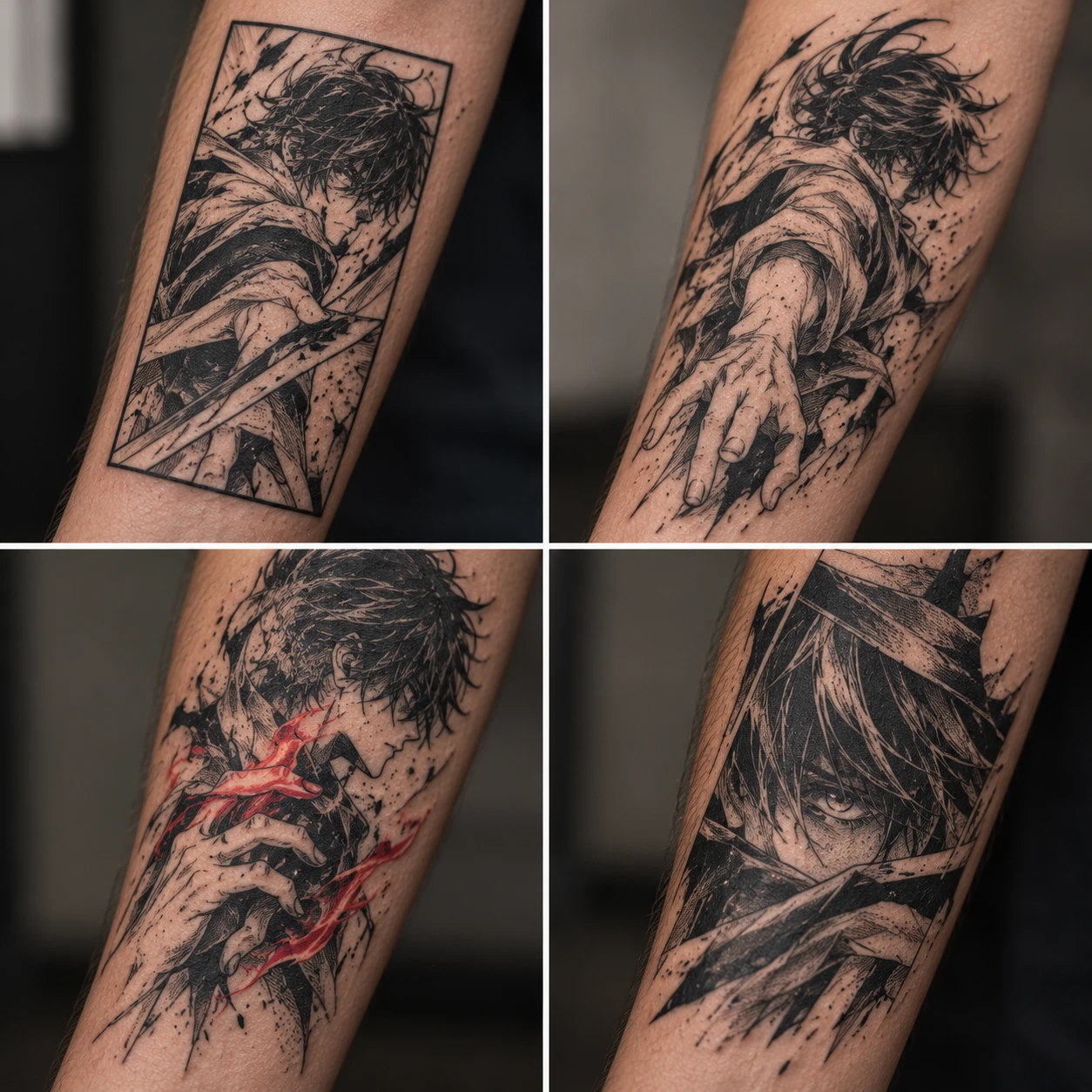
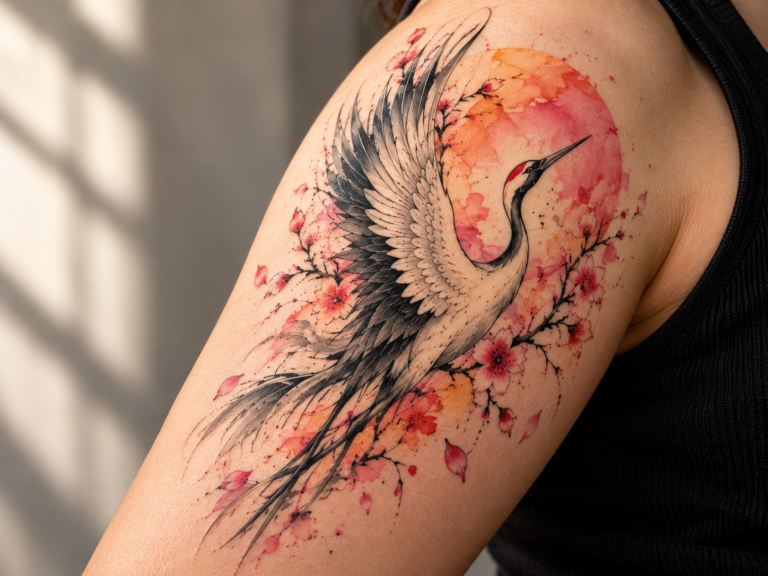
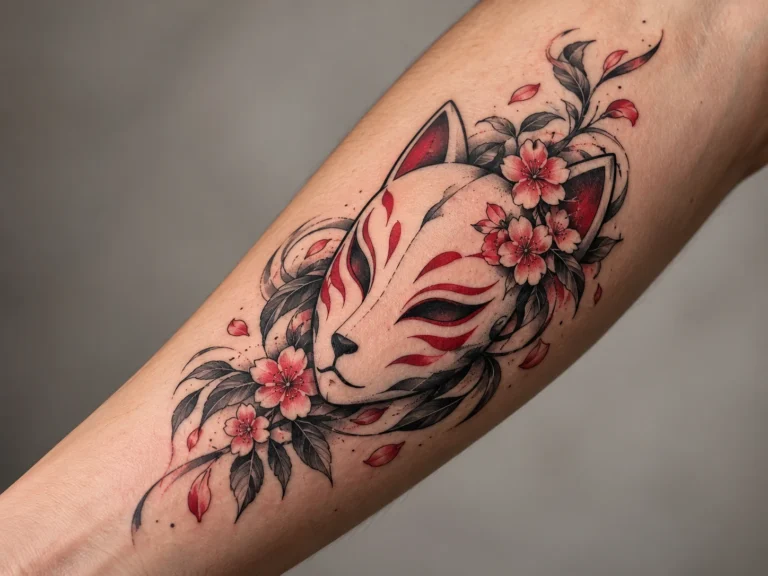
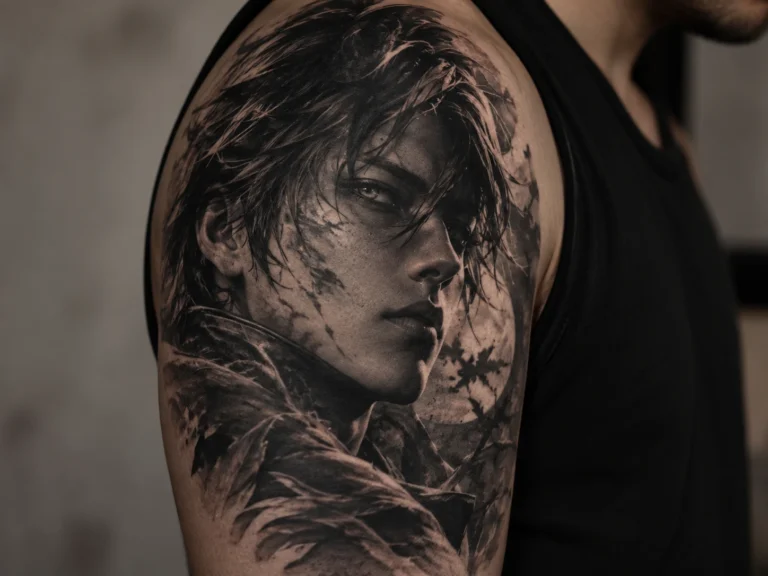
Illustrative concept images: AI-generated artwork created to explore tattoo design ideas. They do not represent verified tattoos performed on real clients.
| Variant | What it looks like | Best for | Main tradeoff |
|---|---|---|---|
| Classic Bordered Panel | A visible rectangular or panel-shaped frame around the scene, mimicking a literal page panel | Readers who want the tattoo to clearly announce itself as “from a comic page” | Can read as more literal or “screenshot-like” than other variants |
| Borderless | The same panel content with no frame — the character or scene sits directly on skin with open negative space around it | Anyone who wants the manga energy without it looking boxed-in | Loses the instantly-recognizable “panel” cue some people are specifically going for |
| Color-Pop Accent | Black-and-grey base linework with one restrained color element added — a single object, a background splash, or a small accent | People who want a focal point without a full-color piece | Needs real restraint — more than one color family starts to compete with the linework instead of supporting it |
| Full Black-and-Grey | No color at all, leaning fully into contrast, shading, and line weight | People who want the cleanest, most classic manga look and the simplest long-term maintenance | Offers the least visual variety of the four, which can feel limiting for a larger or more detailed piece |
Classic Bordered Panel
The border is what most people picture first when they hear “manga panel tattoo.” It works well when the goal is an unmistakable reference to the source format itself, and it gives the artist a clear compositional edge to design around. The tradeoff is that a bordered panel can start to look like a direct copy of a printed page rather than a standalone tattoo, so the content inside the border matters more here than in any other variant.
Borderless
Dropping the frame changes the feel more than it changes the content. The character or scene still reads as manga-style through the linework and shading alone, but it sits on the body more like a portrait or illustration than a page excerpt. This variant tends to age into the skin more naturally, since there’s no hard geometric edge to keep crisp as the tattoo settles.
Color-Pop Accent
A single, restrained color choice can turn an otherwise black-and-grey piece into something with a clear focal point. The key is picking one color family and keeping the colored area simple: a glow, a splash or a small object works better than trying to color in several separate elements. The black linework should still be doing most of the visual work; the color is there to support it, not compete with it.
Full Black-and-Grey
This is the lowest-maintenance and most classic-reading of the four variants. A full black-and-grey piece puts all the emphasis on linework and shading quality, which makes choosing the right artist even more important for this variant than the others.
Matching Panel Shape to Placement
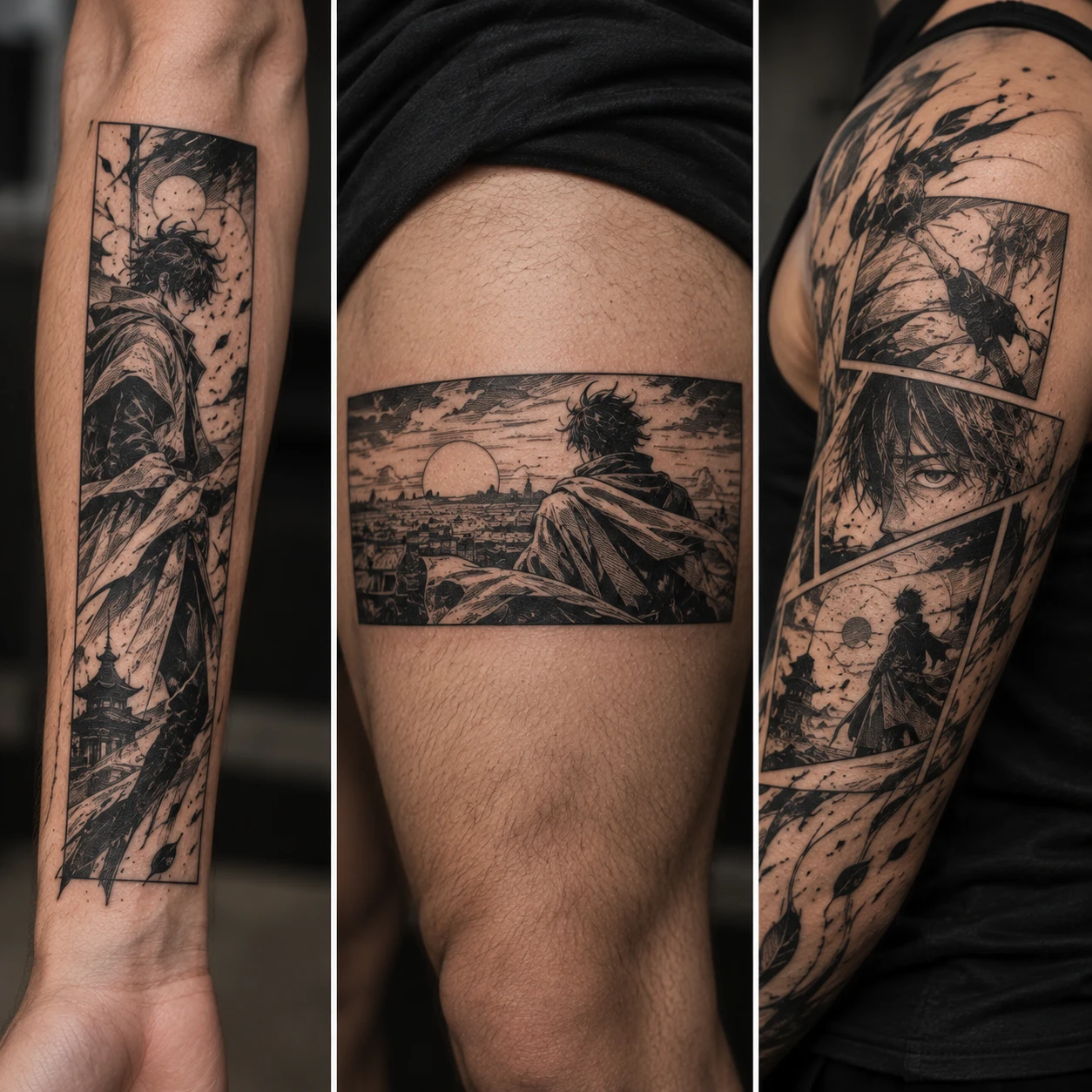
Once you know which variant you want, the shape of the composition should guide where it goes. A panel’s natural shape (tall and narrow, wide, or built from multiple smaller sections) fits some parts of the body better than others.
Tall, narrow compositions suit the forearm or calf, since both offer a long, relatively flat surface that matches a vertical panel shape without needing to bend the design around the limb. Wide compositions suit the thigh or upper arm, where there’s more horizontal space to let a scene breathe. A multi-panel collage (several smaller panel moments grouped together) works best on a sleeve or a rib panel, since both offer enough continuous space to let each smaller section stay legible instead of feeling cramped.
Choosing a placement that fits the composition’s natural shape, rather than forcing a shape into a placement you like for other reasons, is one of the simplest ways to avoid a design that looks stretched, cropped, or awkwardly resized once it’s actually on skin.
For more on choosing a placement in general, see Small Anime Tattoo Ideas: Designs, Placement, and What Actually Holds Up, which covers placement decisions for a more size-constrained approach than the style-driven one covered here.
Linework, Shading, and Longevity
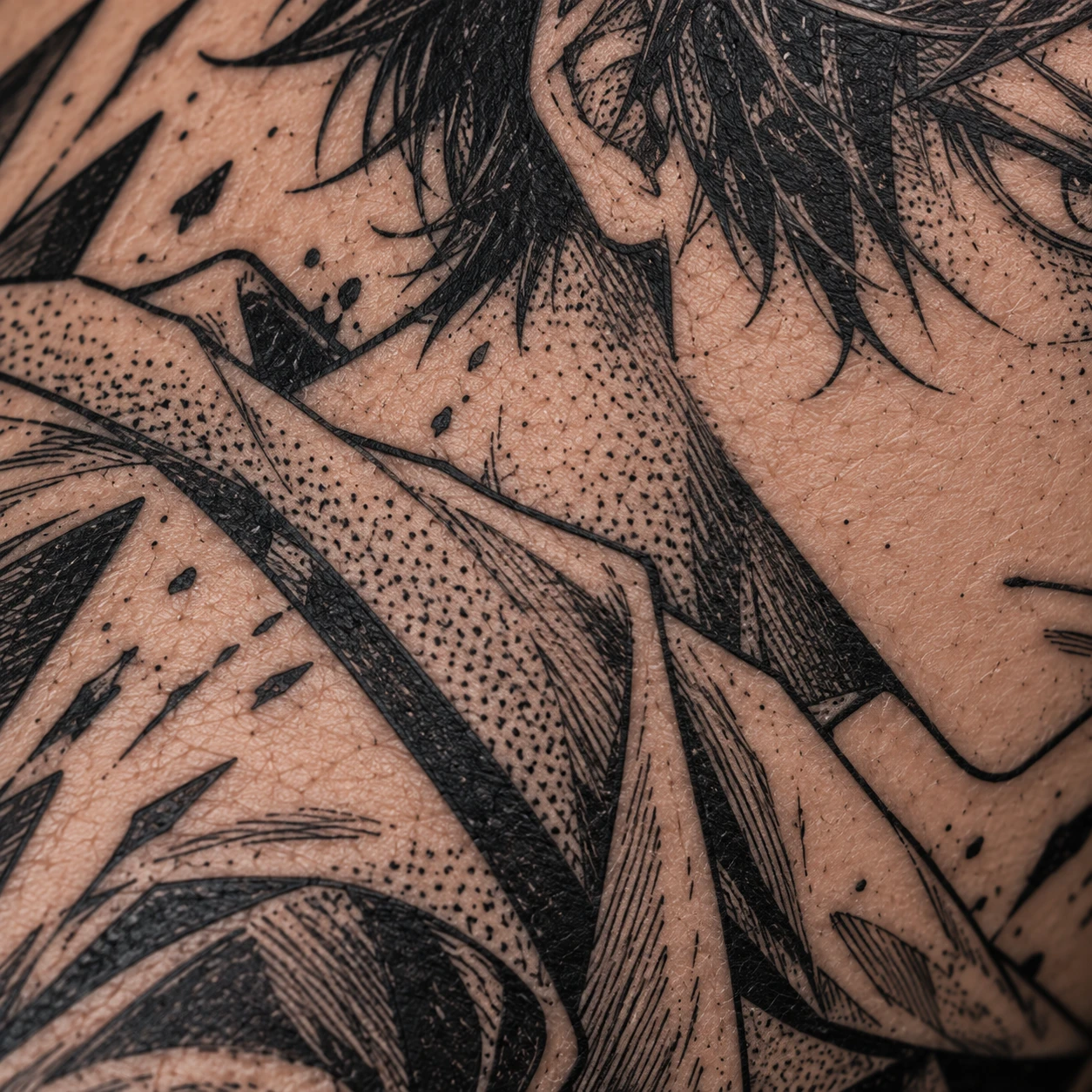
Manga panel tattoos look deceptively simple, but they depend heavily on precision. Clean, well-spaced linework is what makes this style hold up; tightly packed screentone-style texture that looks great in a reference image may not translate well to skin, which does not hold fine, closely-spaced detail the way paper does.
Leaving real breathing room in the composition matters more here than it would for a simple symbol tattoo. A panel with a lot of small, densely packed shading has more surface area that can blur together as the tattoo settles and ages, while a composition with clear negative space and confident, well-spaced lines tends to stay legible for longer. This isn’t a reason to avoid detailed compositions; it is a reason to work with an artist who can translate manga-style shading into linework that’s actually built for skin rather than a direct copy of the printed panel’s texture.
Manga panels are often placed on the forearm or calf, where sun exposure is high. The American Academy of Dermatology says ultraviolet light can fade some tattoo inks and recommends a broad-spectrum, water-resistant sunscreen of SPF 30 or higher. Dense black shading and fine screentone texture are both affected by sun, so plan protection into the design rather than treating it as aftercare only.
The AAD also advises picking skin that is free of moles where possible, since a tattoo can make early signs of skin cancer harder to see. A multi-panel collage covers more skin than a single panel, which makes this worth checking before you decide on the layout.
Choosing a Moment Without Copying a Specific Scene
Picking what to actually tattoo is often the hardest part, and it helps to think in terms of expression, movement, and composition rather than trying to recreate one specific scene exactly as it originally appeared.
A strong expression reads clearly on its own (a determined stare, a sudden shock, a quiet moment of calm) without needing extra context to land. Movement, whether it’s a dynamic pose or a sense of motion in the linework, is what keeps a still image from feeling flat once it’s tattooed. And a simple, uncluttered background keeps the main subject from getting lost, which matters even more on skin than it does on a printed page.
Designing around these three things gives an artist real creative room to build something original and tattoo-appropriate, rather than being handed a single image to trace as closely as possible.
Finding the Right Artist for Manga-Style Work
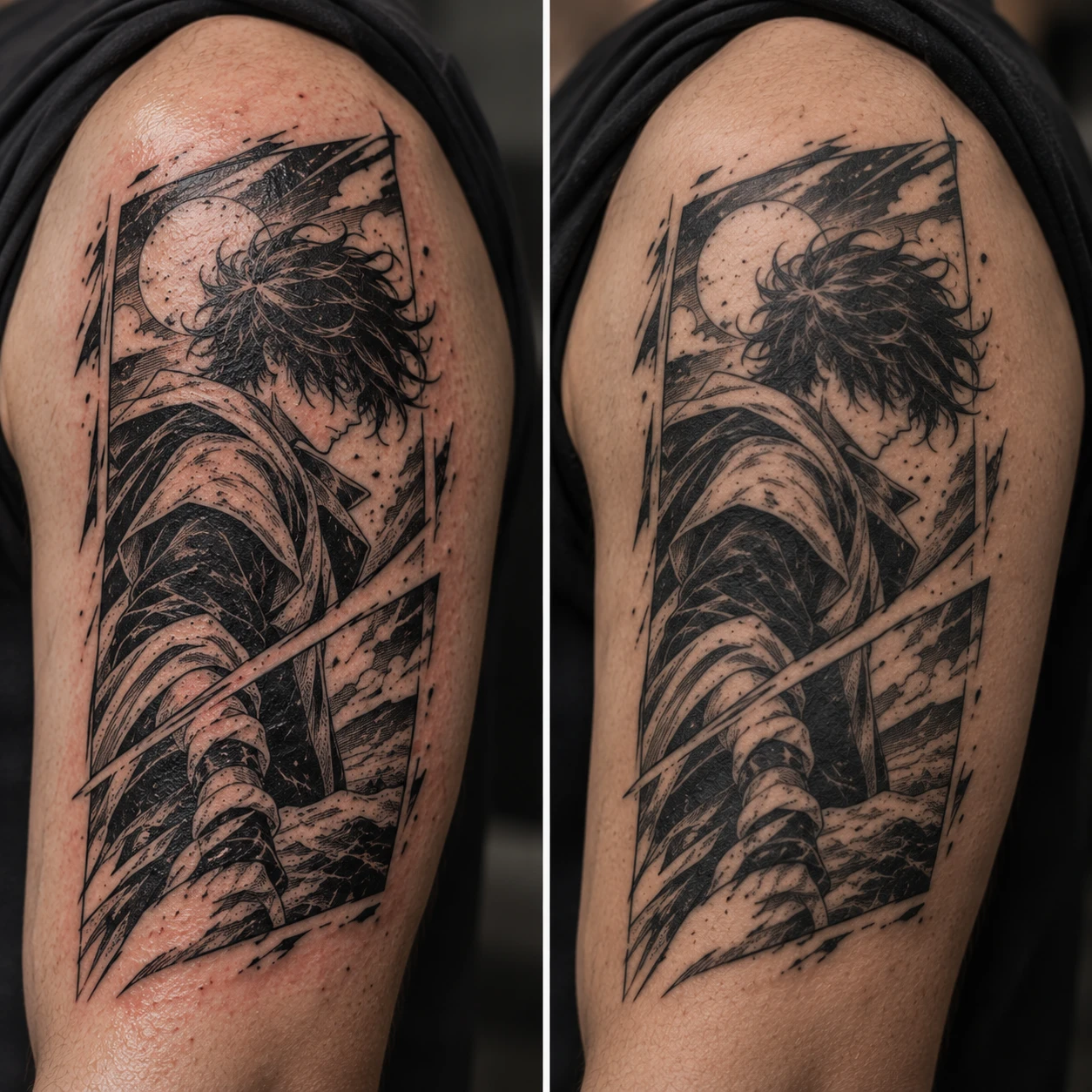
Not every tattoo artist works well in this style, so it’s worth being selective. Look at healed work in a portfolio, not just fresh photos, since healed linework and shading are what actually show whether an artist’s manga-style pieces hold up over time. Prioritizing an artist with real experience in this specific style — clean, confident linework and a good sense of how to simplify shading for skin — will make a bigger difference than general tattoo experience alone.
If you’re also considering a softer, more painterly take on anime-inspired ink rather than the crisp linework covered here, covers that style as a companion option.
FAQ
Is a manga panel tattoo hard to get right?
It depends more on precision than complexity. The linework has to be clean and the shading has to be simplified in a way that works for skin rather than paper, so the artist’s skill with this specific style matters more than how detailed the design itself is.
Should a manga panel tattoo have a border?
Not necessarily. A visible border gives the tattoo a clear “panel” identity, but a borderless approach carries the same manga energy through linework and shading alone, without the frame reading as literal. Both are valid choices — it comes down to whether you want the panel format itself to be part of the design.
What size should a manga panel tattoo be?
Size should follow the composition’s shape and the amount of detail in the design, more than a fixed measurement. A simple, low-detail composition can work small, while a piece with more shading and multiple visual elements needs enough space for those details to stay distinct rather than blurring together.
Do manga panel tattoos age well?
Full black-and-grey and borderless variants tend to age the most predictably, since there’s no color to fade unevenly and the linework carries most of the visual weight. Aging well generally comes down to clean, well-spaced linework and a composition that isn’t too densely packed with fine detail.
Can a manga panel tattoo have color?
Yes, most commonly as a restrained color-pop accent rather than a fully colored piece. Keeping the colored area simple and limited to one color family lets it act as a focal point without overwhelming the black-and-grey linework that defines the style.