Anime Neck Tattoo Ideas: Placement, Design, and What Actually Works
Anime neck tattoo ideas start with one question the rest of this site’s placement guide doesn’t have to answer: can you cover it up if you need to? A tattoo on the forearm, the ribs, or under a sleeve stays optional information about you. A tattoo on the neck is public by default. That single difference of concealability changes almost everything about what design, size, and style actually work there, along with the healing considerations the American Academy of Dermatology’s tattoo safety guidance flags for higher-friction, higher-visibility spots.
This guide isn’t a repeat of Best Placement for an Anime Tattoo: A Full Guide by Pain, Durability, and Style, which covers pain, durability, and detail retention across every placement on the body. This one is narrower on purpose: it looks specifically at neck placement, breaks down which zone — nape, side, or front — fits which kind of design, and explains why bold linework is winning out over detailed scene work in this specific spot right now.
Table of Contents
Table of Contents
Why the Neck Is a Different Kind of Placement Decision
Most tattoo placements come with a built-in option to hide them. A forearm piece disappears under a long sleeve. Ribs and thighs stay covered by default. Even a large back or chest piece only shows up when you choose to show it. The neck doesn’t work that way. Once it’s done, it’s visible in almost every social and professional setting, all day, with no easy way to opt out.
That single fact — concealability, not pain or detail level — is what should actually decide whether a neck tattoo makes sense and what it should look like. Best Placement for an Anime Tattoo: A Full Guide by Pain, Durability, and Style walks through the general pain-versus-durability-versus-detail tradeoffs that apply everywhere on the body, and those still apply here too. What this article adds is the piece that guide doesn’t cover: how the neck’s constant visibility should shape the zone you pick, the size you choose, and the design style you commit to.
Nape, Side, or Front — Which Neck Zone Fits Your Design
The neck isn’t one placement — it’s three, and they behave differently enough that lumping them together doesn’t help anyone deciding where a design should actually go.
Nape (back of the neck): The most forgiving of the three. Hair can cover it fully or partially depending on length and style, and it’s the zone most people can still keep private at work if they choose to. That flexibility means it can handle a slightly larger or more detailed design than the other two zones without becoming something you can’t manage day to day.
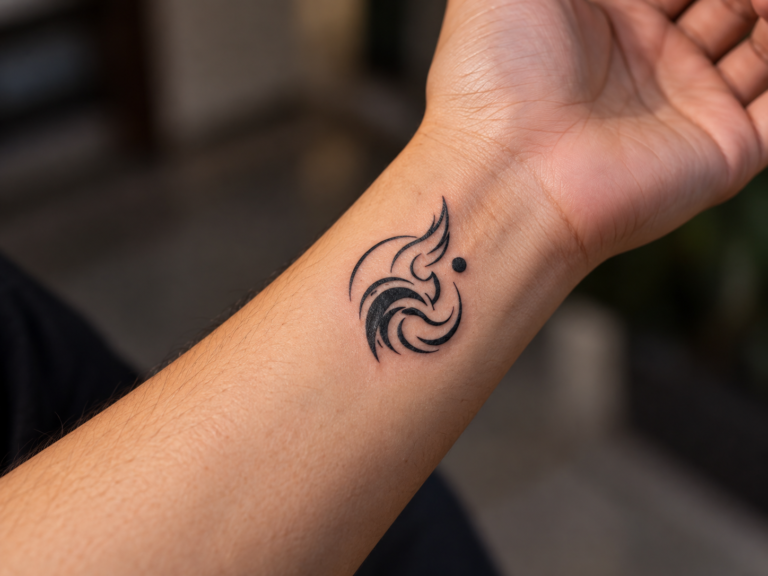
Side (along the side of the neck): Visible more often than the nape, but still partially manageable with hair, collars, or a turned head. This is the zone where a lot of anime-inspired symbol tattoo work actually lands, since it’s visible enough to make a real style statement without requiring the same commitment as the front.
Front-of-throat: The highest-visibility zone on the body, full stop. There’s no realistic way to keep it covered in everyday life, and the skin here is thinner than the sides or back. This isn’t the zone to bring a design that needs fine detail to read correctly, and it’s worth avoiding anything that crosses the midline of the throat entirely — both for how it will age visually and for the extra caution a placement this exposed deserves.
| Zone | Visibility | Design tolerance |
|---|---|---|
| Nape | Lowest — coverable by hair | Handles more size and detail |
| Side | Moderate — partially coverable | Best fit for most symbol-style designs |
| Front-of-throat | Highest — essentially uncoverable | Bold and simple only; avoid midline pieces |
None of this replaces an actual consultation. A licensed tattoo artist can look at your skin, your hairstyle, and the specific design you have in mind and tell you whether a given zone will work the way you’re picturing it — that conversation matters more here than for almost any other placement, precisely because a neck tattoo is so hard to walk back.
Why Bold, Simple Designs Work Best Here (and Detailed Scenes Usually Don’t)
Look at what’s actually getting inked on necks right now, on Pinterest and in Google’s own image results for this exact search, and one pattern repeats far more than any other: small, high-contrast, single-motif designs. A symbol tattoo. An emblem. A short kanji-style mark. Not a detailed scene, not a multi-character composition, not fine linework meant to be studied up close.
That pattern isn’t a trend to copy blindly — it reflects what actually holds up physically and visually at this placement. The neck moves constantly: turning, swallowing, tilting. Skin here shifts more than on a flatter, larger canvas like the forearm or back, which means fine detail is more likely to blur or distort as the tattoo settles and ages. This is also part of why small anime tattoo designs tend to age better here than larger, more detailed ones. A design also tends to get seen from a distance and at odd angles more than it gets studied up close, so it needs to read clearly at a glance rather than reward close inspection the way a large-format piece can.
This is the same “bold and simple beats detailed” principle that applies to other small placements. It isn’t a composition question the way filling a full sleeve is, so this isn’t the place for that kind of large-scale planning. It’s a narrower decision: pick one clear motif, keep the linework bold enough to stay legible as it ages, and resist the urge to fit in more than the space and the skin can actually support.
Pain and Healing Notes Specific to the Neck
The neck’s skin is thinner than most other placements, and that shows up more in the healing process than in the pain itself — pain tolerance varies enough from person to person that any specific pain ranking should be treated as a general guide, not a guarantee.
What’s more predictable is what healing actually looks like day to day. A scabbing, peeling tattoo on the neck stays visible the entire time it heals, in a way a covered forearm or ribs piece simply isn’t — there’s no long sleeve or waistband to rely on here. Collars, scarves, hair, and even a seatbelt can all rub against fresh skin in this area more than they would elsewhere, so loose clothing and extra care around friction matter more for a neck piece than for most other placements.
None of this is medical advice. A licensed tattoo artist can walk you through realistic healing expectations for your specific skin and design, and that conversation is worth having before committing to a placement this visible and this hard to reverse.
Anime-Inspired Neck Tattoo Directions to Consider
Within the bold, simple direction the evidence above points to, a few concrete design directions come up again and again:
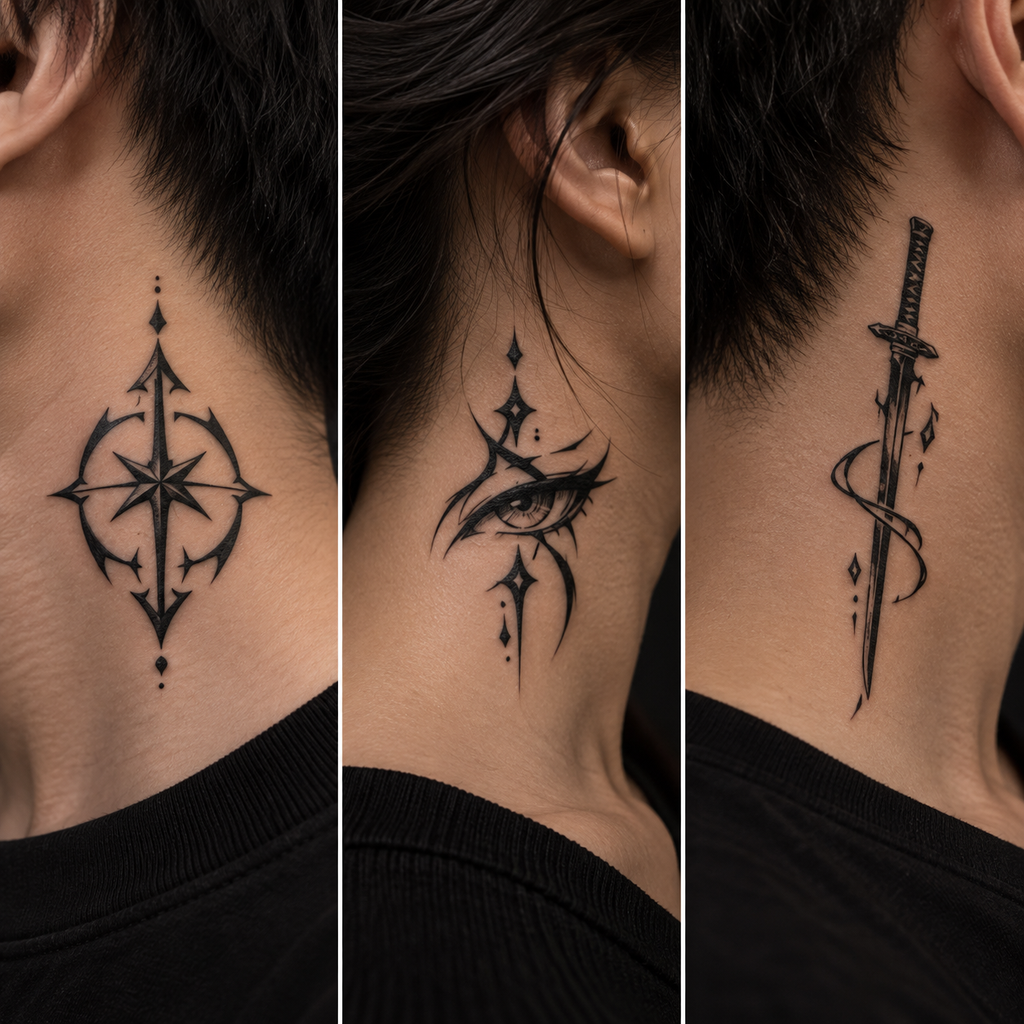
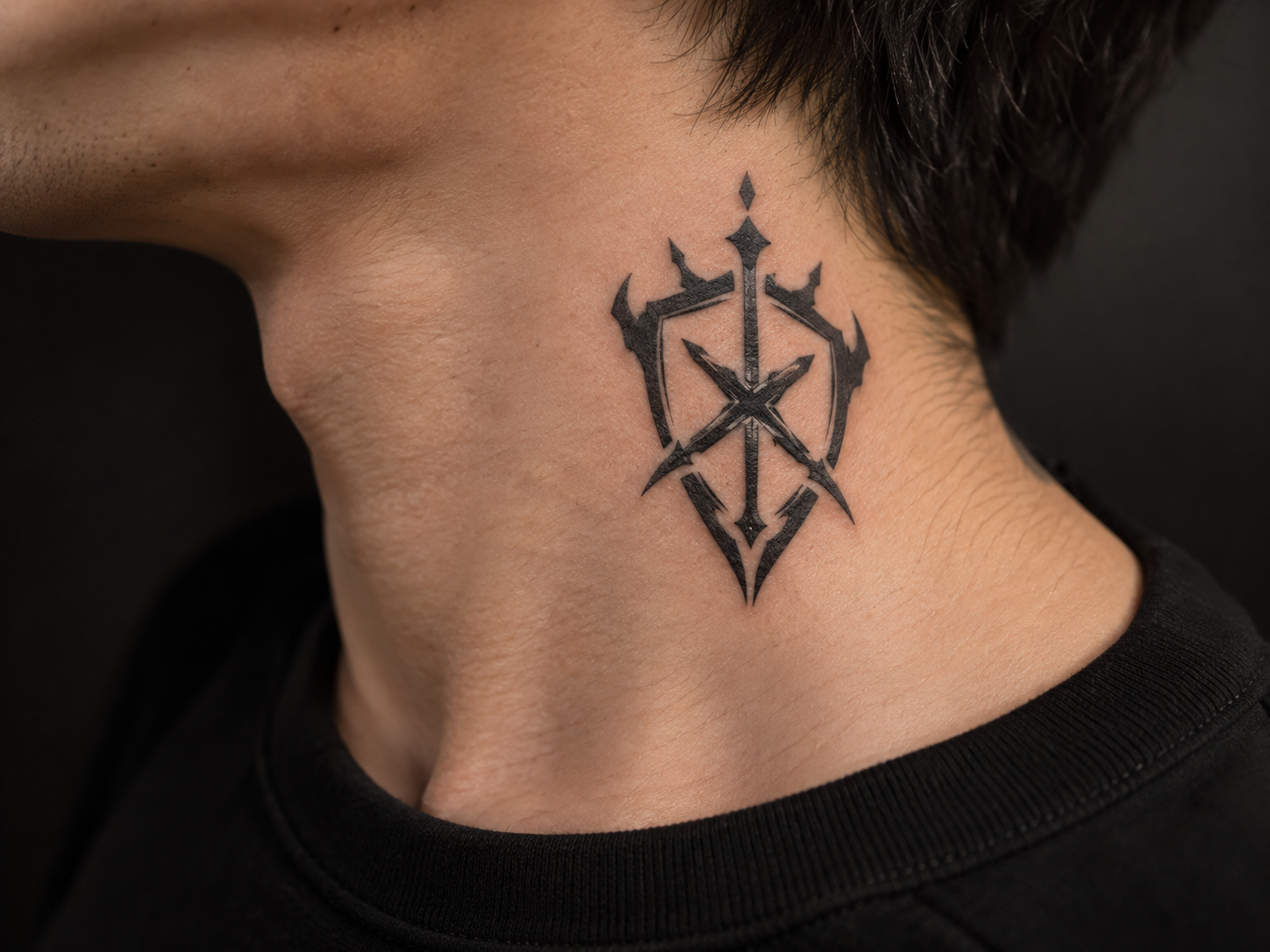
- A single symbol tattoo — a compact, original mark inspired by the kind of clan crests, guild insignia, or power-symbol iconography common across anime and manga, built from clean geometric shapes rather than a literal copy of any one franchise’s actual logo.
- A minimalist eye or gaze motif — a small, stylized eye design inspired by the striking eye imagery many anime characters are known for, rendered as an original abstract shape rather than a specific character’s face or exact eye design.
- A single-line or fine-linework character-adjacent icon — a small object, weapon silhouette, or emblem that nods to a character archetype’s signature item or theme, redrawn as an original piece rather than traced from official art.
Whatever direction you land on, work with your artist to make sure the final design is genuinely your own interpretation, not a direct copy of a specific character’s official artwork. That’s both a legal consideration and, for most people, the more interesting outcome anyway — a design that’s recognizably in the spirit of the source material without being an exact lift of it. These directions also aren’t gender-specific: the same principles apply whether you’re looking at anime neck tattoo ideas for guys or anime neck tattoo ideas for girls.
Frequently Asked Questions
Is a neck tattoo a bad placement choice?
Not inherently — but it comes with tradeoffs other placements don’t. Because it’s almost always visible, it’s worth thinking through workplace norms, long-term plans, and how comfortable you are with a design that can’t be hidden, before deciding whether it’s the right choice for you specifically.
Does a neck tattoo hurt more than other placements?
Pain tolerance varies enough from person to person that a firm ranking isn’t reliable. What’s more consistent is that the skin here is thinner than on larger, flatter placements, which is part of why healing — not just the session itself — tends to need extra care.
What size anime tattoo works best on the neck?
Small to medium, built around one clear motif rather than a detailed scene. The evidence above points consistently toward bold, simple designs at this placement, regardless of which zone — nape, side, or front — you choose.
This article is for inspiration and general placement guidance only — it isn’t tattoo, medical, or aftercare advice. Before committing to a neck tattoo, or any tattoo this visible and hard to reverse, talk to a licensed tattoo artist about your specific skin, design, and healing expectations.