Demon Slayer Tattoo Ideas: Original Designs Built From the Series’ Symbols
Demon Slayer tattoo ideas work best when they borrow the series’ visual language instead of copying its images. The show is full of recognizable shapes: checkered patterns, fox masks, flowing flame and water lines, wisteria blossoms and swords. Those symbols translate well to skin and leave room for a design that is your own.
If you are comparing franchises, our Jujutsu Kaisen Tattoo Ideas: Matching Characters and Symbols to the Right Size, Placement, and Style and Solo Leveling Tattoo Ideas guides show the same approach for other series, and the Anime Characters category page collects the rest of our character-inspired guides.
What Makes a Demon Slayer-Inspired Tattoo Work
The strongest tattoos from this series do not rely on a portrait. They rely on a few shapes that fans spot at a glance: a repeating square pattern, a mask, a sweep of flame or water, a sword outline. Those shapes are simple enough to read at small sizes and flexible enough to be redrawn in your own style.
A design also works better when it has one clear focus. A single fox mask or one sword with flames reads cleanly. Packing several symbols into one small tattoo tends to crowd the design, so decide what matters most to you before you meet your artist.
Color is worth a thought too. A mostly black design with one accent color, such as red or a soft purple, looks sharp. Full color is possible, but it asks for more room and more upkeep, so it suits larger pieces better than tiny ones.
Demon Slayer Tattoo Ideas Built From Symbols
Demon Slayer gives tattoo designers a lot of graphic raw material: repeating patterns, masks, flowing elements and a strong red-and-black palette. The ideas below borrow those qualities and redraw them as original designs, so nothing here is a copy of a character, costume or frame from the series.
- Checkered band. A two-tone grid of squares works best as a wrap around the forearm, calf or upper arm. Keep the squares large enough that each one stays distinct as the skin ages: roughly a centimeter per square is a sensible starting point, and a stencil check on the actual limb will show whether the grid bends awkwardly over muscle.
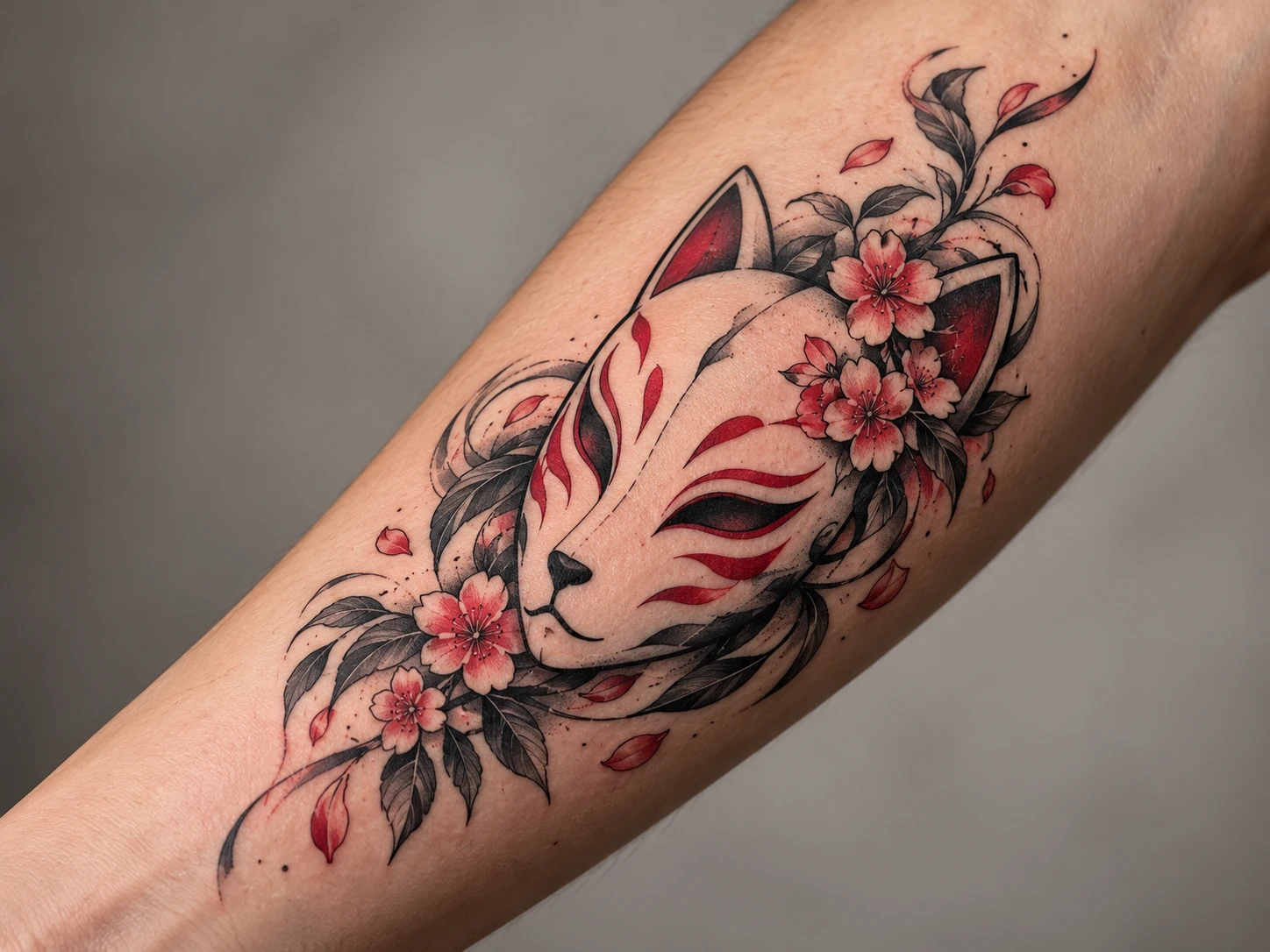
- Fox mask with florals. Draw the mask as an original design: simplified eye slits, a narrow snout and a few painted markings, with flowers growing from one side. A three-quarter angle reads better than a flat front view, and fading the lower half into the skin keeps the piece from looking like a sticker.
- Brush-stroke mark. One thick, uneven stroke in black, with dry-brush gaps at the end, behaves like calligraphy without needing legible text. It suits the ribs, shoulder blade or outer calf, where a long diagonal line has room to move.
- Wave and flame lines. Two sets of curving lines, one rounded and fluid, the other pointed and rising, can sit side by side or spiral around a limb. Make sure the lines follow the direction of the limb; lines that cut across it look flat once the arm moves.
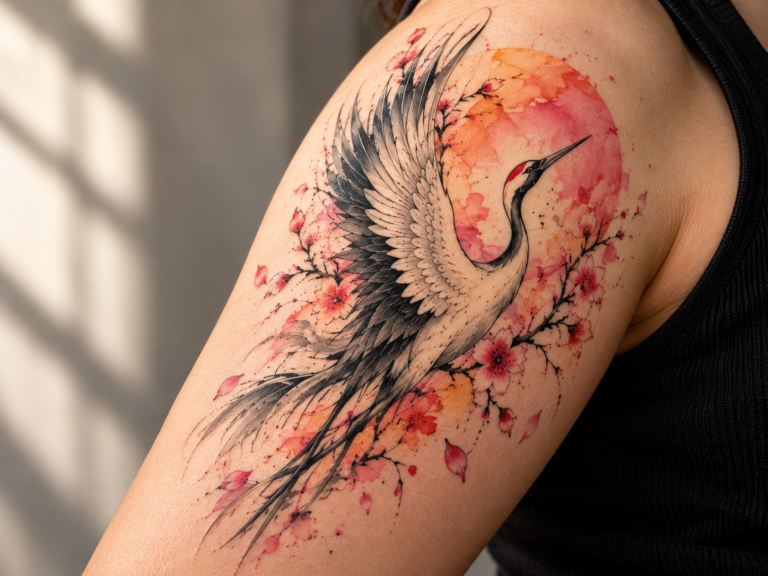
- Wisteria branch. Hanging clusters are naturally vertical, so they suit the outer upper arm, the side of the calf or down the spine. Space the clusters unevenly and let some petals fall; a fully symmetrical branch looks stiff.
- Sword silhouette in flames. A plain blade shape with a simple guard, wrapped in a few oversized flame tongues. Keep the blade as a solid dark shape and put the detail in the flames, since the contrast between the two carries the design.
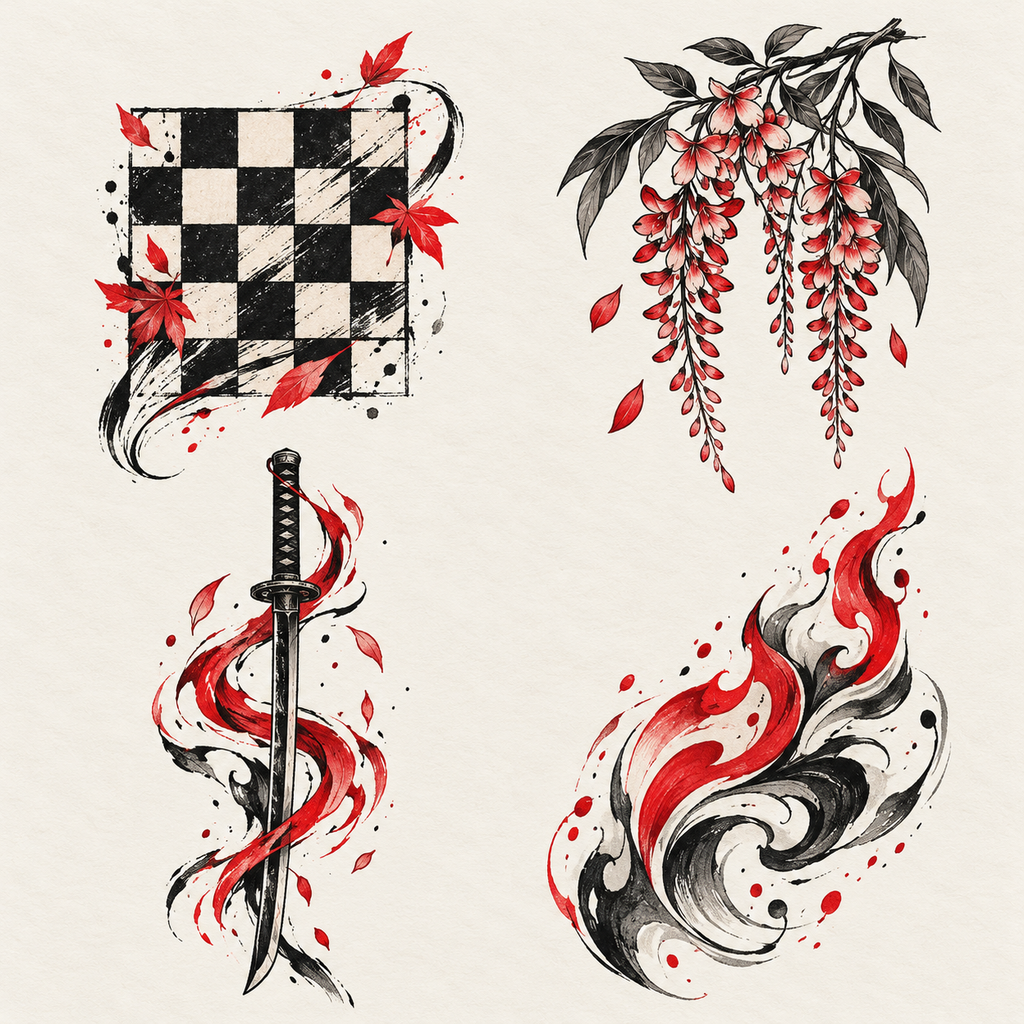
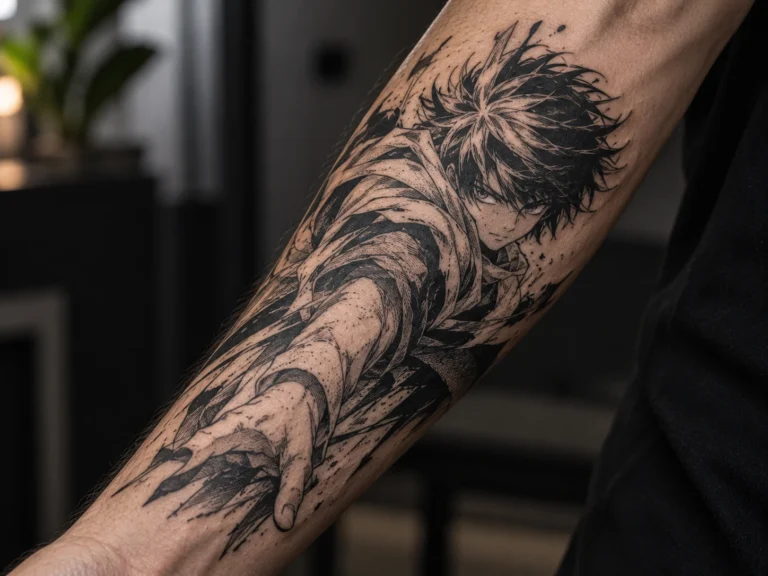
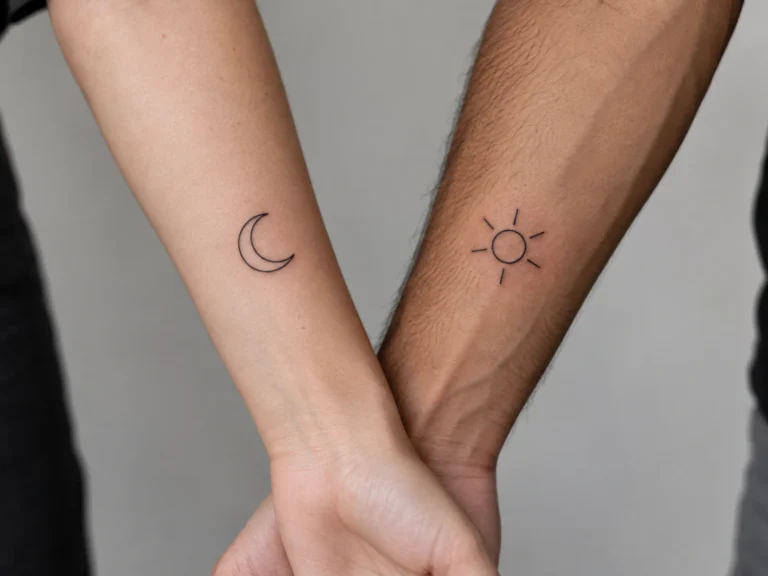
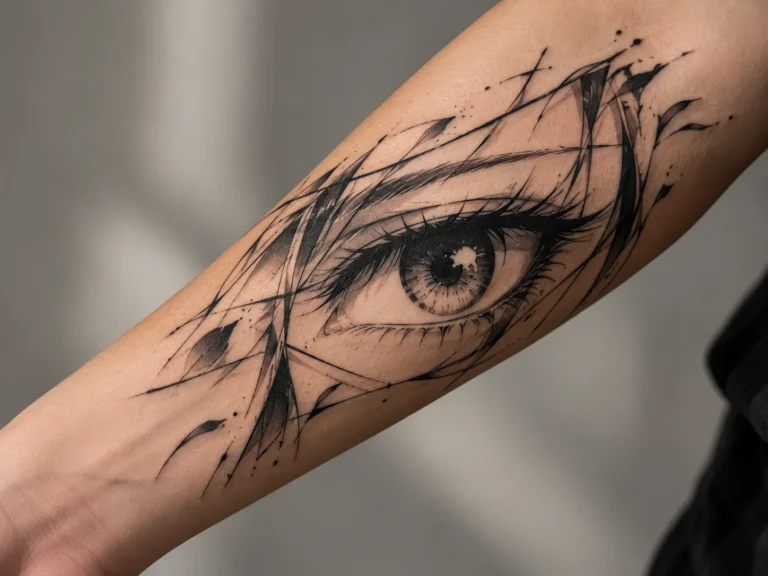
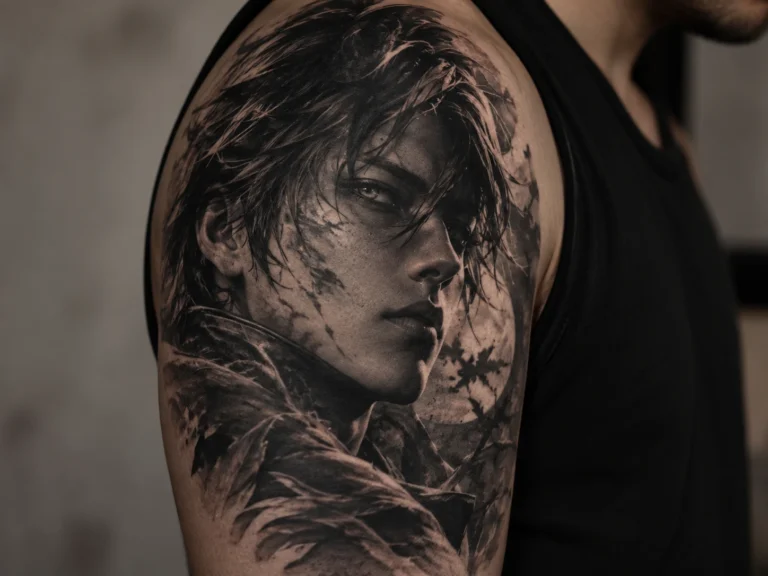
Illustrative concept images: AI-generated artwork created to explore tattoo design ideas. They do not represent verified tattoos performed on real clients.
If one of these appeals, bring a reference sheet of what you like about it (the shape, the pattern, the mood) rather than a screenshot of the show. A studio can then draw something that fits your limb and is yours alone.
Subtle and Simple Demon Slayer Tattoos
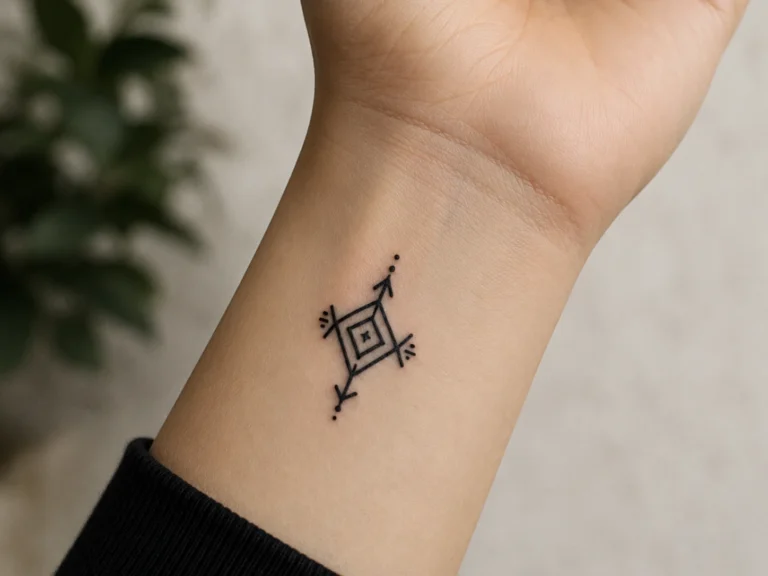
Many fans want something quiet that only other fans will recognize. A small square pattern on the wrist, a tiny wisteria sprig behind the ear or a thin flame line along the forearm all work. Simple designs use clean outlines and very little shading, which keeps them sharp as the skin ages.
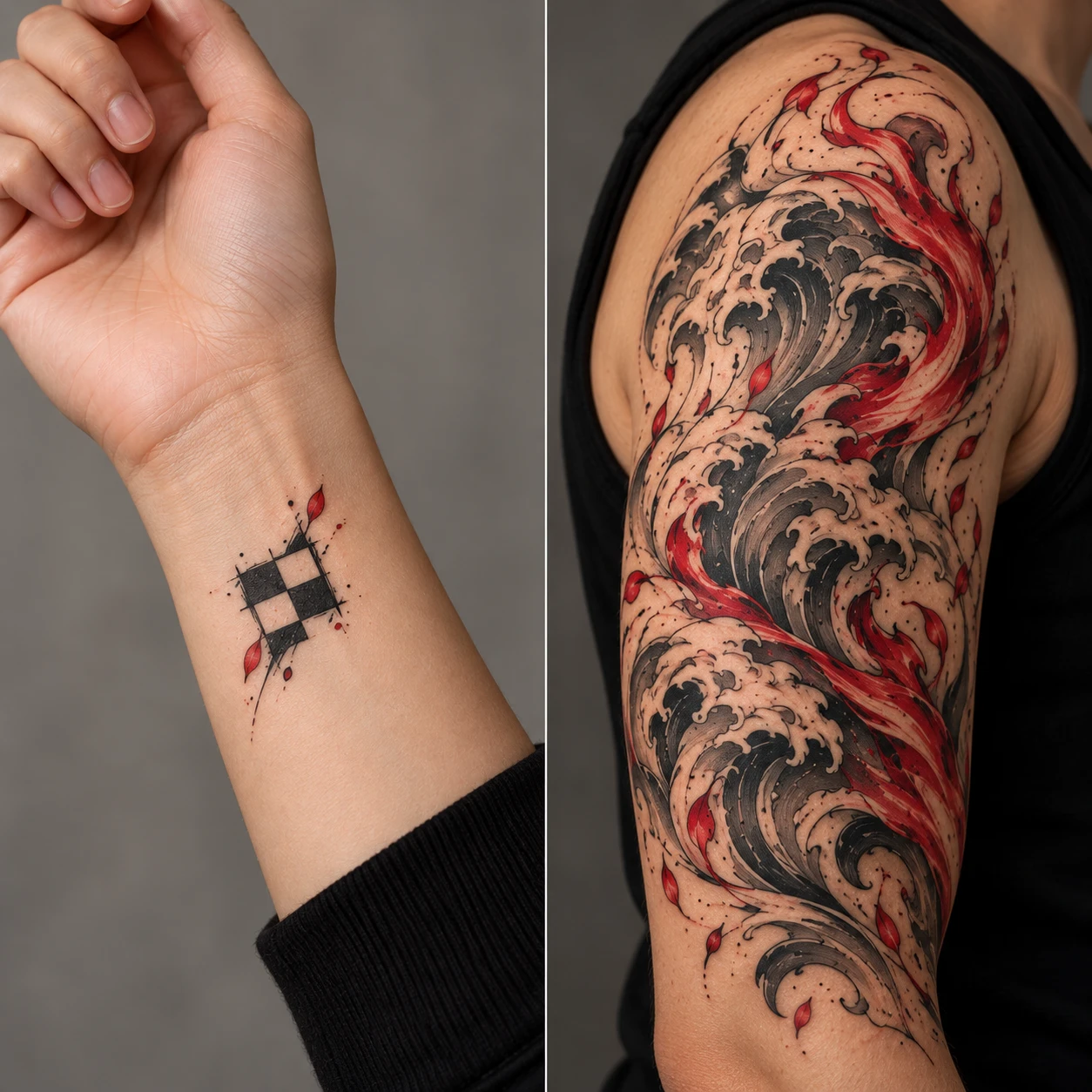
Subtle does not have to mean generic. One small, well-chosen symbol with careful linework can say more than a crowded design.
If you are unsure where to begin, start with the symbol that means the most to you and keep everything else off the design. You can always add to a small tattoo later, but it is much harder to simplify one that started out crowded.
Larger Pieces: Sleeves and Panels
If you want more drama, symbols can be combined into a sleeve or a panel. A common approach is to pick one theme, such as water or flame, and let the lines flow around the arm so everything feels connected. Another is a half sleeve that stacks a pattern band, a mask and a sword.
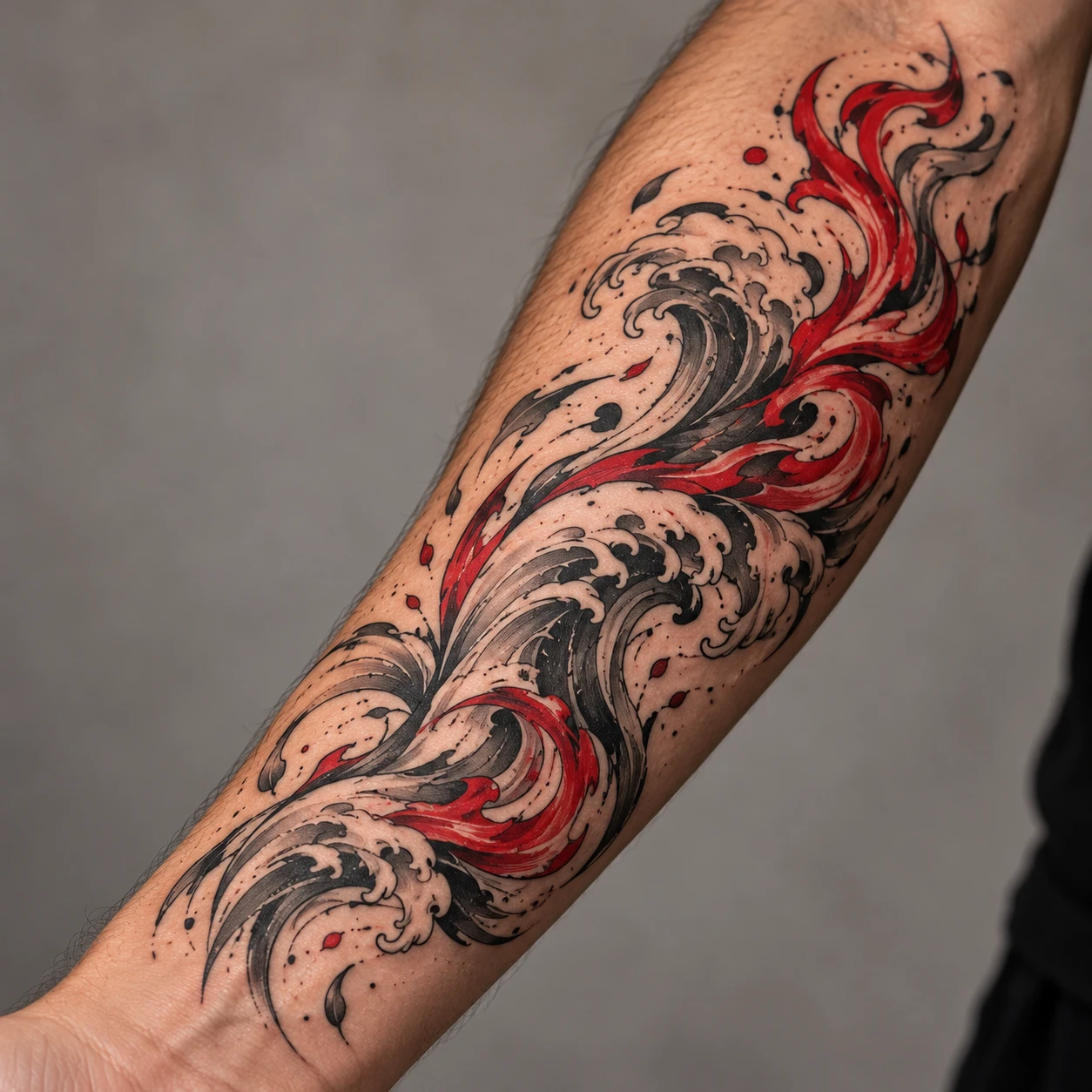
Spacing matters on a big piece. Leave breathing room between motifs so each one stays readable, and use background shapes such as smoke, clouds or ripples to tie them together. A cluttered sleeve looks busy from a distance, while a sleeve with clear gaps looks planned.
Large pieces need planning. Ask your artist how the layout will wrap around the limb and whether it can be built in stages.
Choosing Size and Placement
Match size to detail. A small tattoo needs simple shapes, while flames, florals and swords with fine detail need more room to stay clear. The forearm, upper arm and calf give designs enough flat space, and smaller motifs fit the wrist, ankle or behind the ear.
Think about how the piece will be seen. A pattern band reads well around the wrist, while a sword silhouette needs a long vertical stretch.
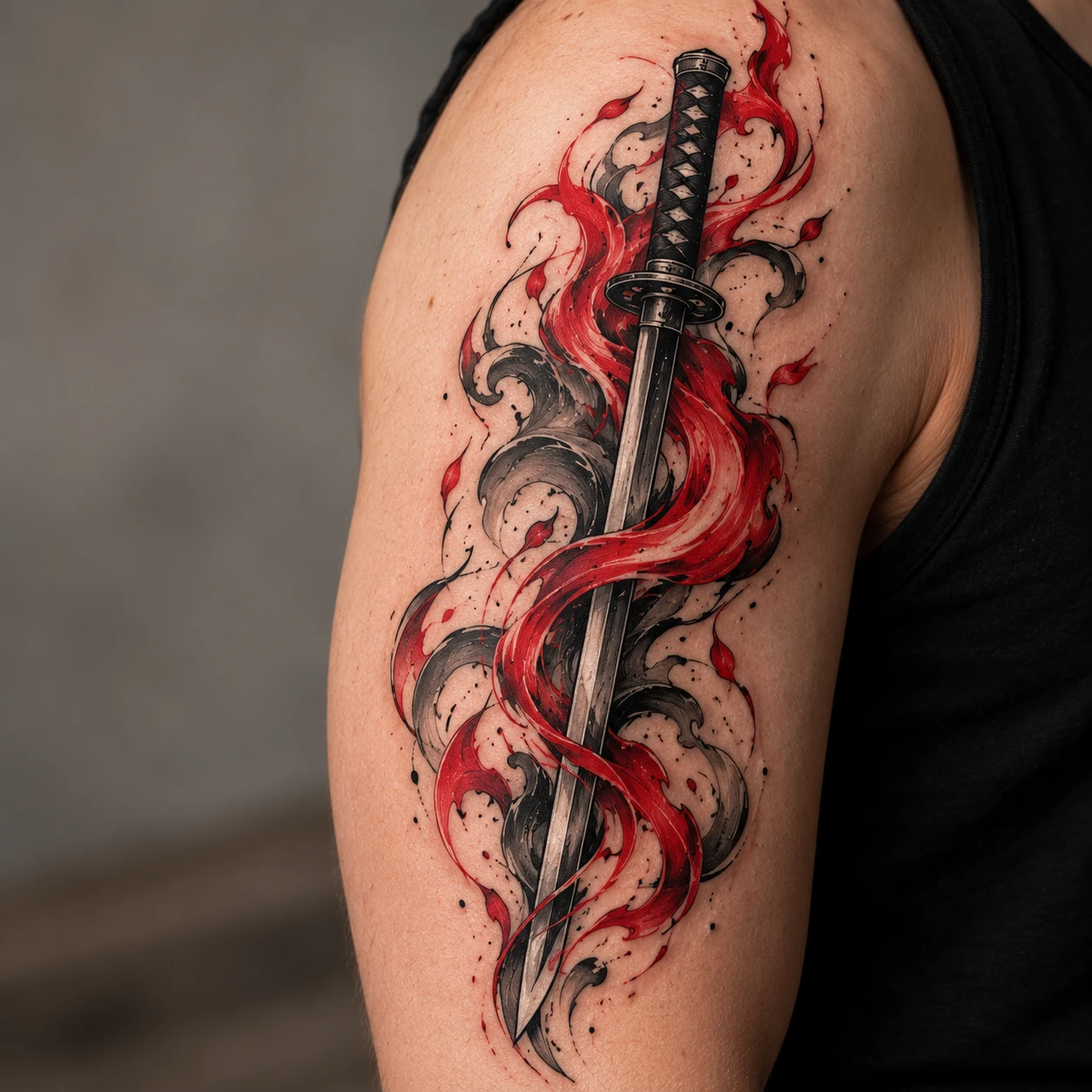
Session length is another factor. Detailed flames, florals and shading take time, and a big design is often done in several sittings. Ask your artist how long each session will run, and plan your schedule so you are rested and not rushed.
Keeping Your Design Original
Fans often bring a favorite scene to the studio, and that is a fine starting point. The best result, though, is a design that is yours. Ask your artist to create an original drawing inspired by the series rather than copying a frame from the show or someone else’s tattoo. That avoids reproducing another person’s work and lets your artist adapt the lines to your skin.
Describe the feeling and the style instead of a single image. Words such as fierce, calm or elegant, plus a note on line weight and shading, give an artist more to work with than one picture.
It also helps to ask your artist to show you the drawing before the day of the tattoo. Reviewing a sketch or a stencil gives you time to ask for changes to the proportions, the line weight or the amount of detail. Most artists welcome that conversation, because a design you are confident about is easier to tattoo and easier to live with afterwards.
When your tattoo is done, follow your artist’s aftercare instructions closely so the lines heal well.
This article is general guidance, not medical advice. Always consult a licensed tattoo artist about your own design, skin and health, and check your local rules for what studios must follow.
Frequently Asked Questions
What are simple Demon Slayer tattoo ideas?
Simple designs use one symbol and clean lines: a small checkered square, a thin flame line, a wisteria sprig or a tiny sword outline. They suit small placements such as the wrist, ankle or behind the ear.
Can a Demon Slayer tattoo have a meaning?
Yes. A symbol can stand for a theme that matters to you, such as perseverance, protection or a favorite moment, and you decide what it means. Tell your artist the idea behind the design so they can reflect it in the drawing.
What size and placement suit a Demon Slayer tattoo?
Small motifs suit the wrist, ankle or behind the ear, while flames, masks and swords with detail need more room, such as the forearm, upper arm or calf. Ask your artist how much detail will stay clear at the size you want.