How to Remove an Anime Tattoo: Laser Removal, Cost, and What Your Ink Means for the Process
If you searched this looking for a way to peel off a costume tattoo before a con, this isn’t that guide. If you’re trying to figure out how to remove an anime tattoo you got years ago — a real, permanent one — this is for you. Maybe it’s plain anime tattoo regret creeping in over time, the linework didn’t age the way you hoped, or you’re just ready for a change. The American Academy of Dermatology’s guidance on tattoo removal is a useful baseline before you read the rest of this guide.
This is general information, not medical advice. Laser tattoo removal is a cosmetic procedure, and the right next step for your specific tattoo is a consultation with a licensed provider, not a blog post. What follows is a realistic overview of how removal works, what makes anime-style tattoos different from a simple black design, what it typically costs, and how to think about removal versus a cover-up.
Table of Contents
Table of Contents
What Actually Happens During Laser Tattoo Removal
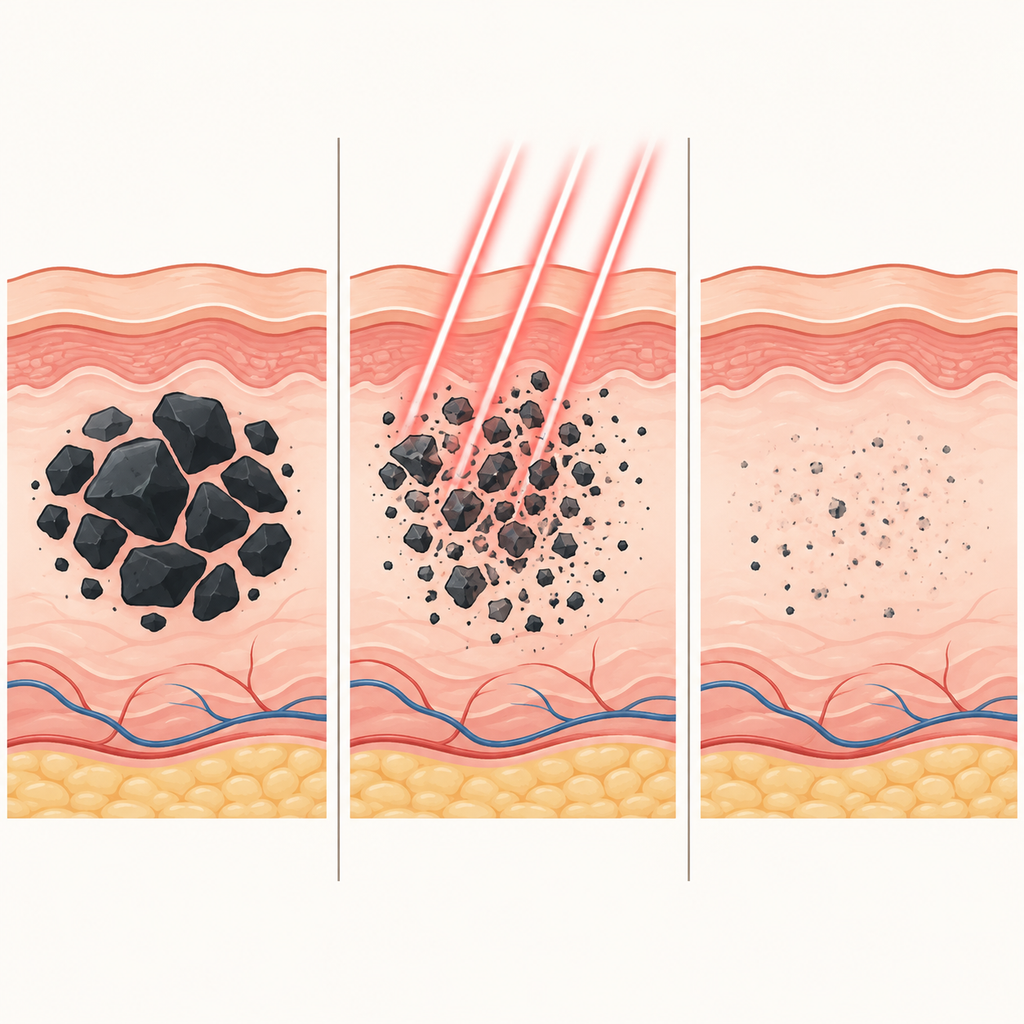
Laser tattoo removal works by breaking ink particles in the skin down into smaller fragments that your body can gradually clear away on its own. A provider passes a laser over the tattoo, and the ink absorbs that energy and shatters into pieces small enough for your immune system to process over the following weeks.
This is why removal is never a one-visit process. Each session only breaks down a portion of the ink, and your skin needs time to heal and your body needs time to clear the fragmented pigment before another treatment can work on what’s left. Sessions are typically spaced several weeks apart, and providers often use that gap to check how much fading has happened before deciding on the next pass.
Because of this, realistic removal is measured in months, not days. A design that took one sitting to create can take a year or more to fully fade, and that timeline depends heavily on the tattoo itself — which is where anime-style ink tends to complicate things.
Why Anime Tattoos Can Be Harder (or Easier) to Remove — Color Density and Linework
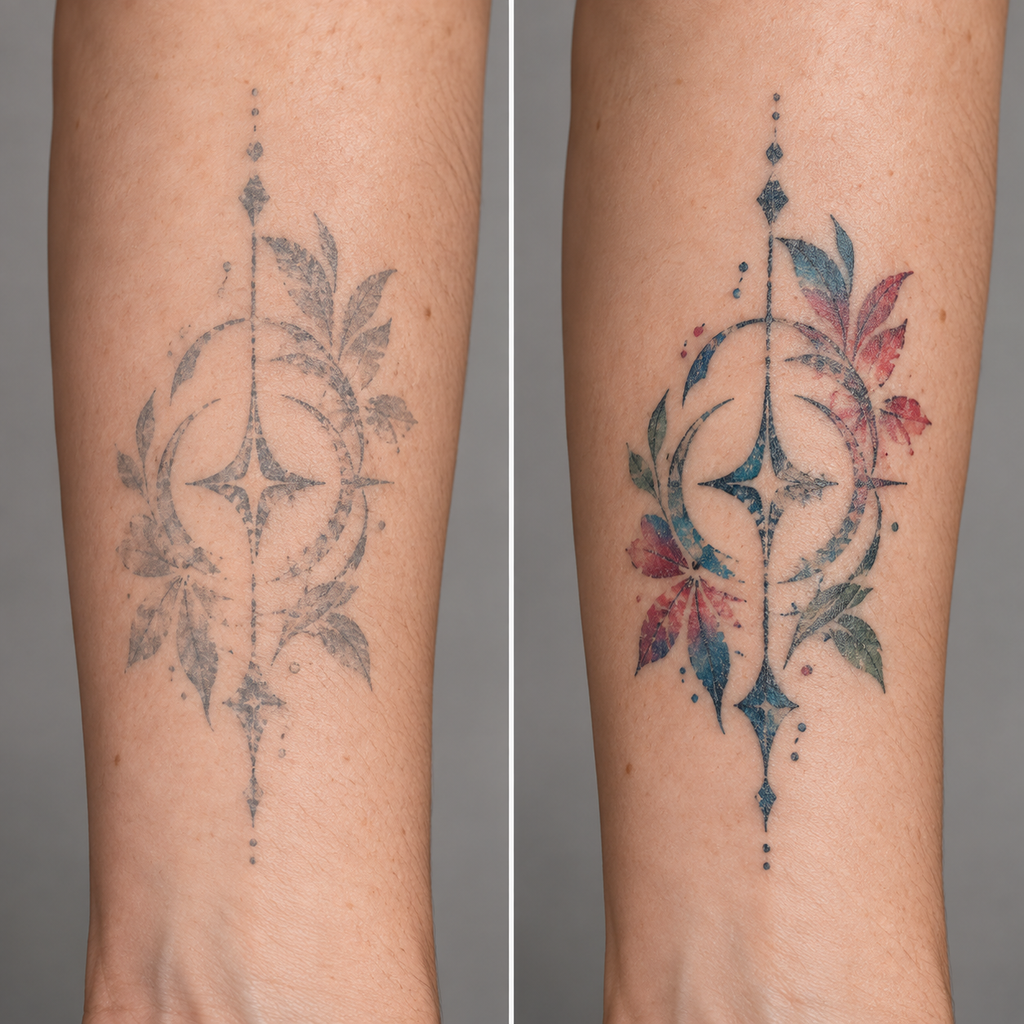
Not all ink responds to laser treatment the same way, and this is the part most tattoo-removal guides skip entirely. Black ink is generally considered the easiest color to remove, because it absorbs nearly the full spectrum of laser light. A solid black outline or shading fades more predictably than most other colors.
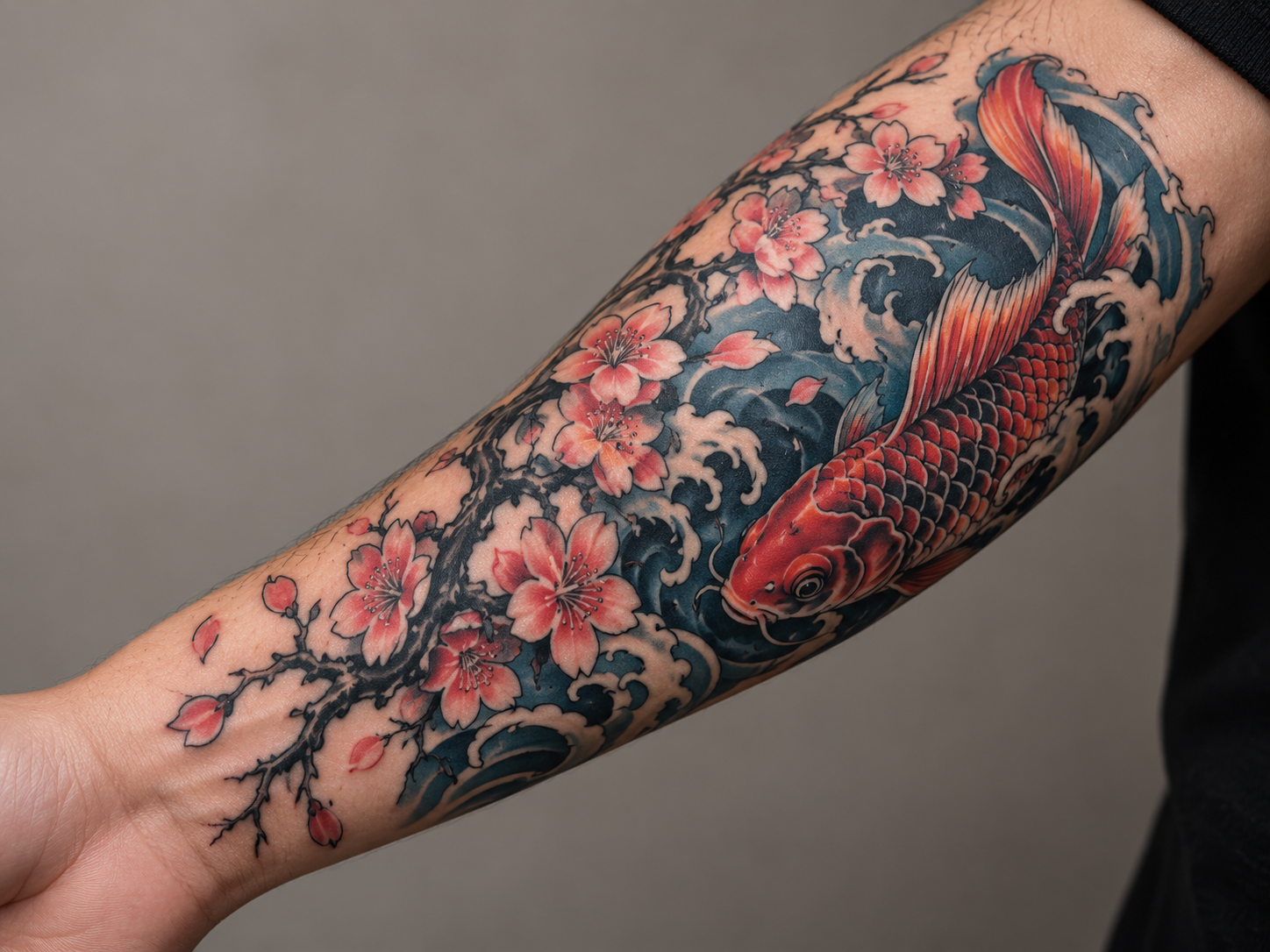
Anime tattoos, though, rarely stay in black alone. Many of the designs people love — vivid color panels, gradient shading, saturated reds and blues pulled straight from a manga page — use exactly the kind of ink that’s typically harder to break down. Lighter colors and certain saturated pigments tend to resist the laser more than black does, which often means more sessions to reach the same level of fading.
Fine linework adds its own wrinkle. Manga-panel-style tattoos and detailed line-heavy designs pack a lot of ink into a small, precise space. That density can make it harder to treat the whole design evenly, and it’s common for some lines to fade faster than others nearby, which can temporarily make a tattoo look uneven mid-removal before it fades further.
None of this means an anime tattoo can’t be removed — it generally can be. It just means the honest answer to “how long will this take” is usually longer than it would be for a simple black outline, and a provider who can actually look at your specific tattoo is in a much better position to estimate than any general guide.
Realistic Cost and Session Expectations

Anime tattoo removal cost is one of the most commonly searched questions on this topic, and it’s worth being specific rather than just saying “it varies.” Based on general industry pricing, a single laser removal session typically costs somewhere between $75 and $500, with an average session often landing in the $400–$650 range. Full removal — the total across every session needed — commonly adds up to somewhere between roughly $800 and $2,000 or more, depending on size, ink density, and location.
| Typical Range | |
|---|---|
| Per session | $75–$500 |
| Average per session | ~$423–$654 |
| Full course (total) | ~$815–$2,000+ |
| Typical number of sessions | 5–15+ |
Most people need somewhere between five and fifteen or more sessions for full clearance, and — consistent with the ink-density point above — a color-heavy or densely-lined anime tattoo often sits toward the higher end of that session count rather than the lower end. These figures come from general tattoo-removal industry data, not anime-specific research, since no dedicated cost study for anime tattoos currently exists. Treat them as a starting expectation, not a quote, and confirm real numbers with a provider who can see your actual tattoo.
Laser Removal vs. Cover-Up: Which Fits Your Situation
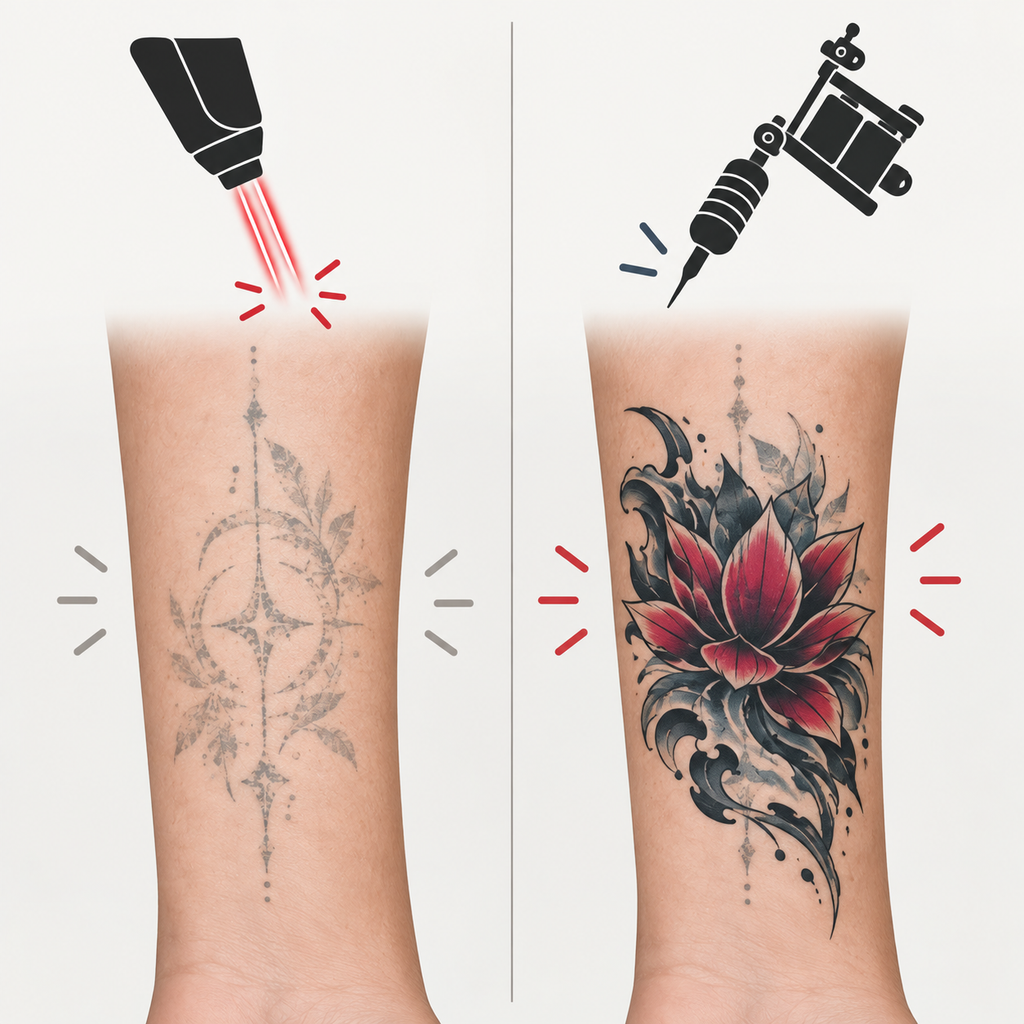
Removal isn’t the only option, and it’s worth being honest that it isn’t always the fastest or cheapest one. A cover-up tattoo works by designing new artwork over the existing piece, and it typically takes far less time than full laser removal — often a single session or a short handful of them, compared to months or years of laser visits.
Cost-wise, a cover-up is often cheaper than a full removal course, though that depends heavily on the size and complexity of the new design. The real trade-off isn’t speed or cost alone — it’s permanence and flexibility. Removal gives you a blank slate to do whatever you want afterward, including nothing at all. A cover-up commits you to a new, usually larger and darker design, since covering existing ink typically requires more saturation than the original piece had.
This trade-off matters even more for anime tattoos specifically. A cover-up generally needs to be noticeably darker or bolder than what it’s hiding, which can be a real constraint if your original tattoo was a bright, detailed color panel — the new design may need to be considerably more saturated than you’d otherwise choose, just to fully conceal the piece underneath. If you’re drawn to a lighter, more delicate cover-up design, partial laser fading first (to lighten the original before the cover-up goes on) is sometimes the more realistic path, and that’s a conversation to have directly with both a removal provider and a tattoo artist rather than deciding from a general guide.
There’s no universally better option here. If you want the option to end up with bare skin, or you’re unsure what you’d want instead, removal keeps that door open. If you already know you want new art in that spot and don’t mind a bolder design, a cover-up is often faster and less expensive.
What to Avoid: Unverified Home-Removal Methods
If your search for this topic turned up suggestions for removing a tattoo at home with things like salt scrubs, lemon juice, or other “natural” methods, treat that content with real skepticism. These methods are not verified as safe or effective by any credible removal provider, and attempting to remove a real tattoo this way risks scarring, burns, and skin damage without actually clearing the ink underneath.
If you’re serious about removing or fading a permanent tattoo, a licensed laser removal provider or dermatologist is the only path with any real evidence behind it. There isn’t a safe shortcut here worth the risk.
Is It Better to See a Dermatologist?
For many people, yes — a board-certified dermatologist or an accredited laser removal clinic staffed by qualified providers is generally the appropriate route for tattoo removal. What matters most is that whoever performs the procedure is properly trained and licensed for laser tattoo removal specifically, whether that’s a dermatology practice or a dedicated removal clinic. This guide isn’t in a position to recommend a specific provider or clinic — that choice depends on your location and what’s actually available near you, and it’s worth researching credentials directly before booking.
FAQ
Can you 100% remove a tattoo?
Not always. Laser removal often achieves significant fading and can get very close to full clearance, but complete removal with zero trace isn’t guaranteed for every tattoo, especially color-heavy or densely-lined designs. A provider who examines your specific tattoo can give a more realistic estimate than any general answer.
Is it better to go to a dermatologist for tattoo removal?
A board-certified dermatologist or an accredited, properly licensed removal clinic are both reasonable paths — what matters most is that the provider is genuinely qualified in laser tattoo removal, not which type of practice they work in.
Which tattoo ink is hardest to remove?
Black ink is generally the easiest to treat, since it absorbs the full range of laser light. Lighter colors and certain saturated pigments common in anime-style color work tend to be more resistant, which is often why colorful anime tattoos take more sessions than simple black designs.
How much is 4 sessions of tattoo removal?
At a typical per-session cost of roughly $75–$500, four sessions could run anywhere from about $300 to $2,000, though most people need considerably more than four sessions for full clearance on a color-heavy or densely-lined tattoo. A provider quote based on your actual tattoo will always be more accurate than multiplying an average.
Learning how to remove an anime tattoo the right way starts with realistic expectations: it’s a real, workable option, but it’s rarely fast or simple — especially if your design leans on color or fine detail rather than solid black. Knowing that going in helps you set a realistic budget and timeline, whether you end up choosing full removal, a cover-up, or deciding to sit with your original tattoo a while longer. And if this has you thinking more carefully before your next one, what to know before getting an anime tattoo covers the decisions worth making up front.