Japanese Wave Tattoo Meaning, Origins, and How to Wear It
Japanese wave tattoo meaning usually comes back to one famous picture: a towering wave with curling, claw-like foam, taken from a woodblock print. The wave is bold, graphic and full of motion, which is why it suits tattoo linework so well.
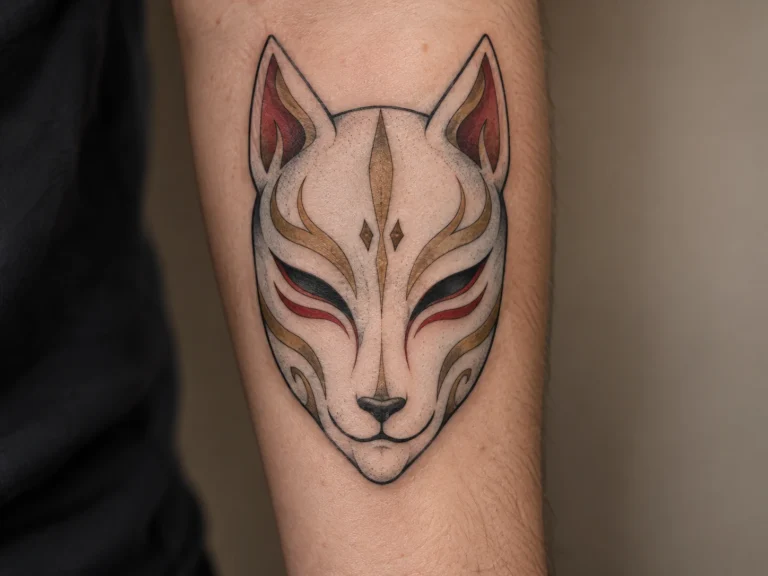
If you are exploring other Japanese-inspired symbols, our Cherry Blossom Tattoo Meaning: Symbolism, Culture, and Design, Torii Gate Tattoo Meaning and Kitsune Mask Tattoo Meaning: The Fox Spirit’s Duality in Japanese Culture and Anime guides take the same approach, and the Symbols & Meanings category page collects the rest.
What a Japanese Wave Tattoo Represents
A wave tattoo is rarely about water alone. Most people choose it for what a wave does: it rises, breaks, pulls back and returns. That makes it a flexible symbol for strength, change, persistence and the power of nature, and it explains why the design appeals to people at very different moments in life.
The meaning you take from it is personal. Two people can wear nearly the same wave and read it differently, one as a reminder to keep going, the other as a sign of respect for the sea. Decide what you want yours to say before you pick a design, because that choice shapes everything from the size of the crest to the amount of detail.
Where the Wave Image Comes From
Most Japanese wave tattoos trace back to a single artwork: Under the Wave off Kanagawa, better known as The Great Wave, by Katsushika Hokusai. According to the museum record at The Metropolitan Museum of Art, the woodblock print dates to around 1830 to 1832 and belongs to the series Thirty-six Views of Mount Fuji. The museum notes that the artist played with perspective so that Mount Fuji looks like a small triangular mound inside the hollow of the cresting wave.
The Metropolitan Museum of Art also explains, in its essay on the print, that it was a team effort. Skilled carvers and printers worked with the artist, and their handling of a newly imported blue pigment helped give the wave its bold outline and sense of depth. Only the artist’s name survives, but the finished image reflects the craft of many hands.
That history is useful for a tattoo. The wave you admire is a carefully composed picture, with a small mountain, tiny boats and a huge curl of water, and each of those parts can be kept, simplified or left out when you design your own.
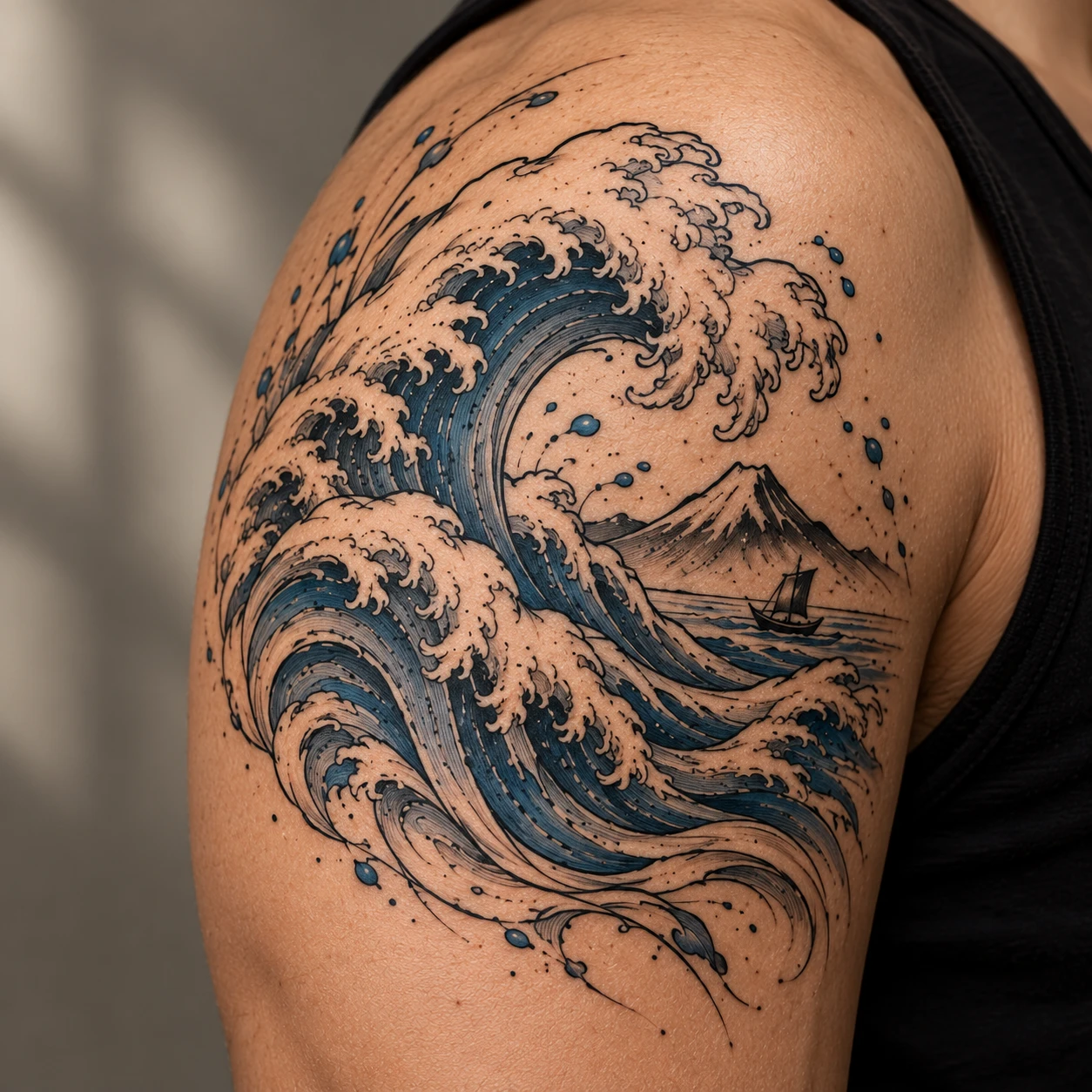
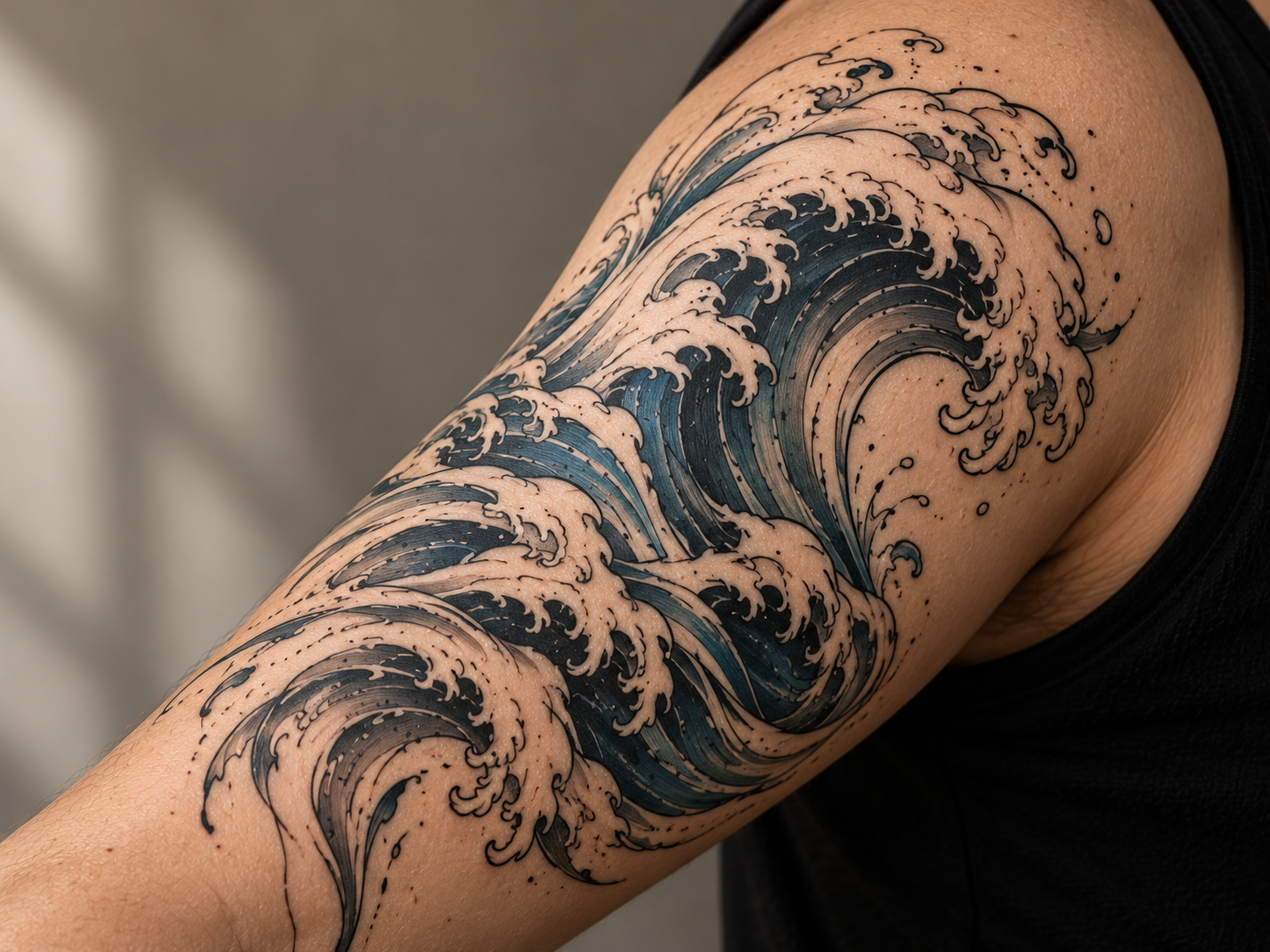
Illustrative concept images: AI-generated artwork created to explore tattoo design ideas. They do not represent verified tattoos performed on real clients.
What the Wave Is Said to Mean
The museum notes we checked describe the print’s composition, color and printing. They do not assign it a single fixed symbolic message. The meanings below are popular readings, not official definitions, so treat them as starting points for your own story.
- **Strength and resilience.** The wave is huge and the boats beneath it are small, so many people read it as facing something overwhelming and carrying on.
- **The power of nature.** A wave is a reminder that some forces are bigger than any person, which some wearers take as humility and respect.
- **Change and impermanence.** Waves never stay still, so the design often stands for change, cycles and letting go.
- **Calm within force.** With the small mountain sitting quietly inside the curl, some read the image as steadiness in the middle of chaos.
None of these is the only correct reading. If a meaning matters to you, tell your artist, and they can shape the composition around it.
Japanese Wave Tattoo Design Ideas
The Great Wave is built from a few separable parts: the curling crest, the claw-like foam, the dark trough, the small boats and the distant mountain. Most good wave tattoos keep two or three of those parts and drop the rest. Six original ways to do that:
- Large crest on the upper arm or calf. Give the curl the full height of the limb and let the foam tips break away in separate shapes. This is the layout that needs the most space, and the one where bold outlines matter most.
- Single-line wave. One continuous curve that rises, curls and trails off, usually on the wrist, ankle or inner forearm. It only works if the curl is simple; adding foam detail turns it into a cluttered small tattoo.
- Wave with a distant peak and one boat. A small triangle in the curl and a tiny hull below it keep the printu2019s sense of scale without copying its layout. Each needs a few centimeters of clear space, so this suits the forearm or thigh rather than a small spot.
- Wave-swirl band. A repeating pattern of rounded swirls wrapped around the forearm or calf, closer to a textile motif than a picture. The band can be as narrow or as wide as you like, and it extends easily later.
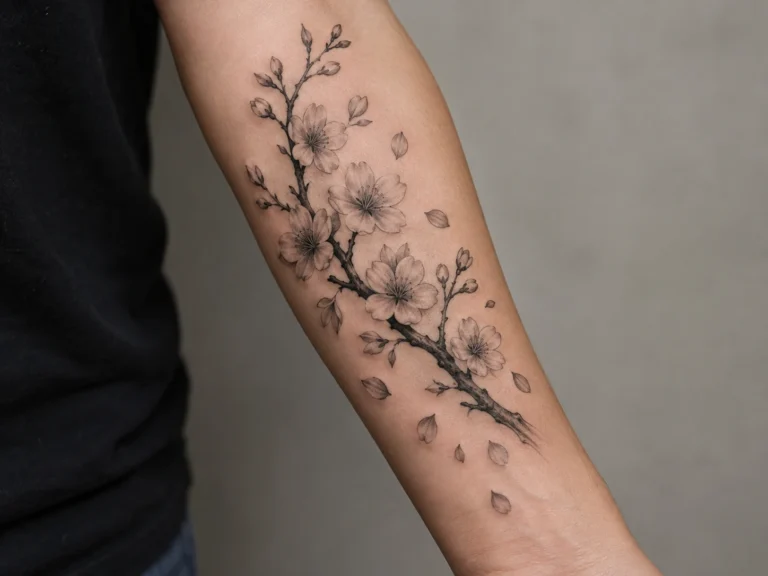
- Wave with drifting petals. Scattered petals break up a large black or blue area and add a second color if you want one. Keep the petals few and uneven so they read as falling, not as a pattern.
- Wave as a sleeve background. Water swirls fill the gaps between other motifs and tie them together. Plan this one with the artist from the start, since the flow of the water has to follow the placement of everything else.
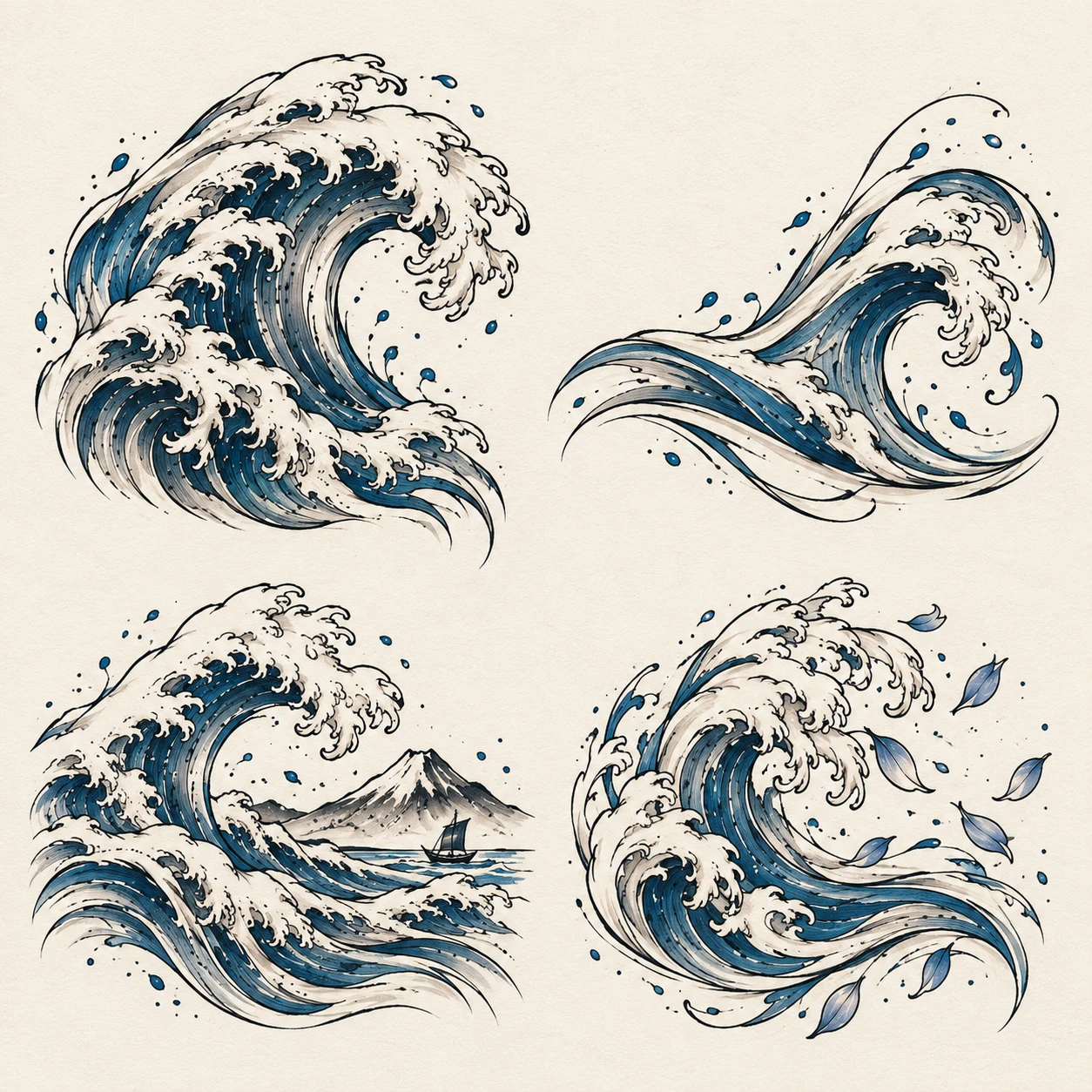
Bring a few references and mark what you like about each one, such as the curl, the foam or the line weight. That gives the artist something to draw from instead of the famous print itself.
Choosing a Style and Colors
Wave tattoos look strong in several styles, so choose by how much detail you want to live with.
Black and gray linework keeps the focus on shape. Bold outlines hold up well over time, which suits large crests with heavy curls. Fine-line waves look delicate and modern, though very thin lines and tiny foam details can soften as the skin ages, so ask your artist how the design will hold.
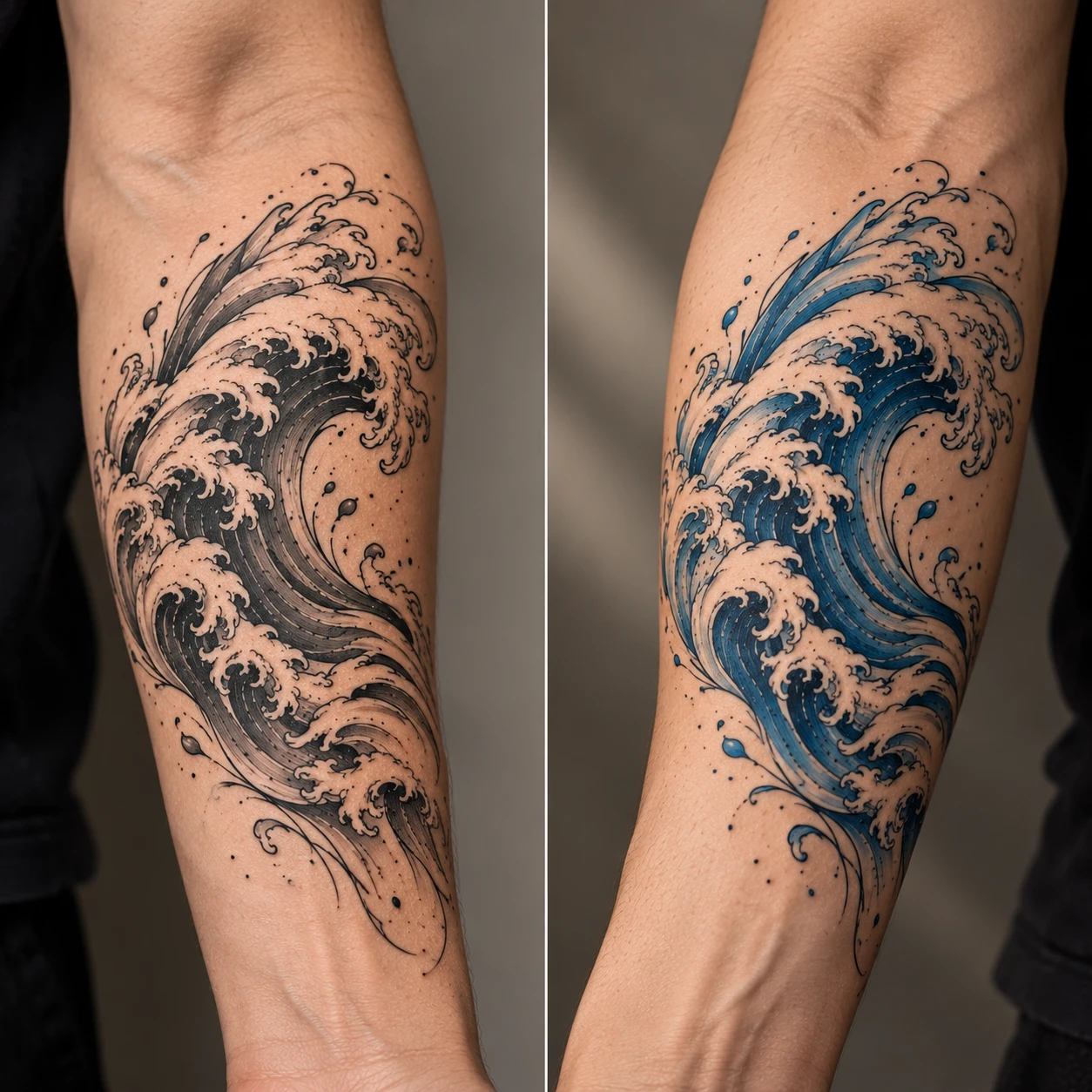
Color is the other big decision. Blue tones echo the look of the print, since the museum describes the artist’s palette of indigo and imported blue pigment. Color needs more room and more upkeep than black ink, so it usually suits mid-sized and large pieces better than tiny ones. A mostly black wave with one blue accent is a middle path that stays sharp.
Beware color-meaning claims online. Many pages assign fixed meanings to wave colors without a source, so choose colors you love instead of ones a blog told you to.
Size and Placement
Match size to detail. A small tattoo needs simple shapes, so a single-line wave or a tight crest works well on the wrist, ankle or behind the ear. Foam tips, a distant peak and a boat all need more space to stay clear.
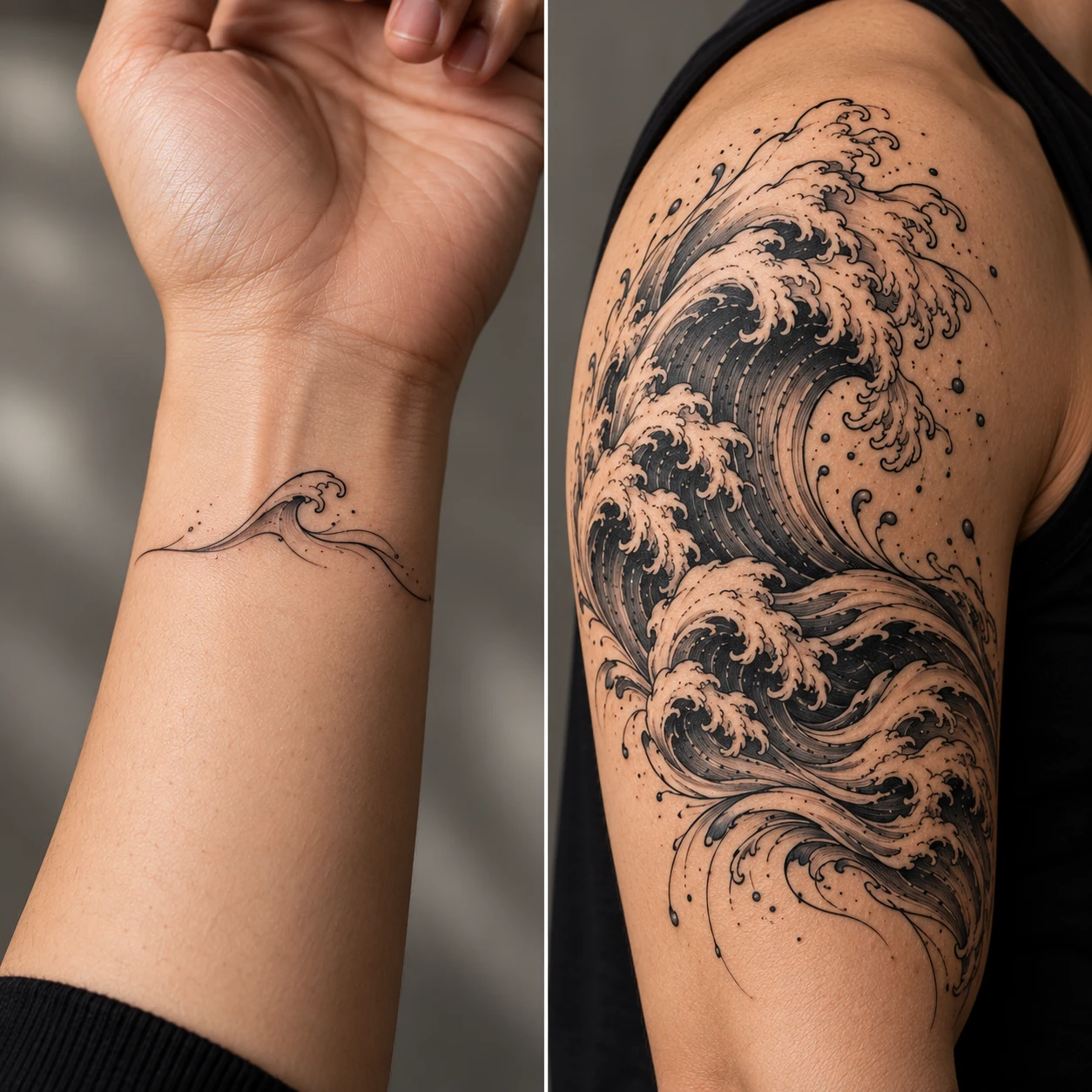
The forearm and upper arm give a wave room to curl, and the calf and ribs suit a long, flowing shape. A band design wraps around a limb, while a large crest wants a flat, wide area.
Think about how the wave will move with your body. A curl that follows the line of the arm looks natural, and a design placed against the flow can look stiff. Large pieces are often built over several sessions, so ask your artist how long each sitting will run and plan to be rested.
Respecting the Source
The famous print is a real work of Japanese art, so it deserves some care. Take time to look at the original through the museum record mentioned above, and understand what you are borrowing before you borrow it. Then ask your artist for an original drawing inspired by the wave rather than a line-for-line copy, which also gives you a design nobody else has.
If you want a traditional Japanese look, look for an artist whose portfolio shows healed work in that style, and ask them to explain their choices. Keep your own meaning in the foreground: your reason for choosing a wave is the part no one else can supply.
When your tattoo is done, follow your artist’s aftercare instructions closely so the lines heal well. This article is general guidance, not medical advice. Always consult a licensed tattoo artist about your own design, skin and health, and check your local rules for what studios must follow.
Frequently Asked Questions
What does the Japanese wave mean?
Most people read it as strength, change and the power of nature. The print it comes from does not carry a single official message, so the meaning is the one you choose, and your artist can shape the design around it.
What does a tattoo of a wave mean?
A wave tattoo usually stands for movement and change, and often for resilience, because a wave rises, breaks and returns. A Japanese wave also points to the famous woodblock print, so it carries a visual link to Japanese art as well.
Where does a Japanese wave tattoo work best?
Long, flowing placements such as the forearm, upper arm and calf give a wave room to curl. Smaller single-line versions suit the wrist, ankle or behind the ear. Ask your artist how much detail will stay clear at the size you want.