Jujutsu Kaisen Tattoo Ideas: Matching Characters and Symbols to the Right Size, Placement, and Style
Jujutsu Kaisen has one of the deepest tattoo-worthy casts in anime right now, and that’s the problem. Sukuna, Gojo, Toji, Nanami, and half a dozen other characters all have visual signatures strong enough to carry a tattoo, which means the real decision isn’t “should I get a Jujutsu Kaisen tattoo.” It’s which character or symbol to build the design around, and at what size, placement, and style it actually reads clearly on skin — a decision that should factor in the American Academy of Dermatology’s tattoo safety guidance on how placement affects long-term results.
Most galleries don’t help with that. They show you a wall of images and leave the sizing, placement, and style choices to guesswork. Some general tattoo guides go the other direction and hand out the same generic sizing advice regardless of which character or motif you actually picked, which doesn’t account for the real difference between a detailed portrait and a small abstract symbol. This guide works differently. It breaks Jujutsu Kaisen tattoo ideas into three design categories, then matches each one to the placement, size, and style that makes it hold up over time.
Table of Contents
Table of Contents
Why Jujutsu Kaisen Tattoos Need a Framework, Not Just a Gallery
Jujutsu Kaisen isn’t a one-character franchise. Sukuna, Gojo Satoru, Toji Fushiguro, Nanami Kento, Suguru Geto, Mahito, Yuta Okkotsu, Aoi Todo, Choso, and Mahoraga each carry a distinct look, and several of them are tied to a specific visual motif, like a cursed technique symbol or a Domain Expansion design, on top of their character likeness. That’s a lot of legitimate options, and picking one without a framework usually ends in a tattoo that looks like it was chosen because it was popular, not because it fits.
A good Jujutsu Kaisen tattoo idea isn’t just “a design of a character you like.” It’s a design that matches the right visual category for what you actually want on your body: a detailed portrait, a compact symbol, or a single distinctive mark. Getting that match right is what separates a tattoo you’re still glad you got in ten years from one that just chased a trend.
Anime tattoos in particular live or die on this kind of matching. A design that reads clearly as a 4-inch reference image can lose most of its detail once it’s scaled down and inked at a fraction of that size, and a design built for a small, private placement can look thin and underwhelming if it’s blown up to cover a full forearm. Choosing the category first, before choosing the exact placement or size, keeps that mismatch from happening.
The Three Design Categories: Character Portraits vs. Cursed Technique Symbols vs. Iconic Marks
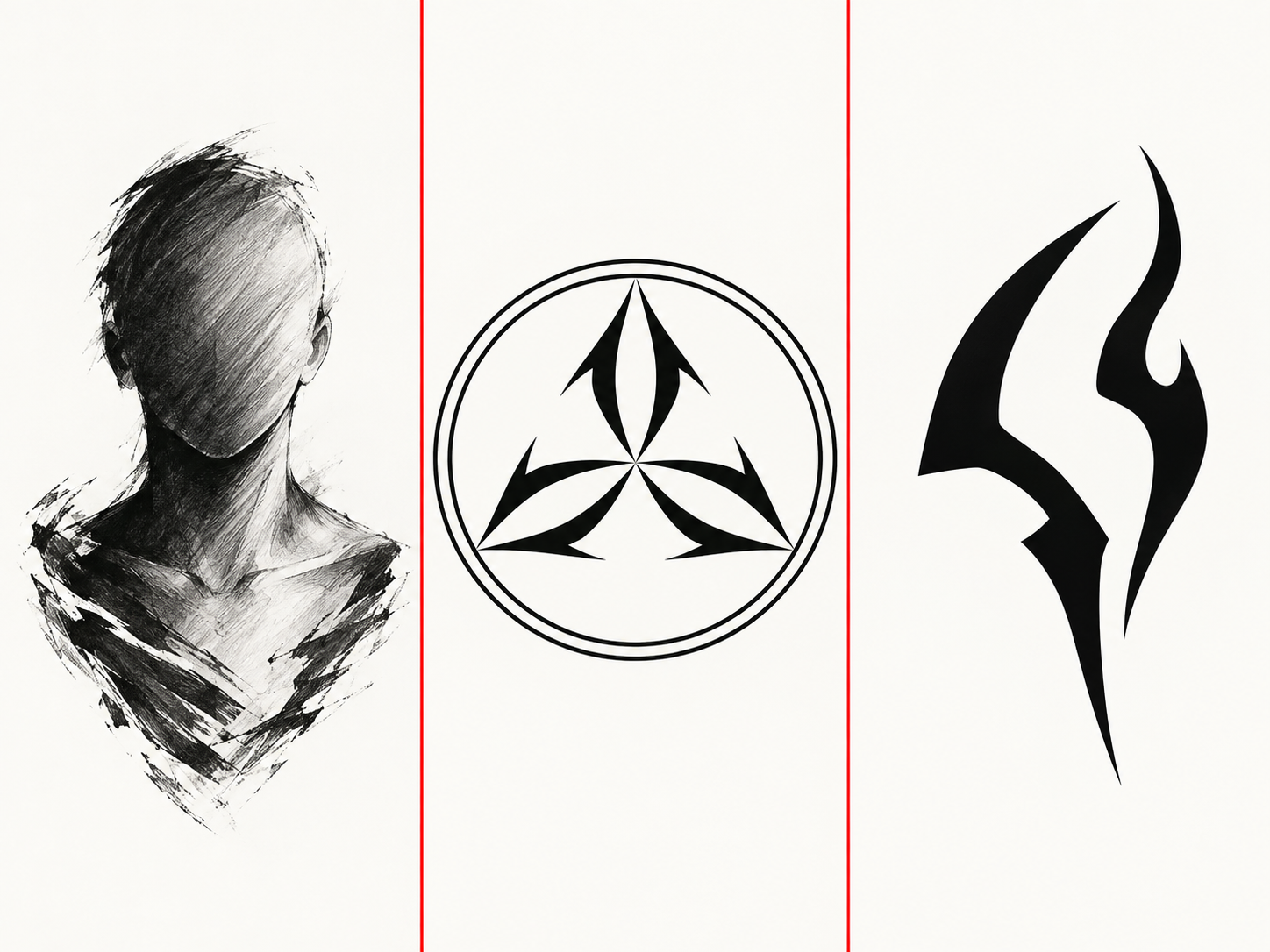
Every Jujutsu Kaisen tattoo idea falls into one of three structurally different categories. They don’t just look different — they need different amounts of space, different placements, and often different styles to work.
Character Portrait Tattoos
A character portrait tattoo is a detailed rendering of a character, inspired by their design rather than copied from a specific official image. Portraits carry facial features, expression, and costume detail, which means they need real canvas space to stay legible. This is the category for someone who wants a specific character, like a Gojo-inspired or Sukuna-inspired portrait, to be the clear focal point of the piece. Because so much of what makes a portrait recognizable depends on fine detail around the eyes, hair, and expression, this is also the category most sensitive to being placed or sized incorrectly.
Cursed Technique Symbol Tattoos
Cursed technique symbol tattoos take the visual language of a character’s ability, like a Domain Expansion motif, a cursed seal pattern, or an energy-effect design, and turn it into a standalone graphic. These designs are abstract by nature, which means they scale down well without losing their shape. A cursed technique tattoo is the category for someone who wants their design to read as “inspired by Jujutsu Kaisen” without needing a character’s face to carry the concept. This category tends to age the most predictably of the three, since a clean abstract shape has fewer fine details that can blur or spread over time.
Iconic Mark Tattoos
An iconic mark tattoo uses a single distinctive visual signifier tied to one character, without going as far as a full portrait. Think of it as the middle ground: more specific than an abstract symbol, simpler than a detailed likeness. This category works well for someone who wants a design that’s instantly recognizable to other fans but doesn’t want the size or detail commitment a full portrait requires. It’s also a practical starting point for a first Jujutsu Kaisen tattoo, since it carries less risk than committing to a large, detailed portrait right away.
Knowing which of these three categories you’re actually choosing from is the single most useful decision you can make before you ever sit down with an artist. It isn’t an editorial gimmick to sort designs this way — portraits, symbols, and marks genuinely behave differently as tattoos, and treating them as one undifferentiated bucket of “Jujutsu Kaisen tattoo ideas” is exactly what leaves most existing galleries and guides unable to give real placement or sizing advice.
Matching Motifs to Placement and Size
Once you know your category, the next decision is where it goes and how big it needs to be. The two aren’t separate choices. Detailed designs need space to stay clean as they age, and simpler designs can go almost anywhere, including spots that a detailed portrait would never hold up on.
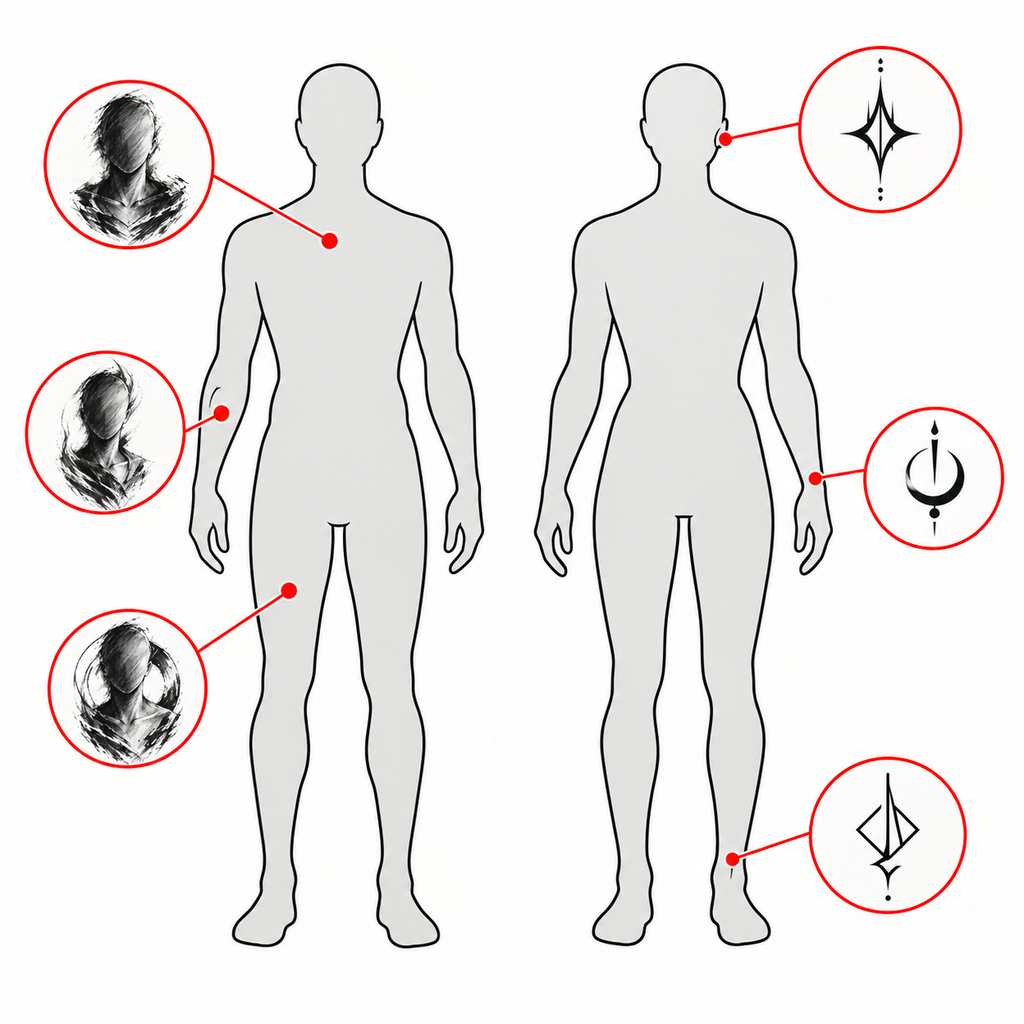
Character portrait tattoos need real space. Forearm, back, and thigh placements give a portrait enough room for the facial detail and shading that makes it recognizable. This applies whether the portrait is inspired by Sukuna, Gojo, Toji, Nanami, or another character with strong enough features to carry a likeness-driven design. Going smaller than that risks the piece blurring into an unrecognizable blob within a few years, since fine detail is exactly what fades and spreads first on skin.
Cursed technique symbol and iconic mark tattoos scale down far more gracefully. A cursed seal motif, a Domain Expansion-inspired symbol, or a single iconic mark can work on smaller, more private placements like the wrist, the ankle, or behind the ear, because these designs rely on clean shapes and strong outlines rather than fine detail.
Here’s how that logic applies across the characters real Jujutsu Kaisen fans are most often looking for tattoo inspiration from:
| Character | Strongest Motif Category | Suggested Placement | Suggested Size |
|---|---|---|---|
| Sukuna | Character portrait or iconic mark | Forearm or back for a portrait; wrist or forearm for a mark | Large for a portrait; small-to-medium for a mark |
| Gojo Satoru | Character portrait or cursed technique symbol | Forearm, back, or upper arm | Medium-to-large |
| Toji Fushiguro | Character portrait | Forearm, back, or thigh | Medium-to-large |
| Nanami Kento | Character portrait or iconic mark | Forearm or upper arm | Medium |
| Suguru Geto | Character portrait or cursed technique symbol | Upper arm or back | Medium |
| Mahito | Cursed technique symbol or iconic mark | Wrist, forearm, or behind the ear | Small-to-medium |
| Yuta Okkotsu | Character portrait or iconic mark | Forearm or upper arm | Medium |
| Aoi Todo | Character portrait | Upper arm or back | Medium-to-large |
| Choso | Iconic mark or cursed technique symbol | Wrist or forearm | Small-to-medium |
| Mahoraga | Cursed technique symbol | Back or upper arm | Medium-to-large |
This isn’t a ranking of which character makes the best tattoo. It’s a starting point for matching a character you already care about to the design category, placement, and size that will actually let that design read clearly, both today and years from now.
The placement and size logic here holds regardless of which specific character you pick, because it follows from the design category, not the character’s popularity. A detailed portrait needs the same forearm-or-larger amount of space whether it’s inspired by a widely recognized character or a less common pick, and a compact symbol scales down the same way either way. That’s the part most galleries and generic guides skip: they’ll show you dozens of character options, but they won’t tell you that the category you choose, not the character alone, is what determines whether the tattoo still reads clearly five or ten years later.
Detailed color portraits are also worth thinking about in terms of long-term upkeep. Fine shading and color tend to need occasional touch-ups to stay sharp, more so than a simple blackwork symbol or a minimalist iconic mark, which hold their edges with less maintenance. That’s not a reason to avoid a portrait if that’s genuinely the design you want, but it’s a fair consideration when weighing a large, detailed piece against a smaller, simpler one.
Style Pairing: Fine-Line, Blackwork, or Color for Your JJK Design
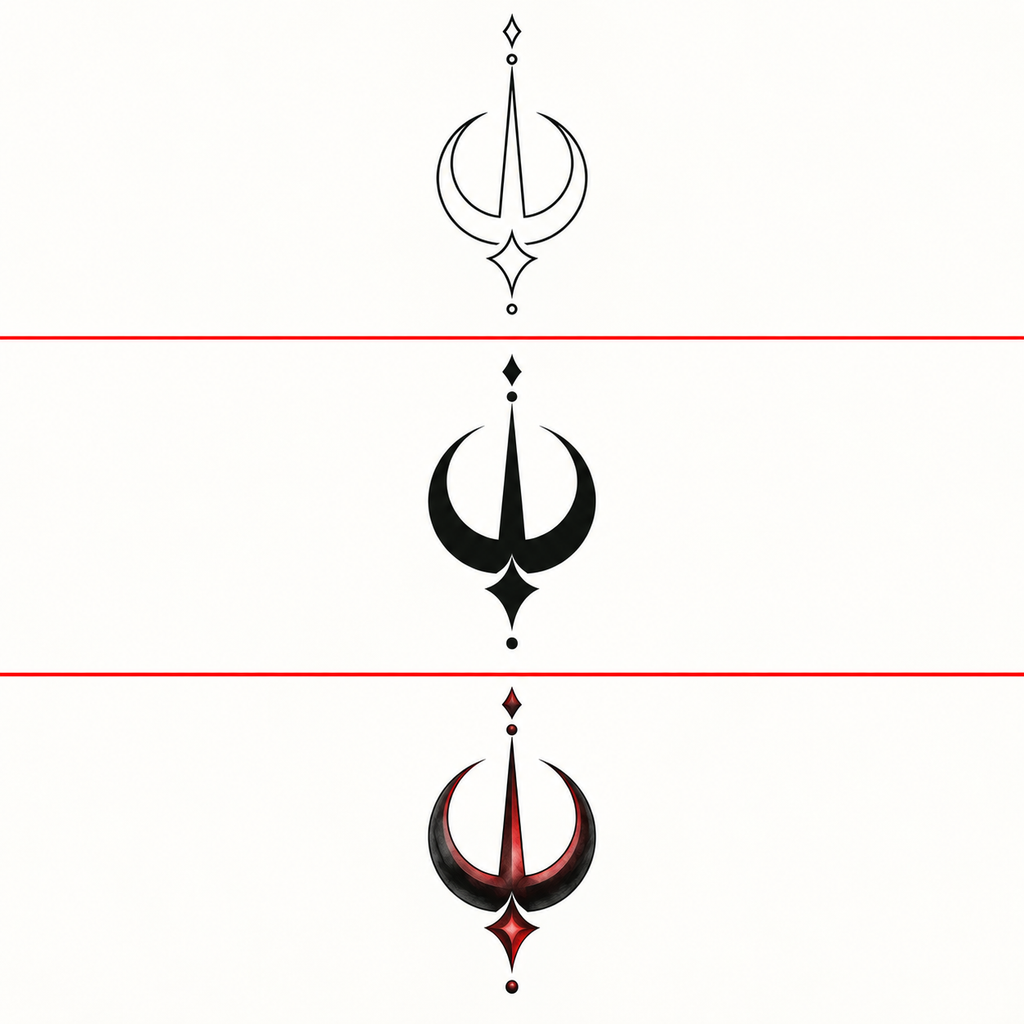
Style choice follows the same logic as placement and size: it depends on what you’ve already chosen to design, not on a separate, unrelated menu of options.
Fine-line and minimalist styles suit cursed technique symbols and iconic marks well. These designs are built from clean shapes to begin with, so a lighter linework style keeps them sharp without adding detail the design doesn’t need. A minimalist Jujutsu Kaisen tattoo built around a single symbol or mark tends to age better in this style than in a heavier one.
Bold blackwork suits high-contrast motifs, including cursed seal designs and symbol-based pieces that benefit from strong, saturated black shapes rather than fine detail. Blackwork holds its edges well over time, which makes it a reasonable choice for a design that leans on shape more than shading.
Color and realism styles suit detailed character portraits, where a character’s likeness and any energy or cursed-technique effects around them depend on shading, contrast, and color to actually read as that character. A portrait rendered in pure line art loses most of what makes it recognizable, so this category is where color and realistic shading genuinely earn their place.
Whichever style you land on, tattoo artists generally recommend choosing style and placement together with your artist rather than locking in the size or detail level before that conversation happens. A design that looks perfect as a reference image doesn’t always translate directly to skin at the same scale.
None of these style pairings are strict rules. They reflect how these design categories actually tend to age and read at different sizes, which is a practical consideration rather than an aesthetic preference. A minimalist cursed-seal design done in bold blackwork instead of fine-line, for example, can still work well — the pairing above is a starting point for a conversation with your artist, not a fixed formula.
FAQ
What does a Jujutsu Kaisen tattoo symbolize?
That depends on which design category you choose. A character portrait tends to represent a personal connection to that specific character. A cursed technique symbol or Domain Expansion-inspired design tends to represent a connection to a character’s ability or identity without needing their likeness. An iconic mark sits in between: recognizable to other fans, but more abstracted than a full portrait.
What are popular Jujutsu Kaisen tattoo designs?
Sukuna, Gojo Satoru, Toji Fushiguro, and Nanami Kento are among the characters fans most often look to for tattoo inspiration, whether as a detailed portrait, a cursed technique symbol tied to their ability, or a simpler iconic mark. Mahito, Yuta Okkotsu, and Mahoraga also show up frequently, especially in symbol-based and mark-based designs rather than full portraits.
Where should I place a Jujutsu Kaisen tattoo?
It depends on the category. Detailed character portraits need larger placements like the forearm, back, or thigh to keep facial and costume detail legible. Cursed technique symbols and iconic marks scale down well and work on smaller, more private placements like the wrist, ankle, or behind the ear.
What style works best for Jujutsu Kaisen tattoos?
Fine-line and minimalist styles suit symbol- and mark-based designs. Bold blackwork suits high-contrast motifs built from strong shapes. Color and realism styles suit detailed character portraits, where shading and color are what make the likeness actually read as that character.
Which Jujutsu Kaisen character makes the best tattoo?
There isn’t a single best answer. It depends on which design category fits what you want: a character portrait if you want a specific likeness front and center, a cursed technique symbol if you want something more abstract, or an iconic mark if you want a middle ground between the two.
Jujutsu Kaisen tattoo ideas on this page are original, fan-inspired concepts. InkShonen is an independent resource and is not affiliated with, endorsed by, or sponsored by the creators, publishers, or rights holders of Jujutsu Kaisen.
Related reading: if you’re building out a full sleeve or want to see this same character-and-style framework applied to a different franchise, Spy x Family Tattoo Ideas: Anya, Loid, Yor, and Bond Designs That Actually Work Small and Chainsaw Man Tattoo Ideas: Denji, Power, Aki, and Pochita Designs walk through the same size-and-placement thinking for their own casts. For more character-driven tattoo inspiration across anime, browse the full Anime Characters collection.