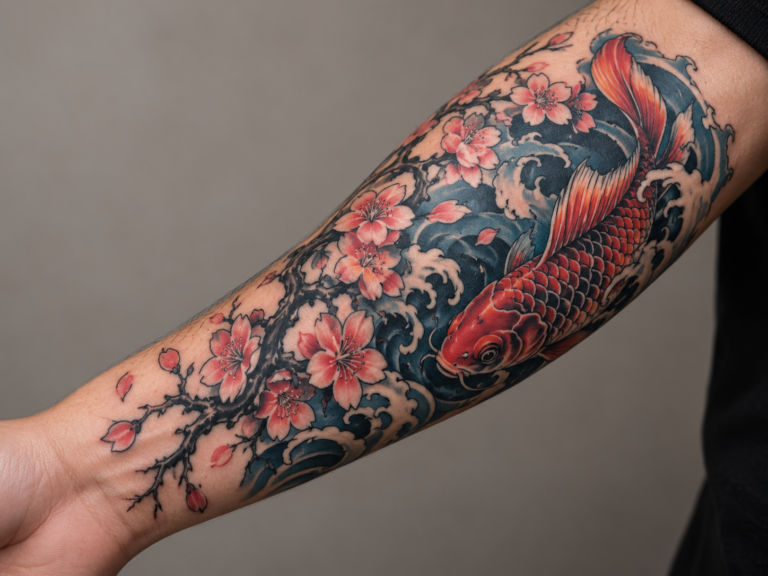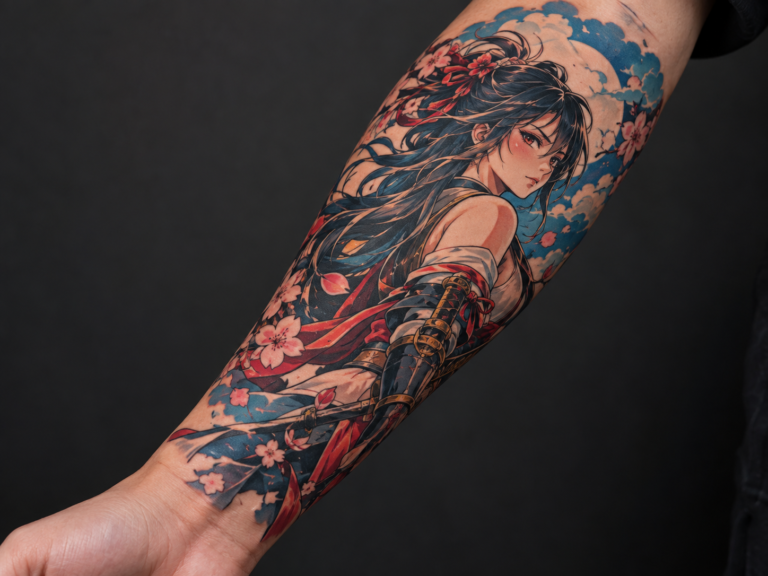
Anime Tattoo Aftercare: The Complete Healing and Color-Care Guide
Healing works the same way for every tattoo. What changes is how much a careless week can cost you when the design carries fine linework or heavy color. A bold blackwork shape can survive a little rough handling and still read clearly. A detailed anime portrait or a full-color piece can’t take the same risks without losing exactly the details that made you want it in the first place. This guide covers the healing process itself, building on the baseline aftercare steps in the American Academy of Dermatology’s tattoo safety guidance, then goes further into what actually protects fine-line and color-heavy anime work while it heals — the part most aftercare pages skip entirely.
If you’re still working through the earlier decisions — style, size, placement, whether you’re ready to book at all — What to Know Before Getting an Anime Tattoo covers that ground. This guide picks up from the moment you leave the studio.
Table of Contents
Table of Contents
The First 24–48 Hours
What you do in the first day or two matters more than almost anything else in the healing process, because this is when the tattoo is most exposed.
Your artist will send you home with one of two coverings: plastic wrap or a medical adhesive bandage like Saniderm or Tegaderm. Plastic wrap usually comes off within a couple of hours. A medical adhesive bandage can stay on much longer — anywhere from a day to several days, depending on your artist’s preference and how your skin reacts to it. There’s no single correct number here. Follow whatever your artist told you specifically, since they chose the covering based on your design and skin.
Once the covering comes off, wash the tattoo gently with warm water and an unscented soap. You’ll likely see some plasma, ink, or blood residue mixing with the wash water. That’s expected, not a sign anything went wrong. Pat the area dry with a clean towel — don’t rub it — and let it air out for a while before applying anything. Most artists recommend skipping lotion entirely on the first day and letting the skin settle first.
Don’t re-wrap the tattoo once the original covering is off, unless your artist specifically told you to.
Cleaning and Moisturizing During Healing
Once the first day has passed, the routine becomes simple and repetitive: keep it clean, keep it lightly moisturized, and don’t overdo either one.
Wash the tattoo once or twice a day with an unscented soap, using clean hands. Pat it dry rather than rubbing. Once it’s dry, apply a thin layer of an unscented lotion or tattoo-specific balm. A thin layer is the goal — enough to keep the skin from drying out and cracking, not enough to leave the area sitting under a thick, greasy film. Let one application wear off before you add more. Over-moisturizing is just as likely to slow healing down as under-moisturizing is.
Stick to unscented products throughout this window. Fragrance and unnecessary additives are more likely to irritate healing skin, and they add a variable you don’t need while you’re trying to tell whether the tattoo itself is healing normally.
What’s Normal While It Heals
A healing tattoo goes through a predictable, slightly unglamorous stage before it looks finished, and knowing what to expect keeps you from mistaking normal healing for a problem.
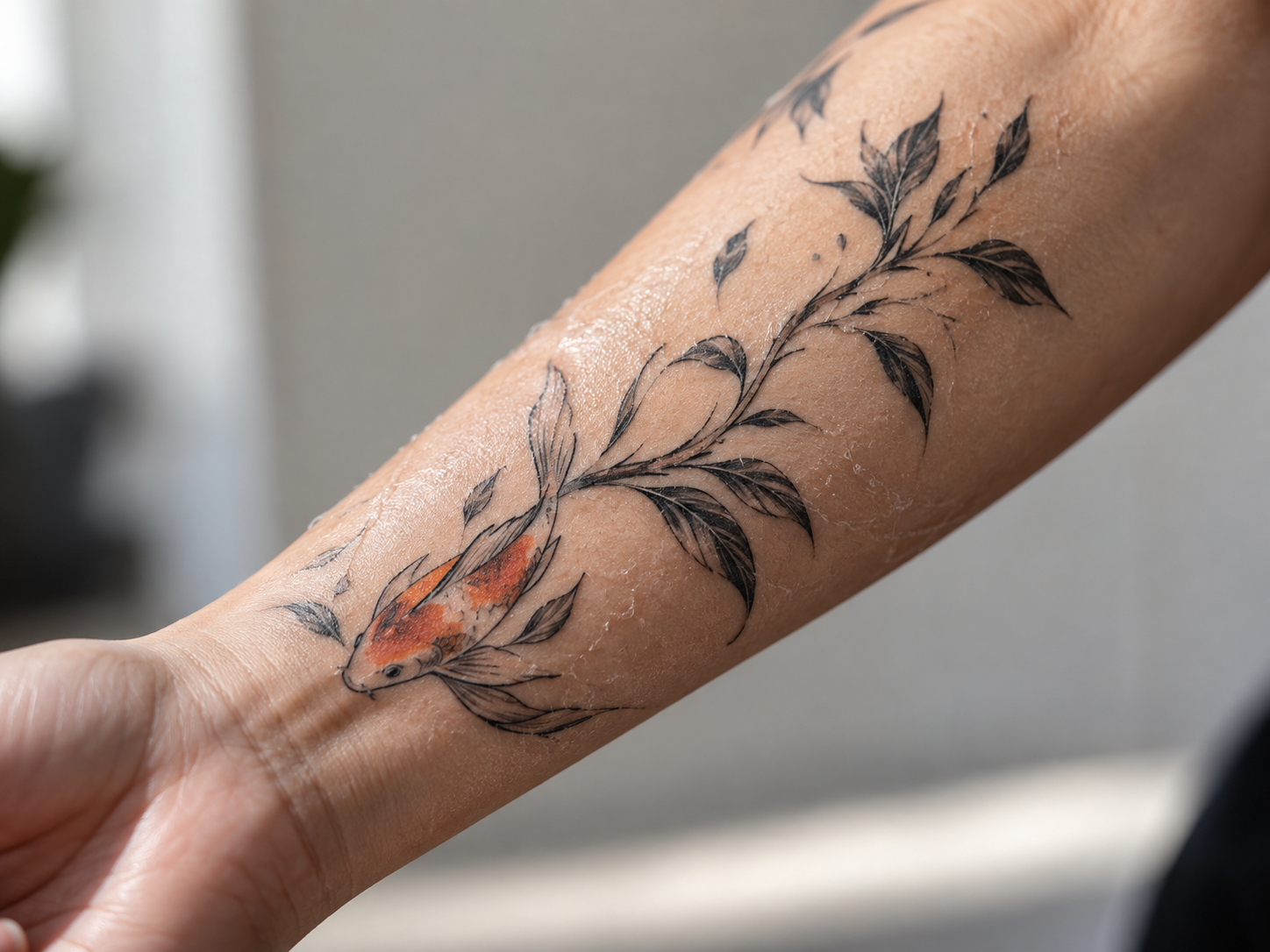
Peeling and flaking usually start within the first week and can continue into the second. Mild scabbing is common too, especially over areas with heavier ink saturation. None of this means anything went wrong — it’s just skin shedding the layer that took the trauma of the needle.
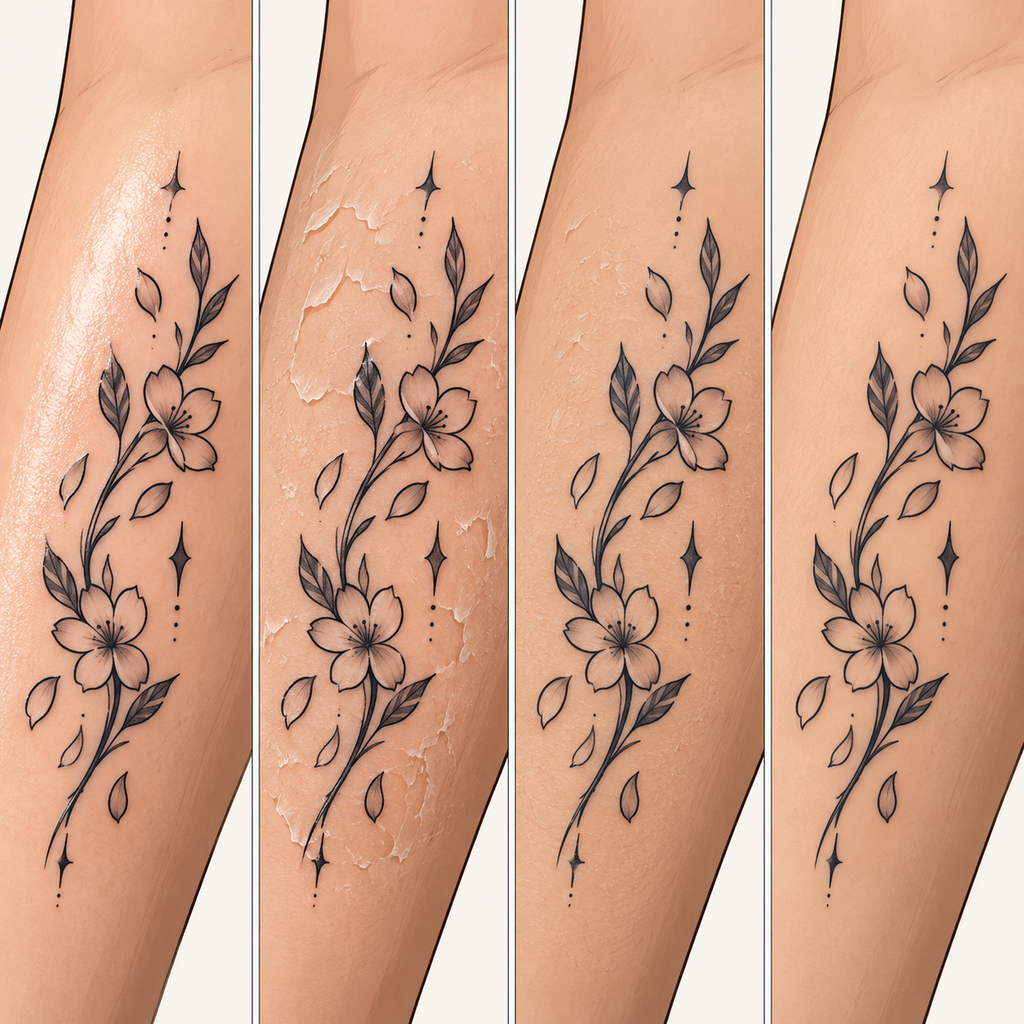
Itching tends to show up as the peeling stage kicks in, and it’s one of the harder parts of healing to sit through. Pat the area instead of scratching it. Scratching or picking at flaking skin is the single most common way people damage a healing tattoo, because it can pull out ink along with the skin rather than letting it shed on its own.
If something looks genuinely different from ordinary peeling — spreading redness, real swelling, or anything that looks infected rather than just healing — that’s a signal to reach out to your artist or a medical professional rather than waiting it out. More on that later in this guide.
What to Avoid During Healing
A short list of things to steer clear of during the healing window, and why each one matters:
- Direct sun exposure. Sun on a healing tattoo can irritate healing skin and dull the ink’s appearance, so it’s best avoided during the healing window.
- Soaking and swimming. Baths, pools, and long soaks introduce bacteria to an open healing area. Quick showers are fine; submerging the tattoo isn’t.
- Saunas and hot tubs. Same underlying risk as soaking, with added heat that can irritate already-sensitive skin.
- Heavy sweating and intense exercise, especially in the first several days. Sweat can irritate the area and heavy movement can stress skin that’s still fragile.
- Tight clothing and jewelry near the tattoo. Friction from a waistband, sleeve, watch, or ring rubbing against a healing tattoo can disrupt the surface exactly where you need it left alone.
That last point matters more depending on where the tattoo is. A tattoo on a high-friction spot — a hand, a foot, a wrist under a watch band — needs more deliberate care during healing than one on a flatter, more stable part of the body. If you’re still deciding on placement, Best Placement for an Anime Tattoo walks through which spots make healing (and long-term wear) easier or harder. Here, the point is simpler: whatever you chose, keep friction off it while it heals.
Protecting Fine-Line and Detailed Anime Work
This is where most aftercare advice stops being useful for anime tattoos specifically, because fine-line and highly detailed work carries a risk that bolder tattoos mostly don’t: losing the exact detail that makes the design recognizable.
A bold, simple shape can take some rough handling during the peeling stage and still look right once it heals — a slightly disrupted edge on a thick line barely shows. A thin line has no such buffer. If skin lifts or gets picked at over a fine line, there’s a real chance of pulling out ink along a stretch that thin, leaving a visible gap rather than just a softer edge. The same goes for small facial features or expressive details — the kind of thing an anime character’s whole likeness often depends on. Lose a sliver of linework there and the design can stop reading as the character it’s supposed to be.
None of this means fine-line tattoos heal through a different biological process. They heal exactly the way any tattoo heals. What’s different is how much margin for error the design has. A detailed piece simply has less room to absorb a mistake during healing than a bold one does.
Practically, that means a few things matter more here than they would for a simple shape. Avoid stretching or flexing the tattooed area more than necessary during the peak peeling days, since movement is one of the more common ways skin lifts unevenly over fine lines. Resist the urge to check on the design constantly by rubbing or pressing on it — let it heal without added handling. And don’t layer on heavy amounts of product hoping to “protect” the detail faster — a thin, consistent layer is still the goal here, exactly as it is for the rest of the tattoo. Thin, consistent care beats heavy, inconsistent care every time, and it matters more here than almost anywhere else in this guide.
Protecting Color-Heavy Anime Work
Color-heavy and cel-shaded anime pieces carry a different version of the same underlying risk: not losing fine lines, but losing the clean, saturated color blocks and transitions that make the piece pop.
Sun exposure deserves extra caution with color specifically. Fresh color is generally considered more sensitive to fading or dulling from sun than a fully healed tattoo is, which is why it’s worth being more careful than usual — covering or shading a fresh color piece when you’re going to be outside, rather than treating sun exposure as an afterthought until you’d normally reach for sunscreen anyway.
Picking and scratching also do more visible damage to color work than to a simple black outline. A patch of lifted skin over a solid color fill or a smooth color transition tends to heal back looking uneven or patchy in a way that’s much more noticeable than the same disruption over plain blackwork. If a color section itches more than the rest of the tattoo during peeling, pat it exactly like you would anywhere else. Don’t single it out for extra scratching just because it feels different.
As with fine-line work, none of this reflects color ink healing through a separate biological process. The skin heals the same way regardless of what color went into it. What changes is how visible any mistake becomes once the color is meant to sit clean and even.
How Your Style Choice Shapes Your Aftercare Priorities
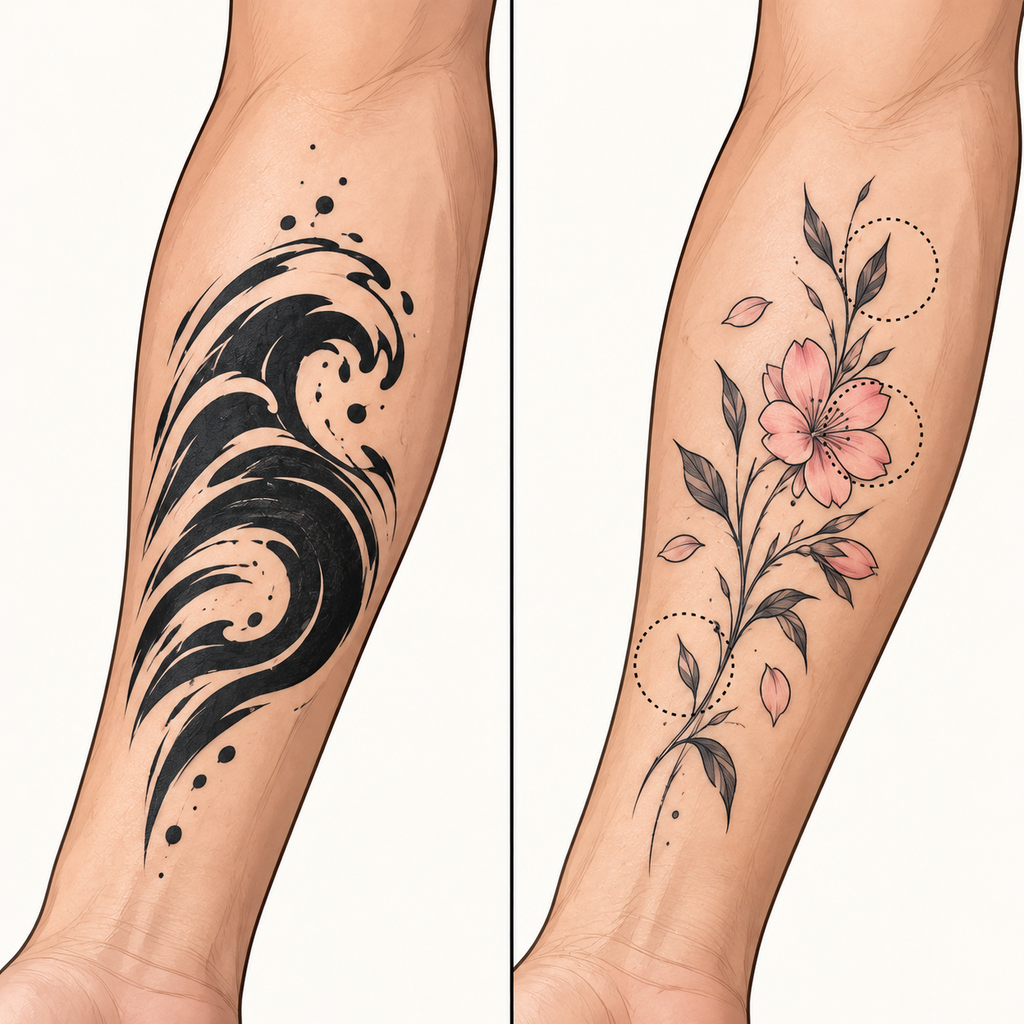
The style you chose already shapes which parts of this guide matter most for you. Bold blackwork tolerates a rough healing week better than fine-line or color-heavy work does, simply because it has more visual margin to absorb small inconsistencies. If you went with fine line, color, or both, the sections above deserve extra attention.
When to Check In With Your Artist
Everything in this guide is general healing guidance, not a replacement for what your specific artist told you. If your artist’s instructions differ from anything here — a different bandaging window, a different recommended product, a different timeline — follow their instructions. They know your specific tattoo, your skin, and the techniques they used to create it.
Reach out to your artist, and see a medical professional if needed, if you notice anything that goes beyond ordinary healing: spreading redness or heat well past the tattooed area, real swelling, pus, a fever, or pain that gets worse instead of better as the days pass. This guide can tell you what typical healing looks like. It can’t diagnose what you’re seeing, and it isn’t trying to.
Surface healing generally falls somewhere around two to four weeks for most tattoos, though the exact timeline varies from person to person and tattoo to tattoo, and by how well the early care steps above are followed — there’s no single universal number that applies to everyone. The skin underneath keeps settling for a while after the surface looks done, which is part of why patience during the visible healing weeks pays off later. Once your tattoo is fully healed, how well it holds up over months and years is a separate question worth thinking about as you decide on aftercare products and sun protection long-term.
A note on this guide: healing time, sensitivity, and how a tattoo settles in all vary from person to person and from design to design. Treat everything above as general guidance, not a fixed timeline or a substitute for your artist’s specific instructions, and consult a licensed tattoo artist or a medical professional about anything that concerns you.
FAQ
How long does it take for an anime tattoo to heal?
Surface healing generally falls somewhere around two to four weeks for most tattoos, though the exact timeline varies from person to person and tattoo to tattoo. The skin underneath continues to settle for some time after the surface looks fully healed.
Is peeling and scabbing normal on a detailed anime tattoo?
Yes. Peeling, flaking, and light scabbing are a normal part of healing for any tattoo, including detailed or color-heavy anime work. The key is leaving it alone while it happens rather than picking at it, since detailed work has less room to absorb damage from picking than a bold, simple design does.
Does color fade faster than black-and-grey during healing?
Color sections can be more visually sensitive during the healing window specifically — more affected by early sun exposure and more noticeable if picked at — which is why extra care matters early on. That’s different from the question of how a tattoo fades over months or years, which depends on more than just how it was healed.
Can I tell if my fine-line tattoo is healing correctly?
Ordinary peeling, light scabbing, and mild itching are normal, even over fine lines, and a healing tattoo can look temporarily lighter, patchy, or less crisp than it will once it’s fully settled. That’s a normal part of the process, not something to try to diagnose yourself. If anything about how a section is healing concerns you, your artist is the best person to ask, since they can see the design as it was originally done and assess it directly.