How to Design a Custom Anime Tattoo With Your Artist
Knowing how to design a custom anime tattoo comes down to one thing: you bring a brief and the artist draws the tattoo, so you do not need to draw anything yourself. A good brief is a small set of references, a clear idea of what must stay recognizable, and a placement, and it decides most of what the finished piece looks like.
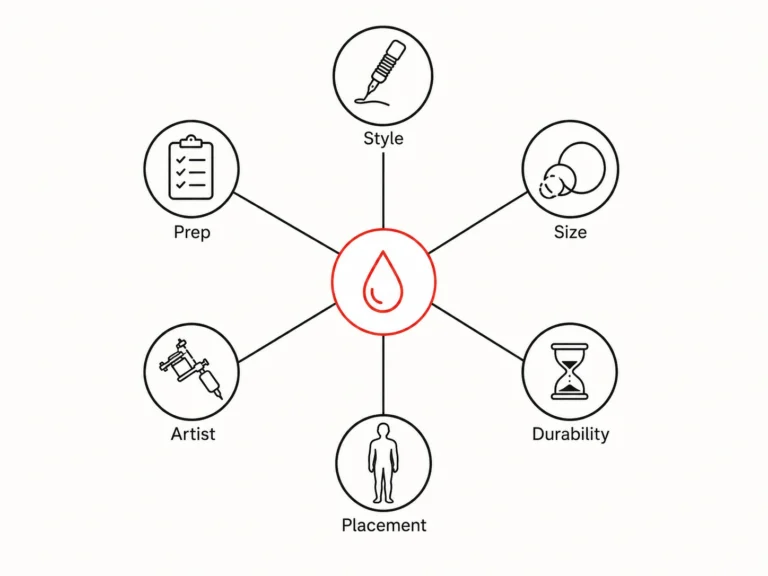
The sections below follow the order an artist will ask for those things, then cover what to check in the drawing before any ink goes in. For the wider decisions around style, size and artist, see What to Know Before Getting an Anime Tattoo, and the Tattoo Guides category page lists the rest of the series.
Build a Reference Set an Artist Can Use
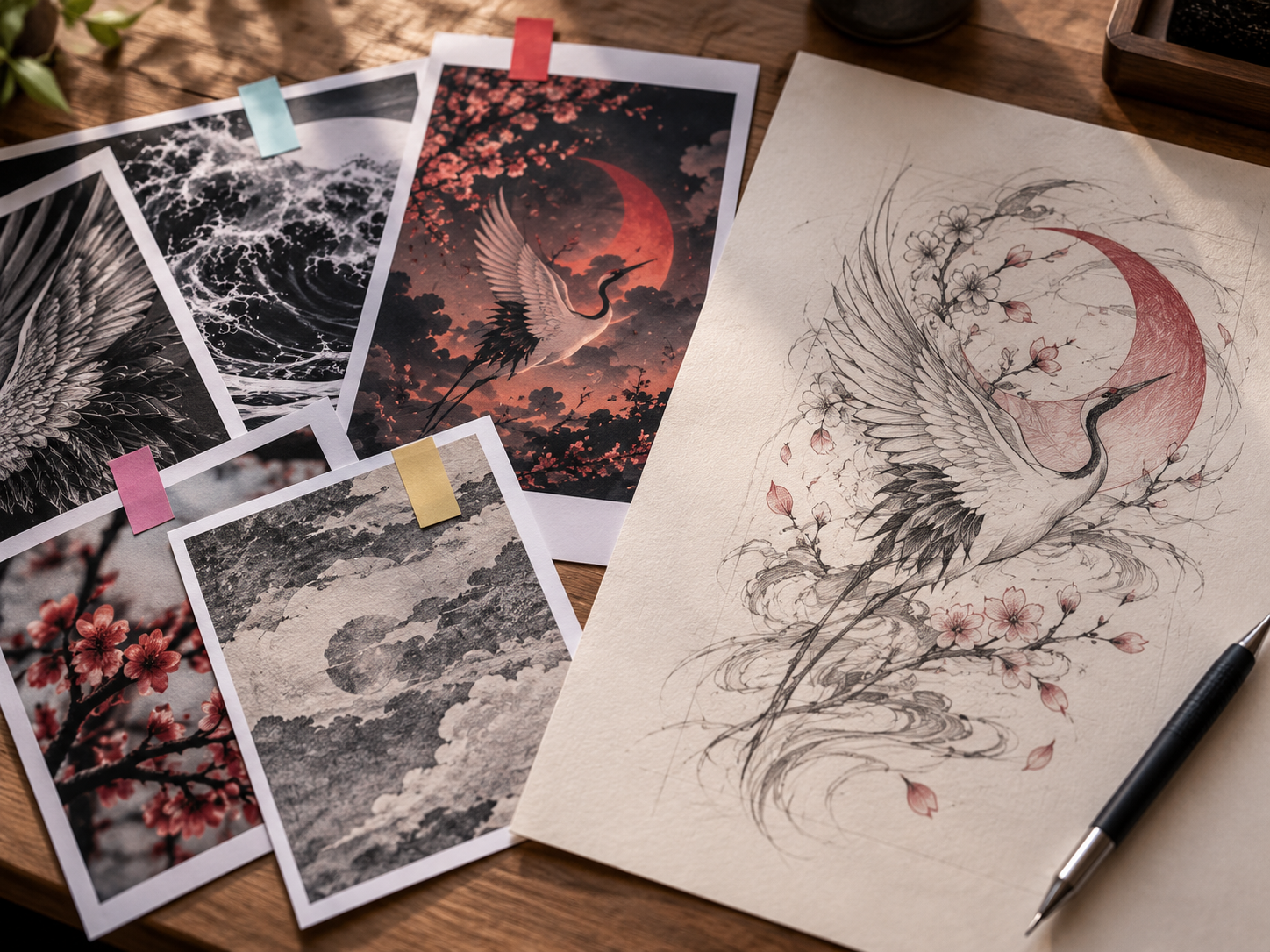
Bring a handful of images, not one. A single reference invites a copy, while a set shows the artist what you keep coming back to. Mix the sources: a panel or screen capture you love, a tattoo whose linework you admire, and a painting or photo that has the lighting or mood you want.
Next to each image, write one line about what you want from it: the line weight, the palette, the pose, the expression or the composition. An artist who learns that you like the heavy outline in one image and the soft color in another can combine them. An artist handed an unmarked folder has to guess.
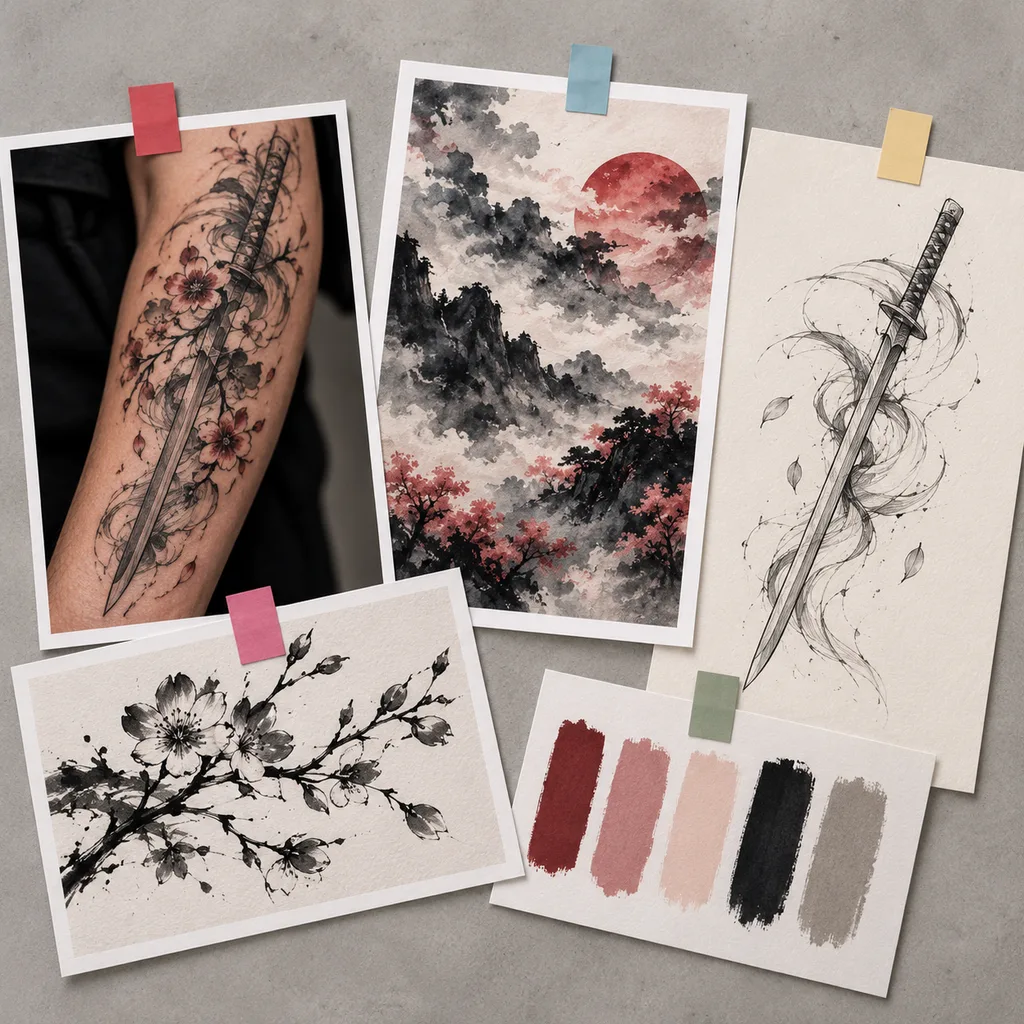
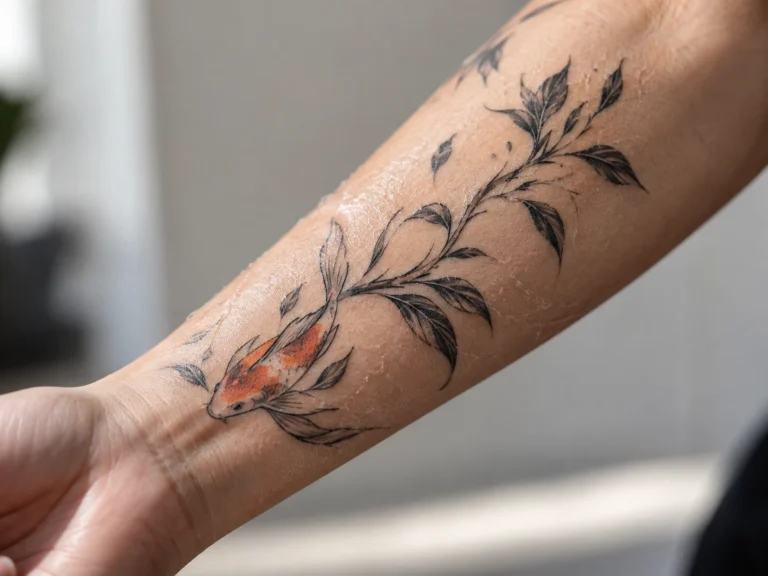
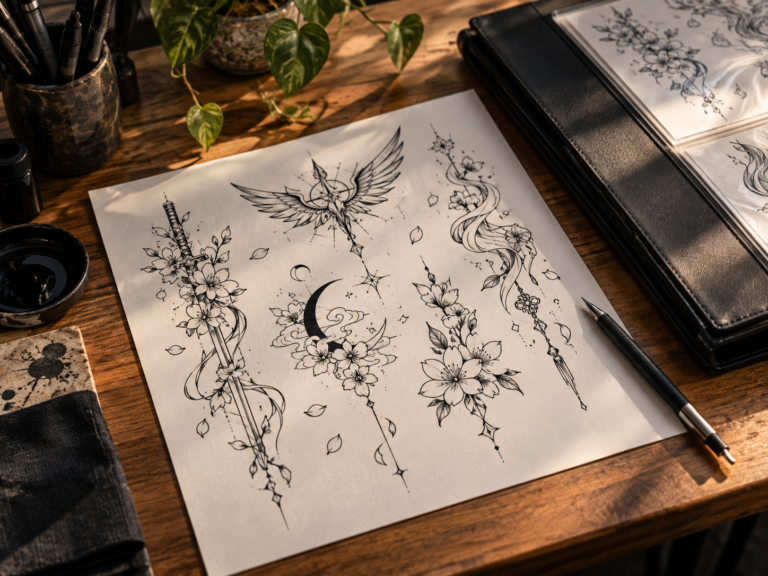
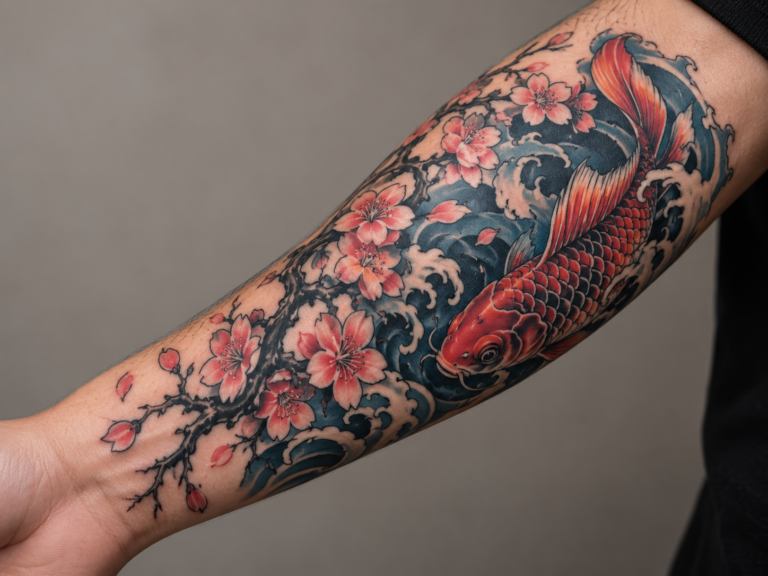
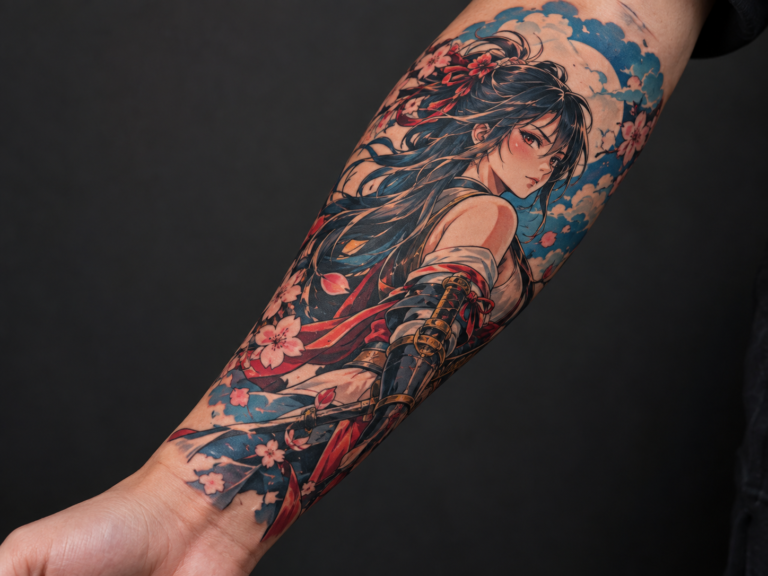
Illustrative concept images: AI-generated artwork created to explore tattoo design ideas. They do not represent verified tattoos performed on real clients.
Leave the images as you found them. Crops, filters and collages laid over a reference tend to hide the detail the artist needs to see.
Choose How Close to the Source to Stay
Every custom piece sits somewhere between a faithful homage and an original design that only borrows a feeling. Decide where before the first sketch, because it changes what the artist draws and how long the drawing takes.
| Approach | What the artist draws | What you give up |
|---|---|---|
| a close homage | the source subject redrawn for skin, keeping its pose and palette | surprise, since anyone who knows the source recognizes it at once |
| a reinterpretation | the same subject in a new composition, style or setting | some instant recognition, in exchange for a piece that rewards a second look |
| an original design | new shapes built on a mood, a symbol or a motif | any tie to one specific image, which is the point if you want something nobody else has |
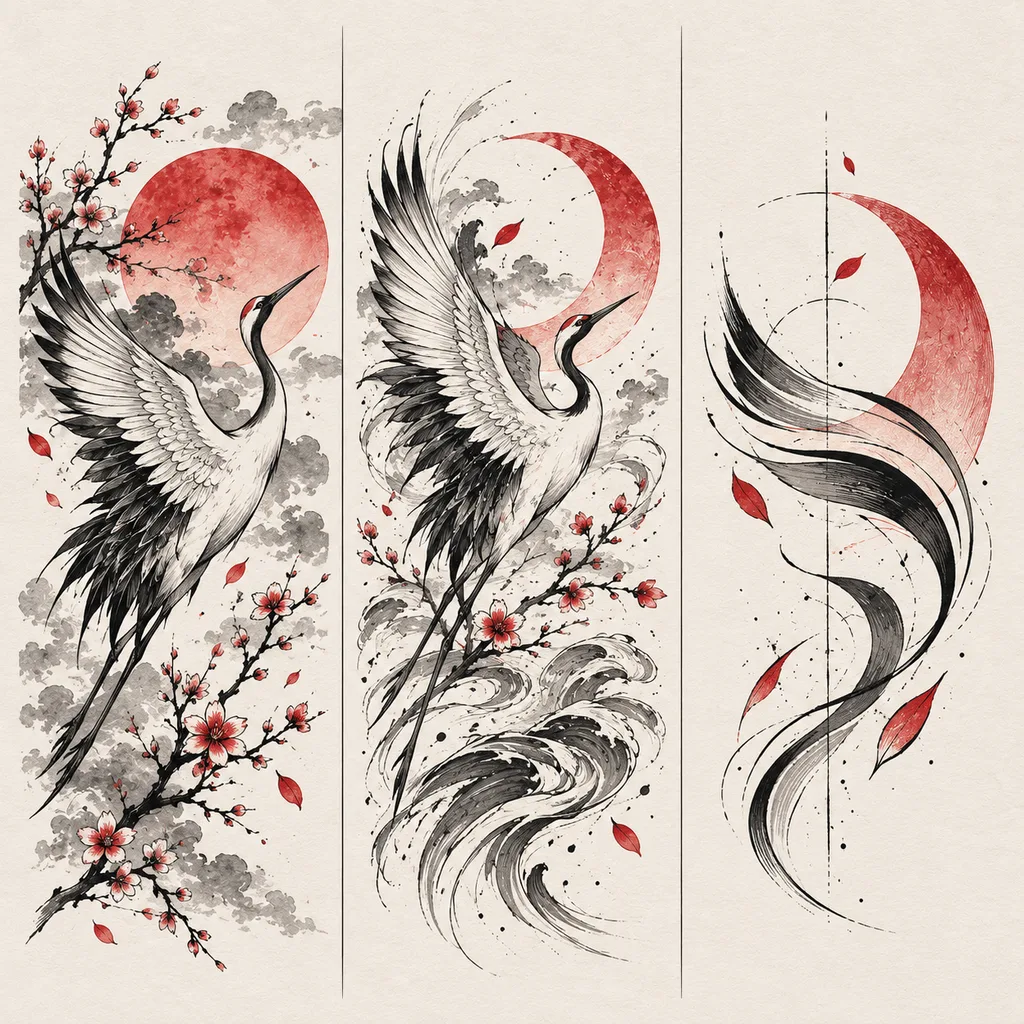
Artists differ on how closely they follow a reference. Some redraw it from scratch to fit your body, others stay closer to the source, and some decline to copy another artist’s artwork exactly, which is a reasonable line for them to draw. If you want one specific image reproduced exactly, say so early.
Choose a close homage if recognition matters more than novelty. Choose a reinterpretation if you want the subject without the screenshot. Choose an original design if what you want is a feeling, such as calm, speed or loneliness, rather than a particular scene.
Adjust the Art for Skin
Anime art is made for screens, and some of what works there has to be rebuilt in ink. Ask the artist about each of these:
- line weight: thin outlines from a digital image often need thickening so they stay readable at tattoo size.
- detail: small eyes, fine hair strands and crowded backgrounds need room, so a small tattoo usually keeps fewer of them.
- color: flat fills and smooth gradients translate differently, and the artist may replace a gradient with shaded or hatched passes.
- effects and text: speed lines, glow and lettering from the source often have to be redrawn or dropped.
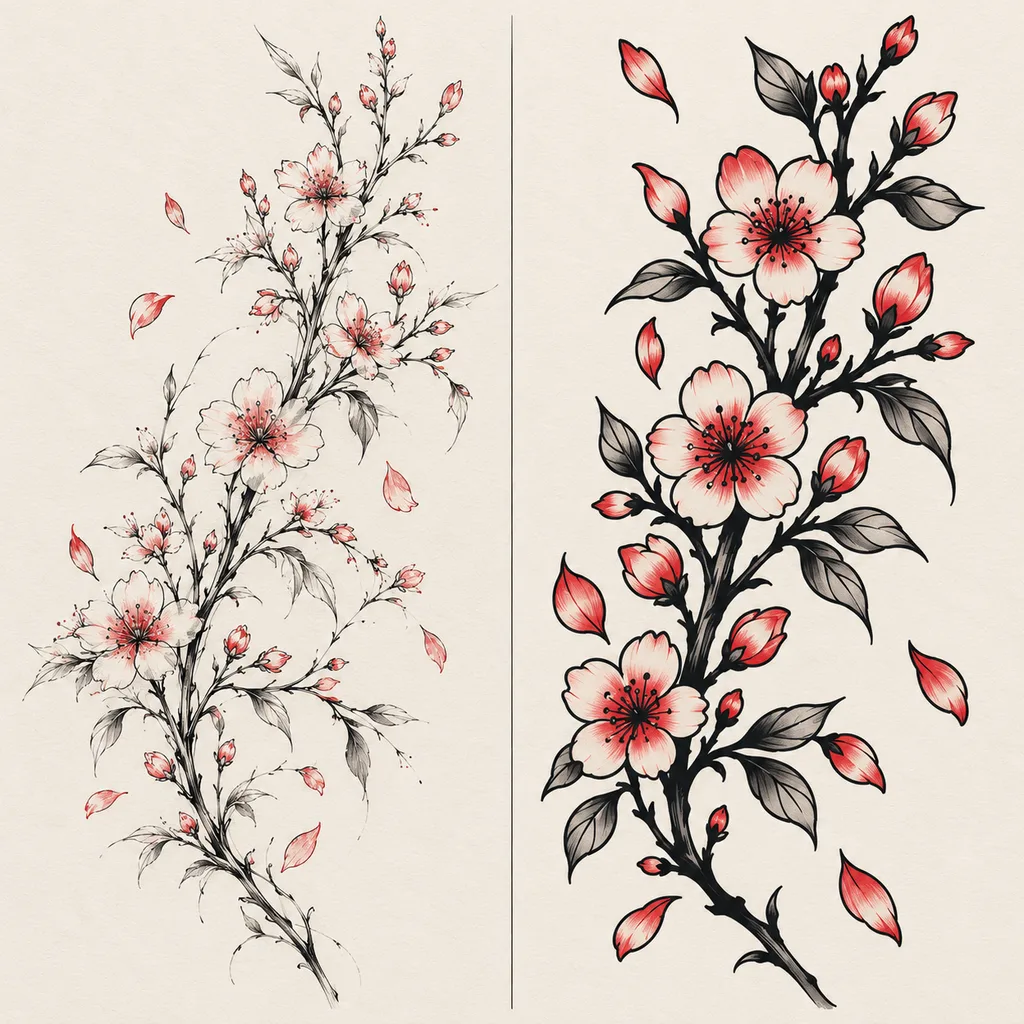
The trade-off runs one way: more of the original detail needs more space, or a simpler version of that detail. If the tattoo must stay small, name the parts you cannot give up and let the artist simplify the rest. Size, style and color also drive the price and the number of sessions, which How Much Does an Anime Tattoo Cost? A Size, Style, and Color Breakdown breaks down.
Fit the Design to the Body
A design is drawn flat and worn on a curve. Tell the artist where it goes before the sketch, because placement sets the shape: a tall blade or standing figure suits the outer forearm, a wide scene needs a back or thigh, and a small icon works almost anywhere. Best Placement for an Anime Tattoo: A Full Guide by Pain, Durability, and Style compares the areas on pain and durability, which is worth settling before you commission the drawing.
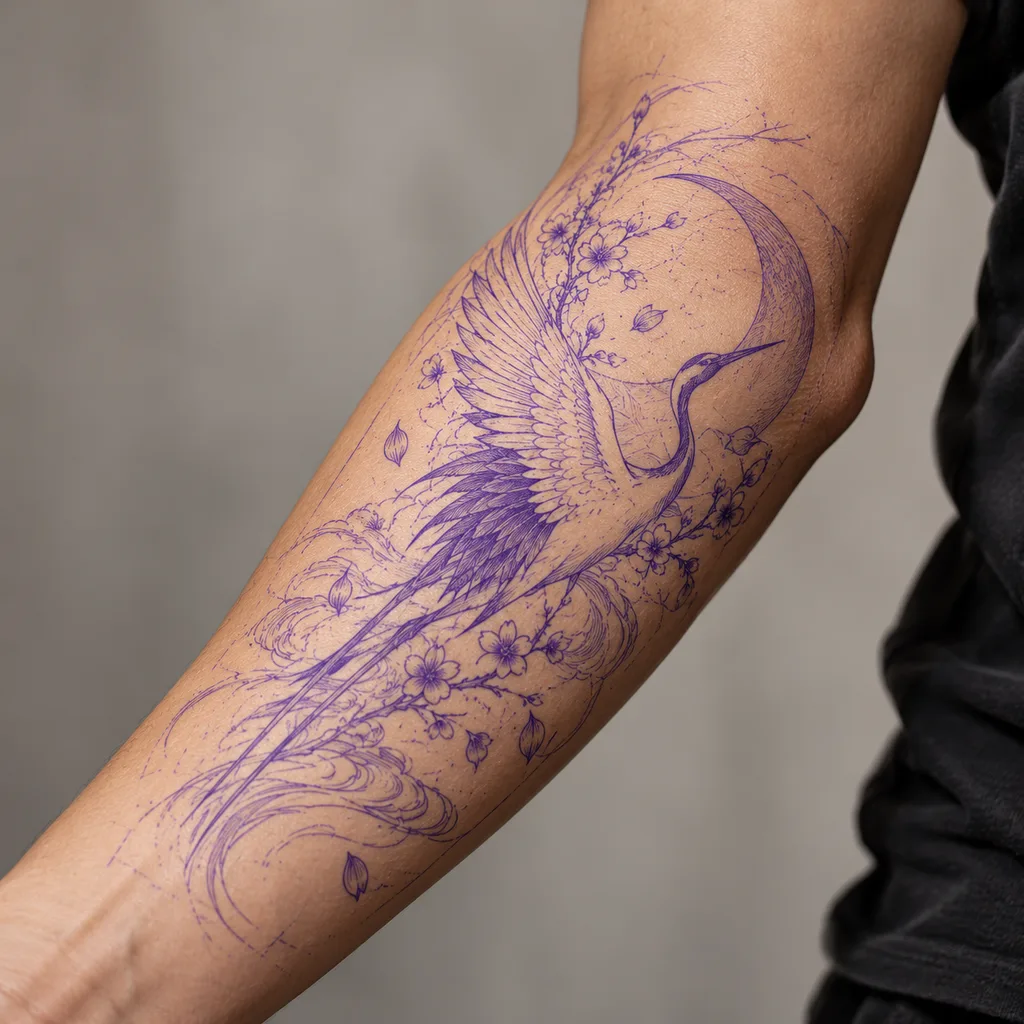
Ask for the stencil on your skin before the needle comes out. Standing, bending and turning with the stencil on shows problems the paper drawing hides, such as a face that stretches around the elbow or a line that kinks over a muscle. Moving a stencil by a finger’s width costs nothing; moving a finished tattoo is not possible.
Review the Drawing Before the Day
Ask whether you will see the drawing before the appointment and how revisions work. Practice varies: some artists send a sketch days ahead, others draw on the day. Neither is wrong, but you should know which one you have been promised. If you have not chosen an artist yet, How to Find an Anime Tattoo Artist: Where to Look, What to Check, and What to Ask covers where to look and what to ask before you book.
When the drawing arrives, check it against your brief, not against your first reaction. Is the part you called non-negotiable there? Does the composition read from arm’s length? Has anything appeared that you did not ask for?
Ask for changes in plain terms, one at a time: “thicker outline on the face” or “move the moon lower” works better than “make it cooler”. Small changes are usually easy, and a change that means redrawing the whole piece is better discovered now than on the table. Do not approve a drawing you are unsure about. A short delay costs less than a tattoo you regret.
Treat the final drawing as the last point at which a change is cheap. Mayo Clinic advises thinking carefully before any tattoo, waiting if you are unsure or worried you might regret it, and not letting other people pressure you. It also says not to get a tattoo after drinking alcohol or using drugs, so schedule the session for a day when you are clear-headed enough to approve the design.
Two practical checks from the same source apply to a custom piece. Think about whether you want to be able to hide the tattoo under clothing, and keep in mind that weight gain, including pregnancy weight gain, can change how a tattoo looks. A design that depends on exact proportions, such as a face or a symmetrical emblem, is more affected by this than a flowing, loose composition.
Where AI Tools Fit
Image generators can help you explore: you can try several moods, test a palette or see how a composition might sit. Treat the result as one more reference in the set. You cannot tell what a generator borrowed from, so a generated picture is a weak base for something permanent. Show it as a mood board and let the artist draw the final piece.
When to Skip the Custom Route
A fully custom piece asks more of you in references, decisions and review time. Choose it if you want a tattoo built around your body and your taste. Skip it if you want one existing design exactly as it is; look instead for an artist who offers ready-made flash, and say that is what you are after.
This article is general guidance, not professional advice. Always consult a licensed tattoo artist about your own design, skin and health, and check your local rules for what studios must follow.